
Claire Stremple

"I support KTOO reporters and guide coverage that informs our community and reflects its diverse perspectives."

When she's not editing stories or coaching reporters, you can find Claire outside with her dog Maya.

Juneau is trading pandemic restrictions for other tools as case rates fall

A box of rapid covid tests on a table
At-home test kits available to the public at City Hall in Juneau. February 24, 2022. (Photo by Claire Stremple/KTOO)

Among Alaska’s major cities, Juneau has kept up some of the most restrictive protective measures throughout the pandemic. Now it’s relaxing the rules while it increases access to public health tools for residents.

The Juneau Public Health Center is kind of a one-stop shop for all the proven defenses against COVID-19. You can grab masks and test kits or walk in to vaccine appointments. It’s all free.

If a public health initiative is measured by how much the community uses it, this is doing well. The first day Juneau offered masks, about 300 people showed up and cleaned out the stock.

Even on this average day, lots of people drop by for supplies. Gabriel Quinones and Jamie Campbell came by for masks because they got too pricey on the internet.

They say they’re still masking, but have loosened up on other things.

“We kind of go out a little bit more,” Quinones said. “But we’re still practicing most of the social distancing and precautions that we have taken since the COVID pandemic started.”

Marlin Bowles also came in for a pack of KN95 masks. He says he hasn’t expanded his bubble, and he still doesn’t go out to eat, but he and his wife do shop and use the pool.

“I don’t think that I’m going to be in public places without a mask anytime soon. I just want to see what’s happening. I fear that states like Alaska may unmask too soon,” he said.

Juneau has hewn closely to CDC pandemic guidelines. But this month, the state’s pandemic poster child dropped mask mandates for vaccinated folks, and city officials say they’re envisioning a day when they relax regulations even further.

Test kits and masks are available at locations all over town, not just the public health center — libraries, the police station, City Hall. Another shipment of 24,000 KN-95s is arrived this week.

“I think adhering to these risk mitigation factors has really benefited our community,” said Alison Gottschlich, the nurse manager for the Juneau Public Health Center.

“I think, overall, throughout this pandemic, we have been really fortunate to have typically lower case rates, lower hospitalizations, higher testing rates, and we have a really nice high vaccine rate locally as well.”

So restrictions are easing, but that’s after some of the more aggressive masking requirements in the state. Juneau schools have masked since in person classes resumed last year. There’s a nearly 80% vaccination rate.

A recent study by the local regional hospital found Juneauites were more than 60% less likely than other Alaskans to die from COVID-19 just because they live here.

And people are still getting vaccinated.

“We still see people getting my first doses. Yeah. Which is a wonderful.”

Gottschlich estimates about 60 people a week come into the public health center for the jab—whether it’s the first, second, or a booster.

If states that drop restrictions are letting the public fight the virus on its own, Juneau’s approach is to heavily arm the public and then let them fight the virus. It’s been working.
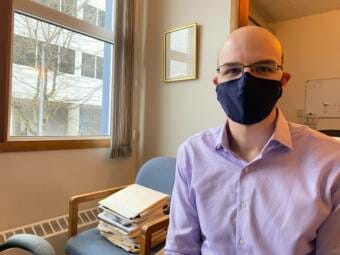
Juneau Deputy City Manager Robert Barr in his office. February 22, 2022. (Photo by Claire Stremple/KTOO)

“I think that’s just a case study, and how much how much can change and how the nature of the virus can change,” said Robert Barr, the city’s deputy city manager. He runs Juneau’s emergency operations center.

Barr says omicron is simply a different variant than we’ve seen before. And at this point in the pandemic, a city with a very high case rate can still be only at moderate risk for COVID-19. He wouldn’t have expected that six months ago.

“I would have been shocked, right, I would have been like… There’s no way. We can’t deal with numbers that are that high.”

Some cities and states in the Lower-48 have dropped restrictions. Barr said he thinks Juneau is moving at a reasonable pace. But like Marlin Bowles at the Public Health Center, he’s thinking about the consequences of dropping restrictions too soon.

“I don’t think we are, but COVID has surprised us before,” he said.

It’s been three weeks since the city dropped mask requirements for vaccinated people. Local hospital operations are normal. Case counts continue to drop.
Cruise lines are predicting a record year, but Southeast Alaska is proceeding with caution

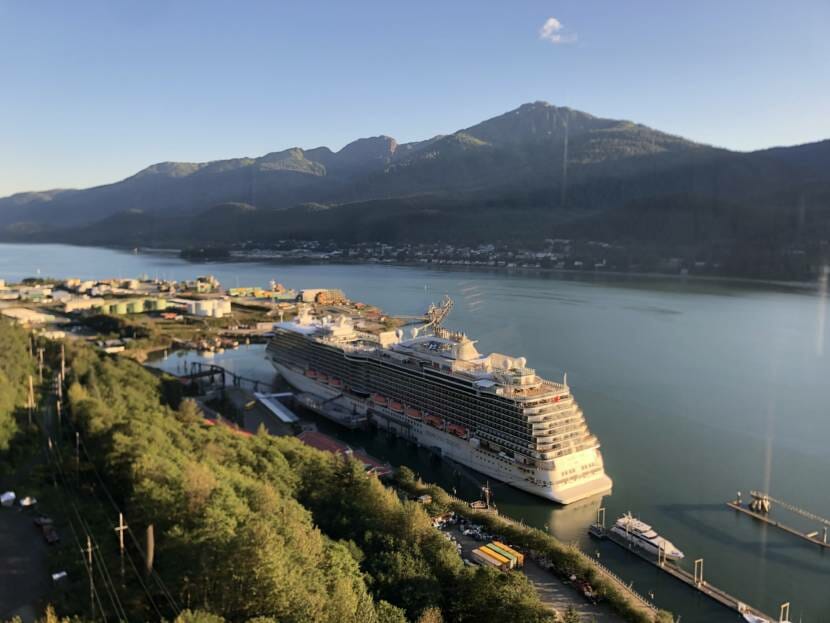
A view from above of a large cruise ship docked in Juneau with Douglas Island in the background
A view from the Goldbelt Tram of a Princess Cruises ship docked in Juneau on Aug. 31, 2021. (Photo by Jennifer Pemberton/KTOO)

Some cruise lines are making bold predictions about a record breaking year for tourism in Southeast Alaska. After two years of pandemic, Alaskans are more cautious.

If you ask the cruise ship industry, this summer is going to be big.

“Really our biggest and best Alaska season yet,” said Josh Carroll, a VP with the Royal Caribbean Group, on a videoconference with Alaska businesses and reporters last week.

“We have, as a Royal Caribbean group, and as an industry, we have the most ships deployed to Alaska that we’ve ever had in our history,” Carroll said.

Carroll said Royal Caribbean is getting more bookings now than they were at this time in 2019, though he wouldn’t share the numbers. He attributed the interest in Alaska to a push towards domestic travel this year.

But he added a serious caveat.

“That’s assuming the protocols allow the the operation of that volume,” he said.

Holly Johnson, who has run Wings Airways and Taku Glacier Lodge in Juneau for the last two decades, said she loves the optimism, but she hasn’t been hearing that from other cruise lines.

She said she also got great pre-season bookings this year. She hasn’t operated for the last two seasons. Even though some cruise ships came in 2021, it was only about a tenth of pre-pandemic crowds.

“We’ve just been sort of holding things together with duct tape, as you do up here,” she said.

Johnson’s pre-season booking are just one indicator of the season to come. She won’t know for sure how many visitors she gets until they’re on the dock. But she has to decide how many planes to insure and how many people to hire now. She says that feels like a gamble while her coffers are empty.

“It’s hard. It’s terrifying. And people are making real business decisions at this point with a lot of hope, but with no concrete knowledge of what the season is going to look like,” Johnson said.

She says she plans to operate at about 60% this season — with the potential to increase if there’s demand. She called it a rebuilding year.

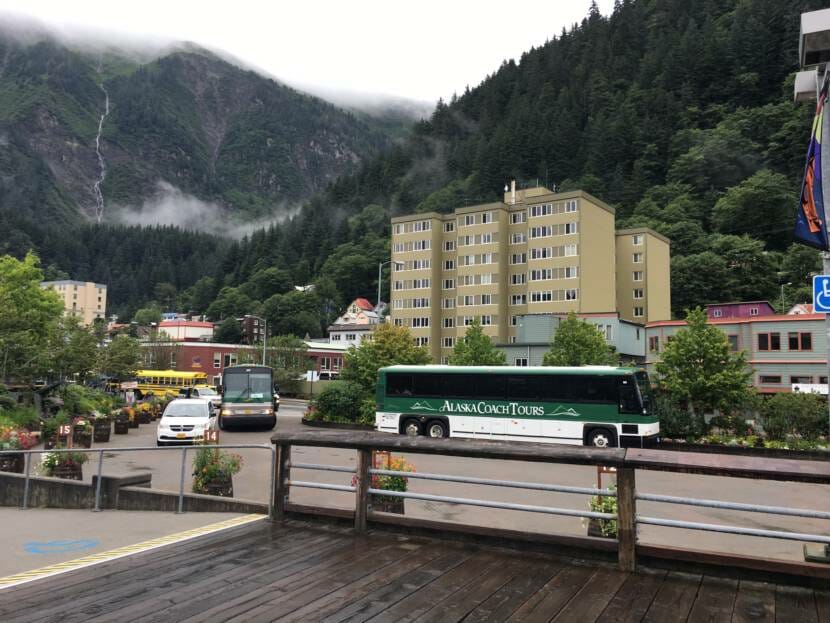
Dennis McDonnell with Alaska Coach Tours isn’t ramping up to full speed either.

“We’re hopeful and expecting a season, probably 20 to 30% better than it was last year,” he said.

Southeast governments need to predict how many tourists will visit, too. In Juneau, Tourism Manager Alexandra Pierce says city leaders plan to make $13 million dollars on cruise ship passenger head taxes. It will take a million passengers to make that, which is close to pre-pandemic numbers.

Pierce says that’s the city’s best educated guess. But Juneau has enough savings that they can afford to be wrong.

“I don’t know what capacity the ships will come at,” Pierce said. “But I think after a year of no cruise season, and last year with an extremely, extremely limited one, this will feel like business as usual for Juneau residents.”

About one hundred miles north, Skagway can’t afford to be as wrong. The city’s economic model is built on tourism, and the last two years took a bit out of savings.

Mayor Andrew Cremata says his municipality is budgeting for only half the season they saw in 2019. He said the municipality is being “prudent.” There are two major concerns on his mind for this summer. One is labor — fewer than 1,000 people live in Skagway. In a typical cruise season, that number at least doubles with seasonal workers.

“There are a lack of workers all over the nation,” Cremata said. “We’re gonna have to get people to come up to Alaska after having essentially two years with little to no business.”

He says it’s extra tough because most seasonal workers make a low wage.

The other concern is Canada. Skagway is just about 15 miles from the border. Tours cross it, and there’s usually a robust stream of visitors from the Yukon.

He and others in the tourism sector have their eyes on Canada’s policy around foreign-flagged ships this year. Large cruise ships have to stop in Canada on their way from a U.S. port like Seattle to another U.S. port like Ketchikan or Juneau. That’s an old U.S. maritime law.

When Canada closed its ports to cruise ships in 2020, it effectively ended the Alaska cruise season. It lifted those restrictions on cruise travel last fall. At Southeast Conference last week, Renee Limoge Reeve with Cruise Lines International Association said that Canada’s border being open is a good sign.

“But we still face challenges. We’re all aware of them,” she said.

She said her group is in frequent talks with the Canadian government. But she, along with businesses and municipalities, is concerned Canada could quickly rescind access again—and doom the cruise season.

Holly Johnson from the flight tour company Wings says that even though there’s plenty of uncertainty between now and this summer, there’s one thing she knows for sure.

“The world is ready to travel again,” she said. “Some of these guests have rescheduled over the last couple years. And they’re just determined to come back.”

She says she’s ready to be back in business, too. Even if it’s a modified amount of business.

Why one Hoonah family rooted for the Czech women’s hockey team this Olympics

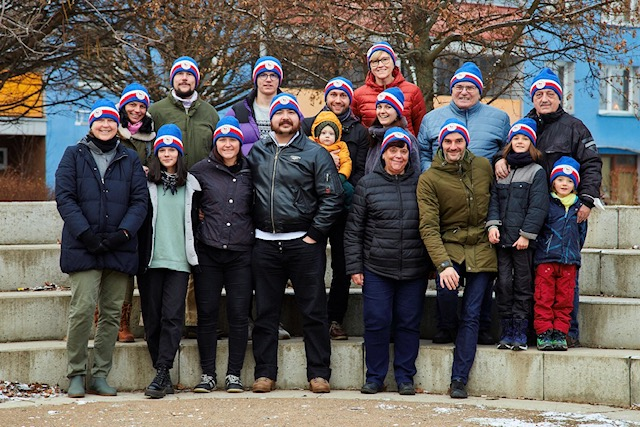
A large family photo
Alena and Thomas Mills with family in Kutna Hora, Czech Republic, December 2021. (Jiri Coubal)

Women’s hockey fever took hold in Southeast Alaska this month as the best teams in the world play for Olympic gold in Beijing. That’s because one Czech hockey star has a huge, close-knit Hoonah family rooting for her.

The Czech women’s hockey team made its debut at the Olympics this year. They lost to the United States in the quarter finals last week, but their strong preliminary games and an early lead against the US in the quarterfinals made some noise in the women’s hockey world.

Alena Mills is the Czech team captain. She is married to Thomas Mills, who grew up in Hoonah and Juneau. They now live together in Russia, where he teaches while she travels to play hockey.

“I’m not surprised that she is in the Olympics,” said Alena’s mother in law, Jane Lindsey, who lives in Juneau.

“I’m actually a little surprised it’s taken as long as it has for her Czech team to qualify.”

Lindsey says one thing that strikes her in Alena’s story is how she committed her whole life to playing hockey — she even moved to the United States in high school so she could be on a team.

“There was pretty much no opportunity for her to excel at the level she needed in the Czech Republic for as a woman, as a young lady. So I think I just really admire her for being at the place that she’s at,” Lindsey said.

The family couldn’t join her in Beijing this year because of COVID-19 precautions, but that doesn’t stop them from streaming the games — which are really late at night because of the time difference.

“The Hoonah family and all of us are just kind of — we’re all over Facebook every time she plays. I’ll get on to the phone and be like, ‘I can’t believe she just made that shot!’ Or, you know, ‘Oh my gosh, I’m so nervous!'” said Lindsey.

Valerie Veler is Alena and Thomas’ cousin in Hoonah. She says Alena’s Olympic journey has brought her huge family together.

“Even though we aren’t face-to-face the whole time, we have our phones up. And we’re FaceTiming and we’re wearing our number 9 Alena Mills jerseys,” Veler said.

Veler got to meet Alena when the couple stayed while she was introduced to the family in Hoonah. Veler says she blended right in. She remembered they went casting for trout, and she was especially happy that Alena embraced Lingít foods she prepared, like herring egg salad and canned cockles.

“She ate whatever foods we had, which is cool because when you come in from the Outside, a lot of people who are not familiar with our way of life don’t have a desire to try different things. And she’s very open,” said Veler.

So she says seeing Alena achieve her dreams on national television is really moving.

“I totally leaked tears because it’s like, how awesome is that to have somebody representing this, you know, she’s married into our family, but instantly she’s like, one of us,” she said.

A lot of the family is concentrated in Hoonah, but many members are spread out across Alaska and the Lower-48. Everyone tunes in for the games: Facebook messages to a cousin in Kansas, chats between Juneau and Russia. Alena’s father-in-law lives really remotely, on Excursion Inlet. Veler says he doesn’t get the games out there, but he’s always got his team hat on and stands by for text updates from the family when Alena plays.

“The bottom line, the whole thing is like: our hearts are full of love, excitement and pride for her,” Veler said.

“We are all spread out all over the U.S. and we are all feeling the same thing. You can’t quite explain it, but it’s pretty powerful. Pretty awesome. She’s one person connecting all of us with all these feelings and emotions,” she said.

Alena Mills’ team won’t medal this year. They were eliminated after a loss to the U.S. team. But the Mills family — from Hoonah to Juneau to Kansas to Russia — was with her the whole way.

A previous version of this article misspelled Alena Mills’ name.

Joint venture between Doyon and Huna Totem invests in Juneau tour bus company

""
Image courtesy of Alaska Coach Tours.

Two Alaska Native Corporations have joined up to form a new business, and its first move is investing in a Juneau-based tour bus company.

The new joint venture is between a huge regional Alaska Native corporation from the Interior and a smaller Southeast village corporation. Doyon, Ltd. is Alaska’s largest private landholder and a major force in Denali tourism. Early this year, Doyon joined with Huna Totem, owners of a successful cruise destination at Icy Strait Point.

The venture is called Na-Dena’. Doyon president and CEO Aaron Schutt says its aim is to fill some gaps in tourism infrastructure statewide.

“There’s an opportunity to bring more people to Alaska and to give them a better experience,” Schutt said.

Schutt says transportation, lodging and visitor experience are all areas where the new joint venture can grow.

They’re starting with transportation. Na-Dena’ has acquired an 80% majority share in Alaska Coach Tours, a Juneau-headquartered company they think can expand statewide.

“It’s not like we’re just buying a bunch of buses from somebody. They have a good team providing a very good product to the same customers we already serve,” Schutt said.

Dennis McDonnell started Alaska Coach Tours in 2004. He said he wasn’t necessarily looking to sell his company, but he saw opportunities for growth that could come from new capital. He said the new partnership’s goals were in line with his company’s ethos of telling real Alaska history to visitors.

“What better situation, to have two very well respected Native corporations join forces with an Alaskan employee-owned company,” McDonnell said. “I just got really excited about what the potential was.”

It’s a big investment after two years of extreme economic downturn in the tourism industry due to the pandemic. Mickey Richardson, who runs marketing for Huna Totem Corporation, says the lull gave them time to start the new company.

“We have time to develop and to think further into the future and not be so wrapped up with our day to day operations,” Richardson said.

Southeast residents won’t see any major changes to Alaska Coach Tours this season — except that McDonnell expects his tours to be fully operational for the first time since before the pandemic.

Family and colleagues remember Juneau pediatrician who died scuba diving

In mid-January, Juneau pediatrician Dr. Kimberly Kilgore died while scuba diving in Florida. She was 57 years old. Family and colleagues say she will be remembered for her whole-hearted approach to life and work.

“Everybody that that knew her loved her,” said her sister, Nicole Kilgore, from her home in Louisiana. “She always was willing to help everyone. She would put everyone else before herself. [She] loved, loved, loved children.”

Nicole says the whole family is extremely close. Kimberly was the oldest of three siblings.

“Life was an adventure to her,” said Nicole. “It was something meant to be lived all the time. She used every second of every day to play and she played hard. And she didn’t leave anything behind. You know, it’s sad, but I will say this, she definitely got every ounce of life out of life. So I have that to go off of.”

Kimberly Kilgore moved to Juneau with her husband so she could practice pediatrics full time here in 2018. She’d been working part-time in the community for over a decade.

At Rainforest Pediatrics, where she practiced, her partner Dr. Joy Neyhart says the office misses their friend and colleague. She said Dr. Kilgore’s style was “very thorough.”

“She would spend lots and lots of time with families at each visit,” Neyhart said. “And the most common comment I would get is, ‘Oh, thank you for bringing Dr. Kilgore here. She is awesome. And we learned so much’!”

Neyhart remembers her as a source of parenting wisdom and global clinical experience. She says patient families have called with support and memories of Kilgore’s care.

“I saw Dr. Kilgore and how she connected and how she took an interest in kids. And so I knew it, but to hear it come from a parent who got to experience it in and when such a positive way with their own child it was, you know, good to just good to hear that,” Neyhart said.

The clinic closed last week after Dr. Kilgore’s death and, coincidentally, an outbreak of COVID-19 among staff. Another pediatrician will be seeing patients at the clinic for the next week until  Neyhart and the staff can return. She said the community in Juneau and the medical community have been incredibly supportive.

Kilgore is survived by her husband, three grown children and three grandchildren.

How climate researchers and Juneau composers are turning data into song

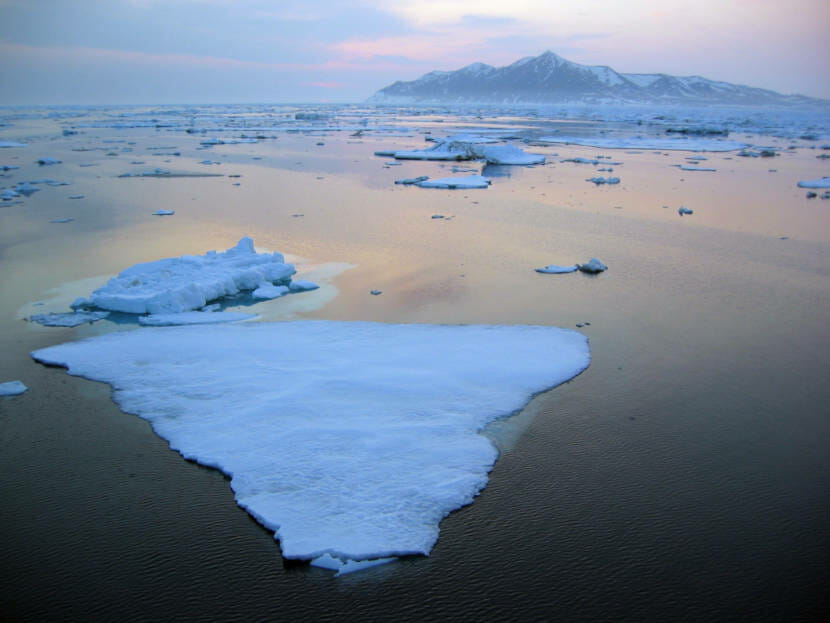
Sea ice floats in the Bering Strait off Cape Prince of Wales. Juneau composers are working with climate researchers in Fairbanks to translate climate data sets into music.  (Photo by Gay Sheffield/University of Alaska Fairbanks)

Fairbanks climate researchers teamed up with Juneau composers to turn data into music. It’s a bid to bring climate research to a new audience.

When Juneau composer and middle school music teacher Michael Bucy first saw the climate data he had to turn it into a song, he said he couldn’t make sense of the symbols.

“I didn’t get out of my algebra II class in high school,” he said with a laugh.

That’s a pretty normal reaction to the codes used in climate modeling. Bucy was looking at data sets showing warming temperatures in the Bering Sea. And his initial response is part of why he and fellow composers attempted to translate the ideas behind the numbers into the more approachable medium of music.

“To be honest, climate change has actually been just too overwhelming for me to address. It’s one of those things that … I think we all somewhat put our heads in the sand just for survival sake … because it’s just too, too overwhelming to think about too much,” he said.

Bucy wrote “Babel 2.0,” which was performed in Juneau last month, with additional help from a writer friend who took care of the lyrics. The name is a biblical reference—prideful men attempt to build a tower to heaven, so their god gives them all different languages so they can no longer work together.

The science to music project is the brainchild of Kaja Brix, who directs the National Oceanic and Atmospheric Administration Fisheries Arctic Program in Alaska. She also works at the University of Fairbanks International Arctic Research Center. She said most climate talks reach the same audience over and over.

“I was reflecting on how we really need to think of other ways to bring information about changes in our state to the public in a way that people will be exposed to that science,” Brix said.

Bucy says his composition is an effort to aid what he considers some of the most important work in the world — he called it “music with a purpose.” But to get from science to music, he had to call professor Vladimir Alexeev at the International Arctic Research Center for a layman’s description of what was going on.

Alexeev has studied climate for 30 years, and he’s modeled recent warm temperatures in the Bering Sea and their effect on the rest of the world. He broke it down simply: “The warm water in Bering Sea makes air move differently.”

His model shows that unusually warm water in the Bering Sea pushed a column of warm air into the jet stream. That sent warm air up north into places like Fairbanks, and that sent cold air south where it doesn’t belong.

“It’s like a rock in the middle of the river. It sends ripples up and downstream,” he said.

Alexeev called it a “disaster.”

He says he suggested dissonant sounds and musical cycles that represent the seasons. He says the project made him think about his research in a new way.

Michael Bucy’s song is the first in what will be a series of about six pieces of music. The Bering Sea is just one theme. Other composers will interpret glacier outburst floods, high latitude mirages and arctic sea ice changes.

The goal is to hold concerts in Juneau and Fairbanks, but pandemic concerns have delayed the project.

Site notifications
Update notification options
Subscribe to notifications