
A bill that would change the scope of an Alaska sexual assault law passed the Alaska Legislature Wednesday as part of a 10-bill package. It alters a law that criminalizes sexual assault by a medical provider.
Democratic Juneau Rep. Sara Hannan’s bill comes after a high profile sexual assault trial in the capital city ended with two acquittals and 14 charges declared mistrials in September.
The case involves more than a dozen former patients — predominantly Alaska Native women — who accused chiropractor Jeffrey Fultz of sexual assault under the guise of medical care while he worked at Southeast Alaska Regional Health Consortium in Juneau.
As it stands now, a key part of the legal definition of sexual assault by a medical provider requires that the alleged victim isn’t aware of sexual contact happening at the time.
Hannan’s bill, originally called HB 242, would change that by closing what she calls a loophole in existing law. If signed into law by Gov. Mike Dunleavy, that stipulation would be removed. That means sexual contact by a medical provider during the course of treatment would be considered assault regardless of the patient’s awareness.
However, the change can’t be applied to the charges in the ongoing case against Fultz.
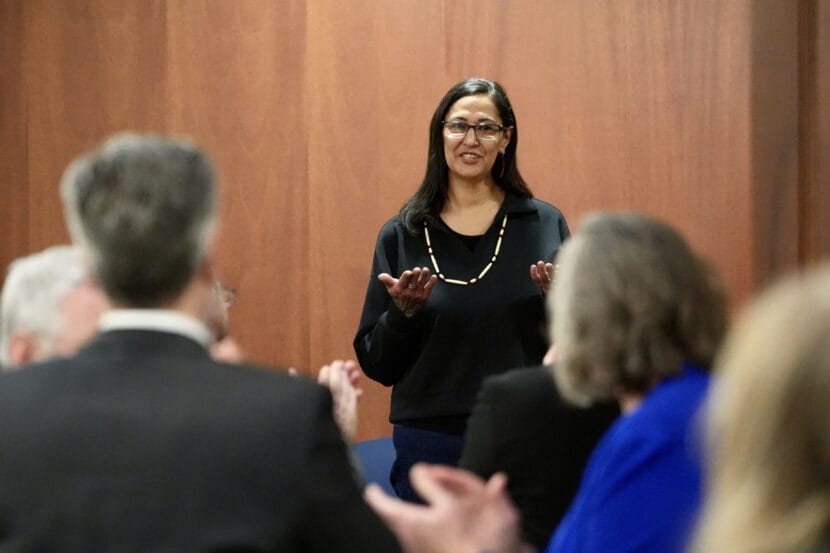
After the bill’s passage Wednesday afternoon, Hannan gave thanks to someone who’s been testifying on behalf of the bill since it was introduced earlier this year: S’eiltin Jamiann Hasselquist.
“She has demonstrated great resiliency and courage to come forward, and I want to thank and acknowledge her,” Hannan said. “The updates to this bill did not impact her case. Her charges have been dismissed. The law is not retroactive, but she is advocating to make sure that future victims aren’t created by cases that can’t be prosecuted.”
Hasselquist is one of Fultz’s former patients. She testified against Fultz during the 2025 trial, and the charges associated with her accusations were the two the jury declared not guilty. It’s unclear if the loophole was a factor in the dismissals. Jurors’ reasons aren’t made public.
But shortly after the jury returned its verdict last fall, the judge in the case dismissed one of the remaining charges, and the reason he gave does involve the loophole.
Judge Larry Woolford ruled that one of the alleged victim’s testimony didn’t match the existing legal definition of the charge for sexual assault by a medical provider. The acquittal order said the charge was dismissed because she was aware that the contact she received was “sexual and that it was not part of legitimate medical treatment.”
Hasselquist, the former patient, says she has been fighting for the change since her charges were acquitted, and this bill’s passage will allow her to rest. She said she hopes it also brings a bit of peace to the women whose charges are still active, and may be retried.
“I consistently, through my testimonies, have sent strength out to the women who are still involved in this case,” she said. “And again, I know that this isn’t going to help them in their case, but I hope that it brings some sort of justice to them in knowing that this loophole is closed.”
The remaining 13 charges against Fultz may still be retried, but the court has not been able to schedule a second trial yet.
