
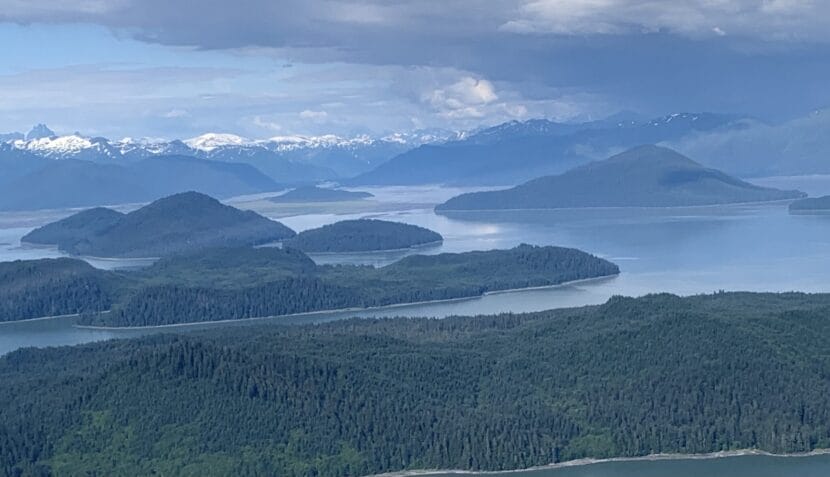
Several proposed mines in British Columbia are located along transboundary rivers that wind through Southeast Alaska. Residents on the Alaska side of the border say there’s a lack of tribal consultation and some worry about pollution in salmon-bearing streams vital to the region’s fisheries.
KTOO’s Alix Soliman spoke with Max Graham, a journalist who covers mining in Alaska for Northern Journal, about the booming industry.
Listen:
The following transcript has been edited for length and clarity.
Alix Soliman: Which proposed transboundary mines seem likely to open in the next several years?
Max Graham: So there are a bunch of projects across the border in British Columbia, of all stages. Probably the most likely to open next or soonest is a big gold and silver project called Eskay Creek, which is in the Unuk River watershed. And the owners of that project, they just got their permits kind of squared away, and have an agreement with the First Nation on whose traditional lands the project is located, and that could open up within the next few years. There are a couple other big proposed projects. Two in the Stikine River watershed, that’s a river that flows kind of in the Petersburg-Wrangell area, and those are called Galore Creek and Schaft Creek. They’re not quite as far along. And then there are kind of a handful of earlier-stage, smaller projects that are even farther out and quite a bit more speculative at this point — so there’s the New Polaris Project on the Taku, like upstream from Juneau, there are a bunch of prospects sort of in the Hyder-Stewart area, sort of further south.
Alix Soliman: What’s driving the mining boom?
Max Graham: With gold prices just being what they are — they’ve seen this like historic rise over the last few years — and that’s really attracted a lot of investment and excitement in the industry. Copper and silver prices are also very high right now, but a lot of the interest in this region is still in gold. You know, at the same time, there’s discussion both in Canada and the U.S. about critical minerals and sort of securing the nation’s supply of metals used in energy and national security, like weapons, and so that’s sort of feeding into the enthusiasm.
Alix Soliman: Last year, you covered the Eskay Creek project, a gold and silver mine revival proposed above the Unuk River that flows near Ketchikan. How have sovereign tribes on either side of the border responded?
Max Graham: That’s on traditional lands of the Tahltan Nation in British Columbia, and that First Nation has an agreement with the province of British Columbia that sort of gives the First Nation a lot of control in the decision-making process. Whereas on the Alaska side of the border, that’s just not the case. I think there’s quite a bit of uniformity on the Alaska side about just asking for, like, the basic, you know, “you need to consult us on these projects,” whereas on the B.C. side, there’s, I think, more robust debate over like, “do the benefits that we’re going to get outweigh the risks?”
Alix Soliman: It seems like there’s an unclear path to resolve issues around transboundary pollution. For instance, the Tulsequah Chief Mine has been leaching acid mine drainage into the Taku River Watershed, upstream of the Alaska border. What are pathways for issues like that to be resolved?
Max Graham: There’s a debate, I think, a very active debate on this side of the border about, like, to what degree there even is pollution, or to what degree we should be worried about pollution. You heard the commissioner of the Alaska Department of Fish and Game pretty much say, like, we haven’t really detected any pollution on the Alaska side of the border from any active or historic mines in Canada. At the same time, you have conservation groups and, you know, fishing groups and tribal leaders sort of very actively concerned that it could happen. And also, huge attention has been given to the Tulsequah Chief — if you go there, or look at photos, like, there is clear acid mine runoff, just like unfettered, going right into the Tulsequah River. Probably is worth establishing, like, what exactly are the risks. There’s a huge push from Alaskans to be sort of much better incorporated into decision-making and into the process of, like, shaping how mines upstream get developed. I think there’s this more fundamental question of, like, how do we mine responsibly, and what does that look like?
