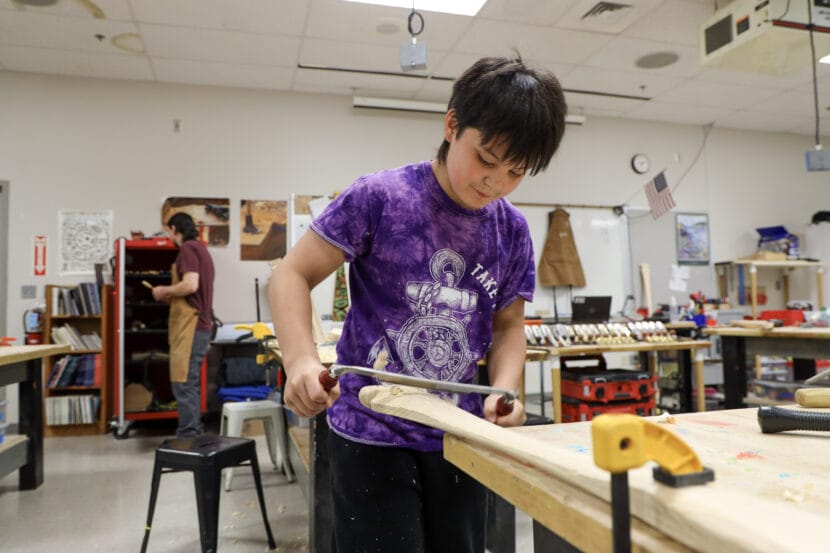
More than 100 middle school students in Juneau are getting hands-on experience to learn about traditional Lingít carving by crafting their own canoe paddles in the classroom.
The sounds of sanding, filing and chipping, and the aroma of spruce filled a classroom in Thunder Mountain Middle School first thing on Monday morning.
Cash Miller is a seventh grader and one of 20 or so students in the first-period STEAM class at Thunder Mountain. Middle school students who sign up for the class get hands-on experience for tasks like wood and metal working, electrical circuitry and basic equipment safety.
Miller said he enjoys having the class first thing in the morning because it gets his blood flowing and he doesn’t have to think too much.
“I think it’s really cool, because like, it’s paddles and it’s really cool,” he said. “And, you get to use all these tools, and it’s really fun.”
Johan Kuggleman teaches Thunder Mountain’s STEAM classes — that stands for science, technology, engineering, arts and math. He gets help with the carving process from two carving apprentices from Goldbelt Heritage Foundation. The foundation, alongside Sealaska Heritage Institute, collaborates with the Juneau School District to connect students to Southeast Alaska’s land and Indigenous cultures.
“Southeast Alaska water is really important. The ocean, the rivers, the lakes and stuff are really important,” he said. “So it’s really cool to kind of encourage that, and tell the kids that where they are growing up, it’s actually really special. It’s not like everywhere else in the world.”
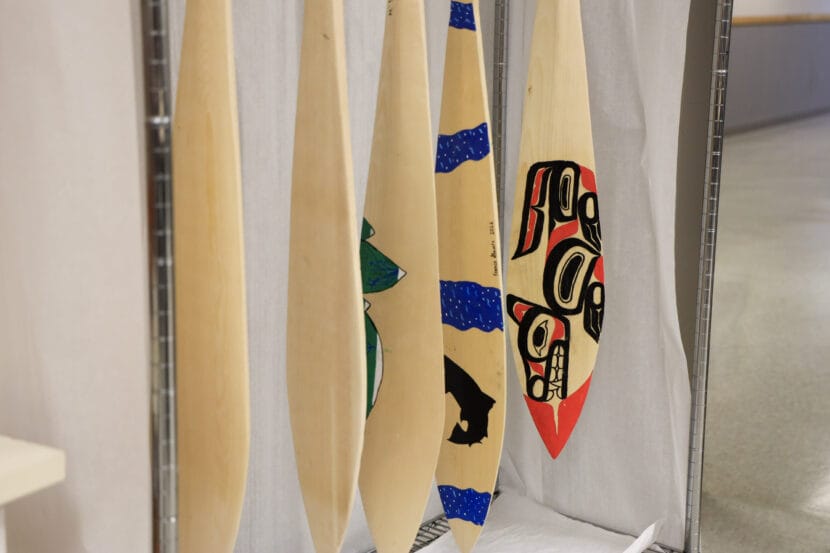
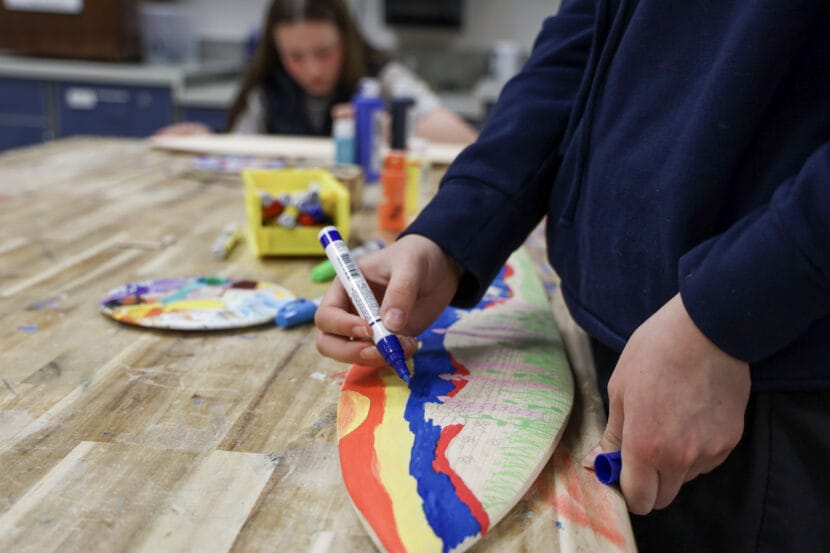
This semester is the first time students at Thunder Mountain are carving full-size, 5-foot-tall paddles in the class. Goldbelt Heritage Foundation donated the spruce wood from Hoonah, along with dozens of carving tools. Students get to learn how to use tools like chisels, bench planes, rasps, draw knives and electric sanders.
Kuggleman, who grew up in Juneau and is Iñupiaq, said it’s a special experience for him to be able to share Indigenous knowledge through project-based learning.
“This kind of program was not existing when I was their age. It would have been something that I would have loved to have taken in middle school,” he said.
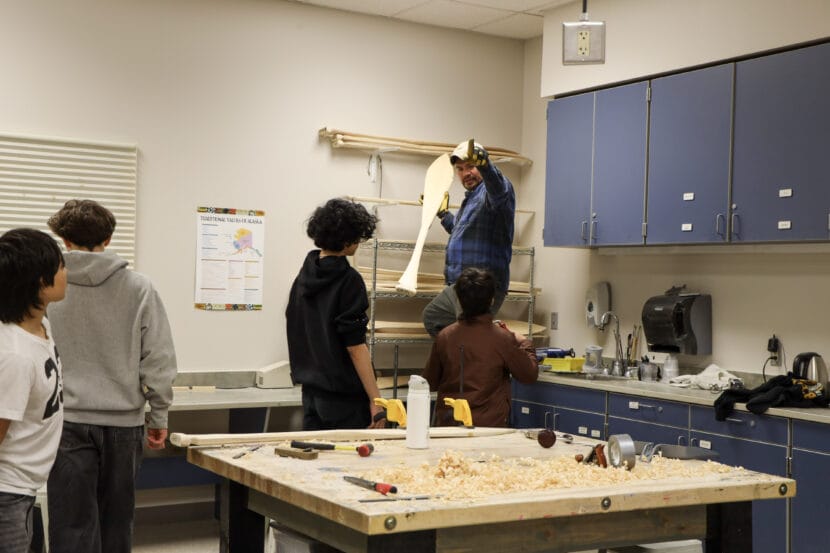
Kuggleman said he grades students on their safety using the tools and the effort they put into each task of the carving process. Brandon Gomez is Lingít and one of the apprentices helping students as they carve and paint the paddles. He said he’s found that many students don’t have a problem with putting in the work.
“There have been a few students that, I don’t know, may have skipped before, and now they’re, like, really, really locked in,” he said. “They have some of the best-looking paddles, like the sharpest-looking paddles, because they’re really interested in this stuff.”
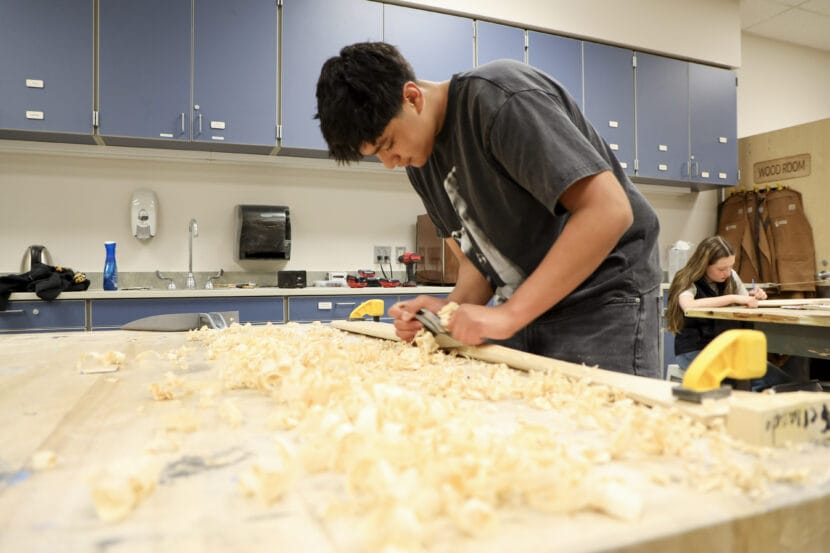
The spring semester is coming to a close soon and many students will finish their paddles within the next week. While many students said they plan to hang their paddles for display at home, Eighth grader Greyson Dalton said he hopes to bring his to Celebration next month. Celebration is a biennial festival in Juneau where thousands of Indigenous people from Southeast Alaska and beyond gather to honor and uplift their cultures.
Dalton said that before moving to Juneau from Washington state, he wasn’t really connected to his Lingít roots.
“We never really got the chance to do this in Washington. Maybe, like once a year we would do a little project about Native American history,” he said. “But it’s so much like, funner and better to learn more about it in Juneau.”
Through this class and project, he’s finding that connection and more.
“It’s fun learning it more and getting to know my culture,” he said.
School in Juneau ends for most students on Wednesday, May 20. Celebration kicks off on June 3.