
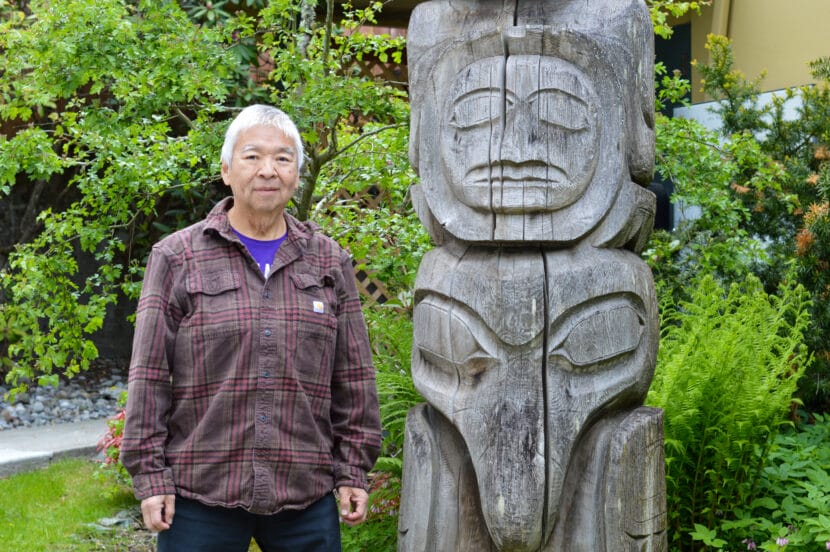
You’ve likely seen Brian Wallace around town. And odds are, he was carrying a camera. Wallace has been taking photos of Juneau people, places and happenings since he was a kid. He worked as a photojournalist at the Juneau Empire for nearly 30 years.
He comes from a family of artists: his father, the late Amos Wallace, was a renowned carver.
Wallace takes pictures of the present for future generations. He’s also working to memorialize the past — his own family’s and Juneau’s.
Listen:
This transcript has been lightly edited for clarity.
Brian Wallace: My name is Brian Wallace, semi-world famous photographer here in Juneau, Alaska.
Well, I was a photographer for the local newspaper for 28 years, six months. So I’ve seen a lot of people grow up. A lot of people around town, a lot of people recognize me.
It’s hard for me to sneak out of town or be anywhere I like trying to be anonymous when I travel. Like last time I was in New York City, I saw on a Facebook post, someone said, “Oh my god, I just saw Brian Wallace crossing Times Square.” She gave the whole rundown what I was wearing, what direction I was heading, you know. So that kind of blew my cover, you know? I was trying to sneak out of town, and I was caught.
I think, around fifth or sixth grade, my older brother, Roger, who was taking photographs for the Juneau-Douglas High School Totem Yearbook. And I kind of wanted to copy him with taking pictures and developing images so that that, you know, seemed like magic to me.
I would just take a picture, use the enlarger, project something down onto a piece of paper, dump it in chemicals, and all of a sudden, like magic, you know, the image appears.
Technology is real amazing, now — the digital. Back when I started, I had maybe two rolls, 72 exposures to cover a whole story. And now, like, I take, like, several hundred to several thousand.
I photograph Celebration. There’s thousands of dancers, so there’s gonna be maybe thousands of images. And so narrowing down to like, you know, you know, 20 to 25 decisive moments that would define the event is a real — it’s a lot of work.
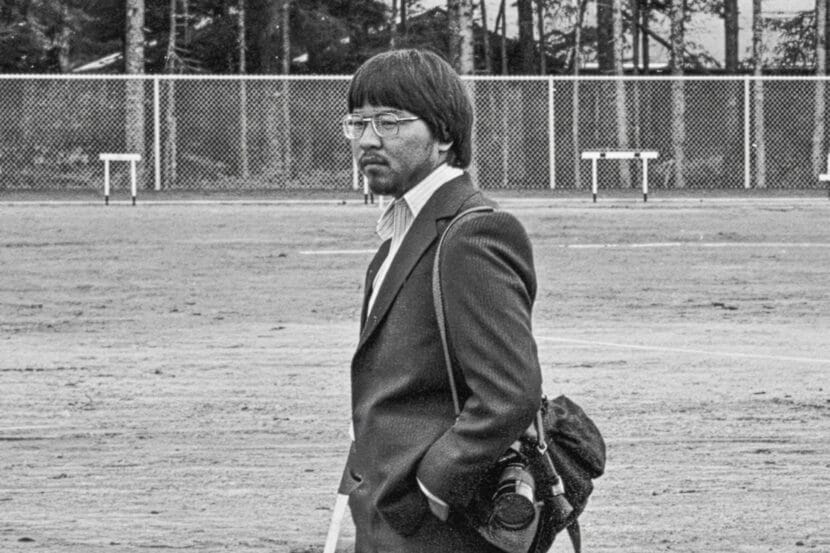
I’m a full time employee at the Alaska State Museum. One of my jobs that I do is to photograph some artifacts. Photographing the hands-on objects, as well as other stuff that people aren’t allowed to hold. But we need a visual record of that.
It just amazes me photographing, you know, the old Lingít artifacts, the blankets. Even the mysterious ivory artifacts that were dug out of the tundra. We have no idea what they were used for, but some person made it long before the Egyptian pyramids were built.
It’s been real fulfilling for me to photograph all of my late father’s work. He has some totem poles in museums in New York City. I made pilgrimages there to photograph it, and one big one in Cincinnati.
I’ve traveled throughout the whole country trying to track down all the totem poles that he made. And I’m still looking for the ones that he carved for Disneyland back in the 1950s, but their archivist hasn’t been able to locate them for me.
I’m trying to round up as much artwork that my dad did. He did literally hundreds, maybe thousands of bracelets, and they’re all out there in the world, and I’ve maybe photographed about 20 or 30 of them so far. Anytime someone says, “Hey, my mom had a bracelet that was given to her in 1961.” I say “Can I photograph it?”
I’m a big fan of my dad and his work, I just don’t want it to fade away.
I’m not a trained historian, but history has always been one of my favorite subjects, since high school, so I really pursued my images to preserve things for posterity.
When I put photographs out, people say, “Oh, that’s great. That reminds me of this certain time.” Or if I find photographs of an elder who has passed, but it’s someone who I photographed 40 years ago, I could show them the images. And that kind of makes a lot of peoples’ days.
