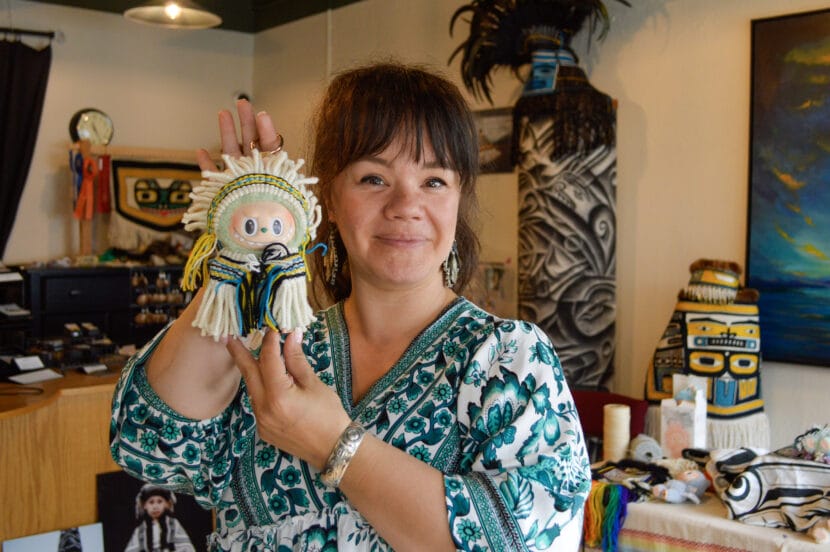
A Lingít master weaver is using viral monster dolls called Labubus to bring attention to Chilkat and Ravenstail weaving.
Listen:
In Lily Hope’s shop in downtown Juneau, she held up a tiny doll with an evil grin.
“Some people are like, ‘why? Oh, please no. Why?’ It’s the you know, ‘what an ugly monster,’” she said. “And other people are like, ‘oh, please let me have one.’”
Her shop was filled with pieces of weaving: earrings, formline robes, and pictures of models in more weaving. On her desk laid a green doll wearing a Ravenstail headdress, woven in pink, white and blue yarn.
“This one is Trans Pride, requested from an art collector in New York City,” she said.
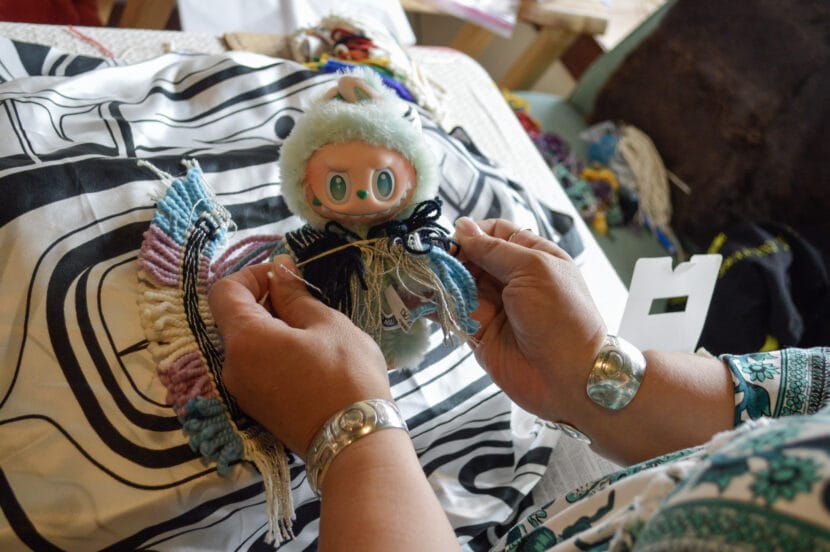
Hope is a master weaver. She has dedicated her life to reviving Chilkat and Ravenstail weaving, and through apprenticeships and classes, she’s helped hundreds of Alaska Native people form their own weaving practice.
She’s also a mom of five. And those two worlds collided when her kids started asking for Labubus.
“My three small children introduced me to the dolls and said, ‘Please, Mommy, please, mommy, buy these for us,’” Hope said
You may have heard of them. The dolls are all over the internet, with their fuzzy bodies, big colorful eyes, and pointy teeth. They are based on storybook characters.
Hope said they come in “blind boxes” — generic packaging that leaves the contents a mystery — so part of the fun is finding which Labubu is in the box.
“Oh, yes, this is the whole rage, right?” she said. “It’s like, ‘Oh, I got Lychee Berry. Oh, I got, I got the Green Grape. Oh, now we need to get Soy Milk, Mama, let’s get Soy Milk.”
But in the craze, she saw an opportunity to continue to push Northwest Coast weaving into the spotlight.
“When somebody sees an Indigenized Labubu in a Ravenstail regalia,” Hope said. “They can be like, ‘Oh, where does that come from? Oh, what are those? Oh, what is Ravenstail weaving? Oh, wait, it’s related to Chilkat. Let’s go.’”
Lingit regalia is sacred attire that represents ancestral heritage and cultural identity.
Hope’s doll-sized regalia sets go for more than $600, and fine arts collectors all over the country are ordering them.
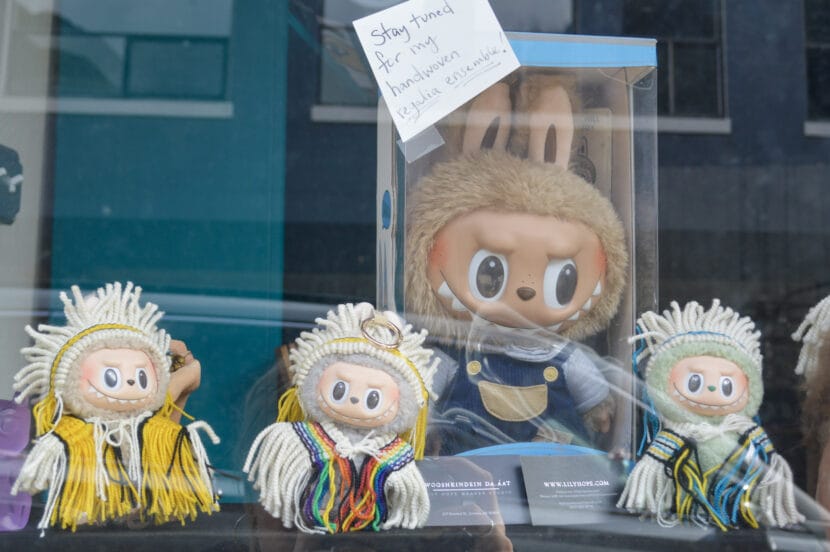
But for those who don’t want to shell out that much, Hope also sells kits for people who want to weave their own outfits for a doll.
“It’s a way to get the work further into the world,” she said. “And kind of, you know, capture some people who wouldn’t necessarily come to Ravenstail weaving otherwise, but are like, ‘Oh, this is a way that I can dress my Labubu in traditional regalia, and I made it myself.’ That’s huge.”
It’s a way of weaving your own story into the trend. And the little monsters look pretty cool, too.