Listen here:
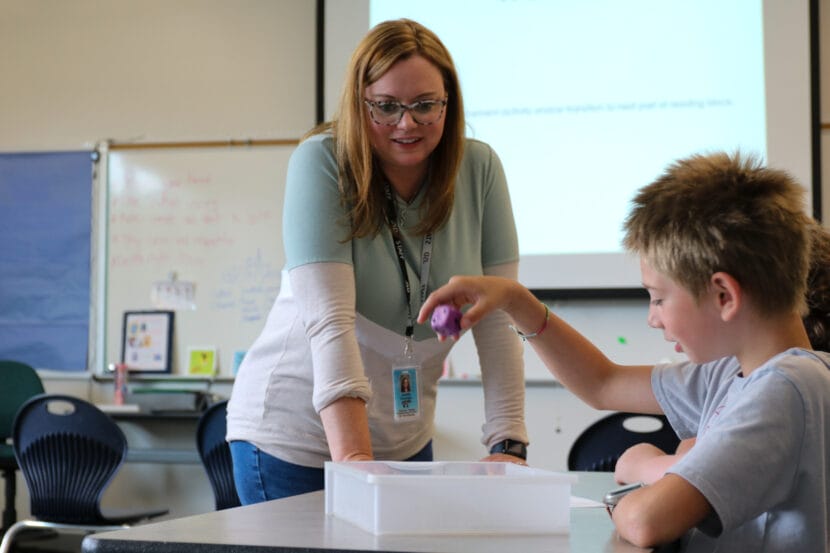
Teacher Janelle Ondrejka led a small, six-person reading group at Thunder Mountain Middle School in July. She called on students Astrid King and James Lemons one at a time to read short sentences off a large projector screen.
James and Astrid stuck around after class to talk with KTOO about going to summer school. They had differing opinions on the program.
“I hate summer school,” James said. “Except science.”
Astrid had a more positive view of school.
“I really like summer school, actually, because here, if I finish a level, I get a prize.” she said. The students received small, squishy or stuffed toys as incentives during class.
The two students are rising fourth graders at different elementary schools. Lemons goes to Kax̱dig̱oowu Héen Elementary School in the Mendenhall Valley and King goes to Harborview Elementary in downtown Juneau.
But they both went to summer school to work on their reading skills. For three weeks in July and August, they spent their mornings rotating between reading classes, with a science class to break up the day.
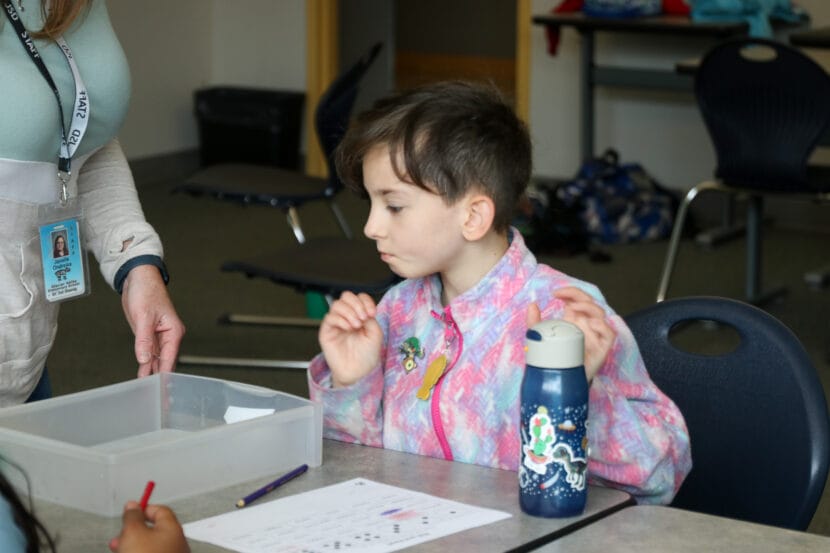
Ondrejka is normally a special education teacher at Sitʼ Eeti Shaanáx̱ – Glacier Valley Elementary School, but she taught summer school this year. She said working with students in small groups has been really helpful.
“It’s been really nice to really have the small group and being able to hone in and work individually if needed,” she said. “I give lots of praise to individual kids, and I can really listen to them reading, versus, like, the big, large classrooms. It’s hard to get individual with the kids.”
While she tries to keep things fun, Ondrejka said the focus is still on improving their reading skills.
“They are here because they’re struggling readers, so they need to really hone in on their reading skills to help prepare them for fourth grade,” she said.
Summer school is a part of the Alaska Reads Act, a state law passed in 2022 that aims to get every student reading at grade level by the end of third grade. Students can move on to fourth grade if they meet the reading requirements, or by getting a waiver that requires summer school or tutoring in order to move up.
The most recent state data from the 2023-2024 school year showed 31.6% of Juneau School District third graders were well below the reading benchmark by the end of the year – that’s slightly lower than the statewide rate.
But things are looking better this year. Kristin Garot is the Juneau School District’s Director of Teaching and Learning Support. She said fewer students needed a waiver to move on to fourth grade this year, down from more than 30% to about 25%. Garot attributes a lot of that to teachers using the new reading curriculum more effectively with the district’s youngest students.
“We are seeing stronger results, especially from our younger students now, who are then going to move up,” she said. “So I’m not surprised to see a decrease in our – in the number of students who are well below, and I hope to continue to see that decrease over time.”
Data from the Alaska Department of Education and Early Development for the 2024-2025 school year shows more students statewide are reaching reading proficiency by the end of the school year.
Some parents and guardians appreciate the opportunity for their children to work on reading during the summer.
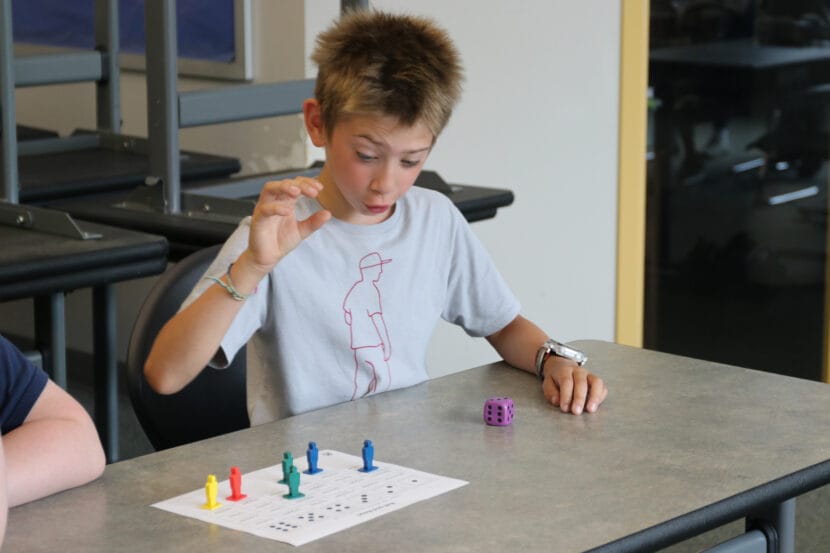
James’ grandmother and guardian, Michele Brainard, said he still struggles with reading, but she’s hopeful he’ll show more of an interest in it soon.
“We’re always trying to find that that one book, you know, that kind of piques his interest,” Brainard said. “Because I keep telling him, when you find that right book, I said, then you’re going to love or enjoy reading,”
On top of summer school, Brainard purchased the same reading software the district uses. While James struggles with reading, his grandmother said he loves math. So she uses math software to incentivize him to practice reading.
“We have set it up to where before he can do the math part, since he loves it so much, that he must do at least 30 minutes over the reading before he starts doing the part he really enjoys and will spend hours doing,” Brainard said.
In an email to KTOO, Astrid’s mother Trisha King said she’s seeing her daughter show more interest in reading and books after summer school.
Sen. Löki Tobin, an Anchorage Democrat, worked on the Reads Act as a legislative aide in 2022. She says the policy has been a great first step in improving outcomes for students. But she hopes the state will work harder to get feedback from educators and stakeholders to improve its implementation.
“It’s hard to know how things are going in our classrooms if you’re not hearing from those who are doing the work and who are working directly with parents and families to get this legislation up off the ground,” Tobin said.
She also said education funding is a big component to ensure schools can effectively teach students.
“Without adequate funding for our public schools, it’s difficult to support quality implementation of policy when you have 20, 30 kids in a classroom and a teacher who is trying to serve the 10 to 15% of her kiddos who are struggling to learn to read.”
Despite having to go to summer school, students got a bit more time off before the school year begins. The Juneau School District delayed the start of school by one day in response to a record-breaking glacial lake outburst flood in the Mendenhall Valley. The school year in Juneau starts Aug. 15.
Students around the state are also headed back to school this week.