Alaska’s state office of emergency management, and their federal counterparts at the Federal Emergency Management Agency, are almost finished doling out disaster aid grants for those affected by August’s record-breaking glacial outburst flood.
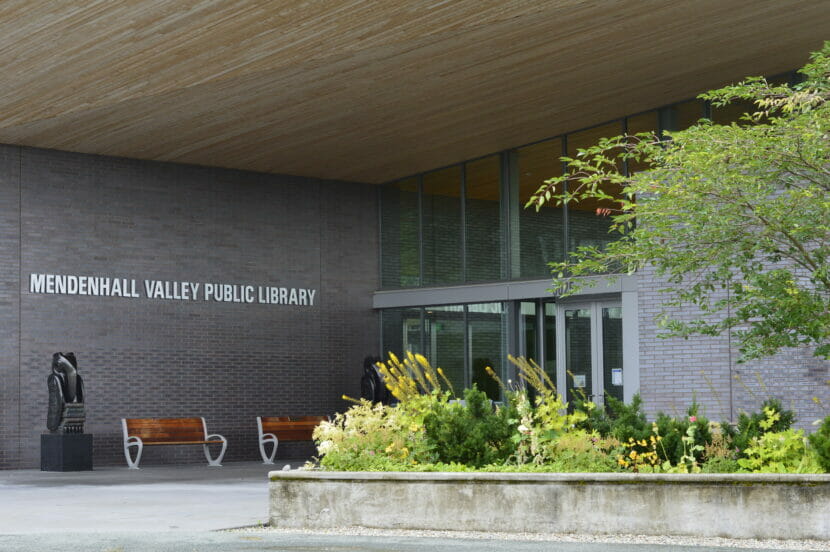
So starting on Tuesday, Dec. 17, the Disaster Recovery Center that’s been operating in Juneau’s Mendenhall Valley Public Library since October will start to focus solely on the distribution of Small Business Administration Loans. They’re generally larger amounts of money and somewhat more flexible than FEMA grants.
Claudia Anderson, a public information officer with the U.S. Small Business Administration, says flood victims should go to FEMA first, but there’s more federal money available for homeowners or businesses that still have repair work to do.
“While FEMA offers this great grant program, sometimes the rebuilding costs and repair costs exceed what they’re able to offer people,” Anderson said. “We offer a substantially larger amount of funding opportunities, but in the form of a low-interest loan.”
State or FEMA disaster grants don’t have to be paid back at all, but interest rates for small business administration loans are still considered very good. They can be as low as 2.813% over a 30-year term for homeowners. For businesses, they typically hover around 4% and for non-profits, around 3.25%. Interest won’t accrue until 12 months after the loan disbursement.
Homeowners who were affected by the flood are eligible for up to $500,000 to repair their property, and both property owners and renters could receive up to $100,000 to replace personal property, including cars that were destroyed by the flood. For businesses or non-profits, it’s up to $2 million.
Another advantage of these loans is that they can be used to pay for measures to protect a home from future floods, like raising the house. Anderson said these loans are also flexible. When the Small Business Administration makes its offer, homeowners can take it or leave it for later on.
“Sometimes the damage that occurs with flooding events doesn’t always appear right away, and if you miss the deadline of these programs, it’s very hard to backtrack and get into them,” Anderson said. “There’s no obligation to take the loan if it’s offered to you, but it does mean that you’re in the system, so that you have the ability to go back if you find out later down the road that the building or repair costs have exceeded what you had to anticipated, or if all of a sudden you have foundational damage that you weren’t aware of initially.”
Anderson says it’s still best to get applications in as soon as possible. The deadline is Monday, Dec., 16th, 2024, but if an application is incomplete or has problems, representatives from the U.S. small business administration will be posted at the library starting next Tuesday.
The center will operate Monday through Thursday from 10 a.m. to 6 p.m. and Fridays from 12 p.m. to 6 p.m. through the first week of the New Year, with closures on Christmas Day and New Year’s Day.