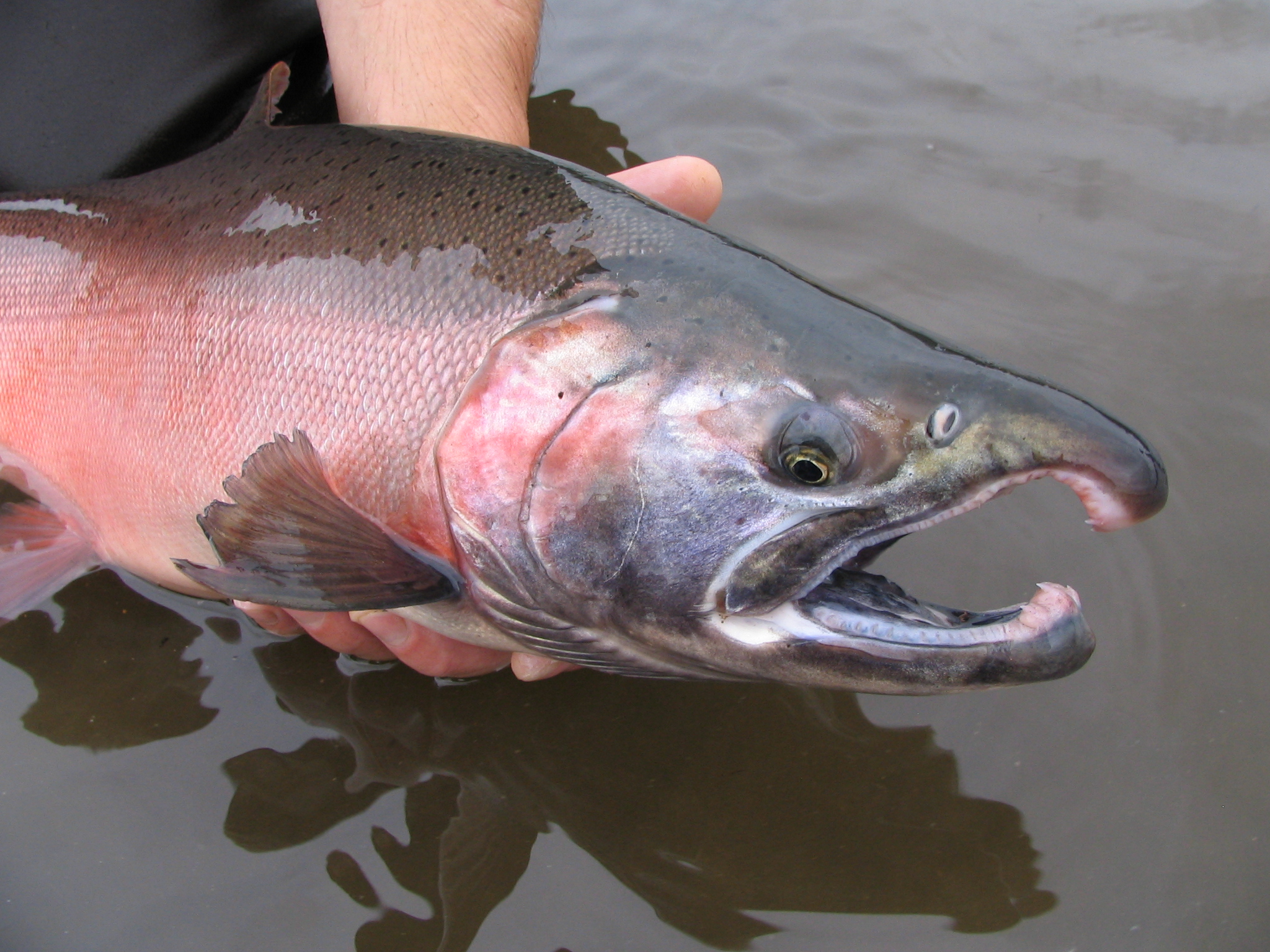
TESLIN, Yukon Territory — Ask scientists about the decline of the Yukon River’s chinook salmon run, and they’ll tell you they know one thing for sure — it’s for real.
After that, it gets harder. Peter Hagen works with the National Oceanic and Atmospheric Administration in Juneau. He says there are all sorts of different possibilities and probably not one single reason why the fish decline or rebound.
Hatched in small, gravel-bedded streams in river headwaters, chinooks remain in freshwater for up to 18 months before heading downstream.
After a few months near river mouths, they head into the deep, cold waters of the Bering Sea, where they make their living for up to eight precarious years before beginning their epic migration back to the creeks where they began.
Research hasn’t yet teased out when and where the problem lies.
Two common culprits — industrial development and increased fishing — haven’t been factors along the river, so many scientists believe the problem is in the ocean.