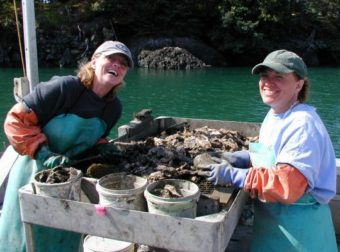
Gov. Bill Walker signed an administrative order in early 2015, creating a mariculture task force in hopes of boosting aquatic farming and fisheries. The task force has been examining all areas of the mariculture industry and will present a comprehensive plan to Walker in 2018.
The 11-member panel has split its resources into five advisory committees over the past year.
Among the many issues the committees have taken on are investment, infrastructure, regulatory, environmental and marketing.
Task force member Heather McCarty explained that the committees’ recommendations will be presented to Walker in spring 2018.
“The advisory committees have some of the task force on them, but they also have people from outside the task force, people who have specialties in various areas,” she said. “We’ve tried to bring in communities, travel groups, academia (and) regulatory groups.”
She said some pieces of the plan are already in action such as SB 172 and HB 300. Both are shellfish hatchery bills that were proposed last year and would allow Alaskans to establish nonprofit shellfish hatcheries.
McCarty expects the legislation to be proposed again.
She added that these developments will make communities stronger.
“We believe diversifying economies, particularly in coastal communities, can have a really positive effect on those economies,” she said, “and kind of act hand in hand with the more traditional marine careers and jobs that people do in coastal communities.”
Panel member Julie Decker, who sits on the investment and infrastructure and public education committees, said the task force is trying to find areas of the state with a high probability of supporting the industry.
“We’re trying to first see what the state has in those areas, what existing infrastructure we have, existing seafood processing plants, ports and harbors,” Decker said. “Things that make sense for hubs of mariculture.”
She noted they also will seek to find “what pieces of infrastructure are missing.” Shellfish hatcheries and seaweed hatcheries are among the most apparent, Decker said.
She said with state funds dwindling, panel members will have to get creative with funding.
Public-private partnerships such as the state’s salmon hatchery program are possible.
Federal monies are another potential source for such a partnership, Decker said. The task force will also work to educate communities on what a developed mariculture industry may provide.
“What that opportunity might look life for them, are they interested, what are the environmental benefits, how might it integrate with what your community is already doing,” Decker said as she explained questions of the outreach arm will answer.
McCarty said a draft plan is expected in the fall.
She added that the public will have a chance to comment on the task force’s work before the final comprehensive plan is completed.