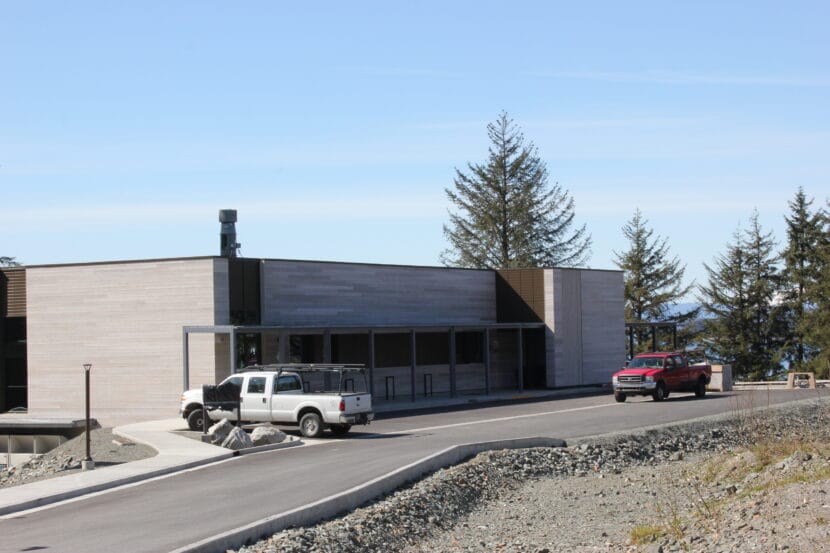
There are still some power tools and a clear plastic tarp scattered in the entryway of the newly constructed science building at the University of Southeast Alaska. Inside, there are shiny floors and a new building smell.
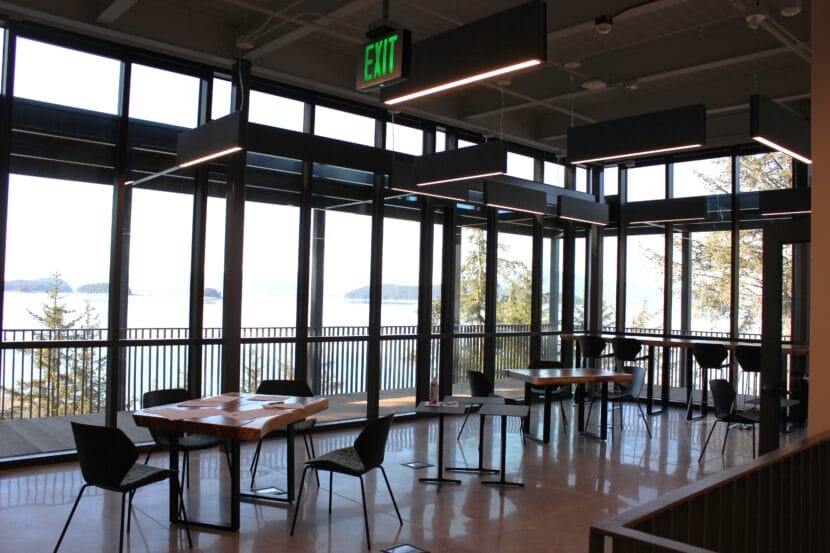
The first room you see after you walk through the main entrance, is a lounge with a few sets of tables and chairs and a giant picture window.
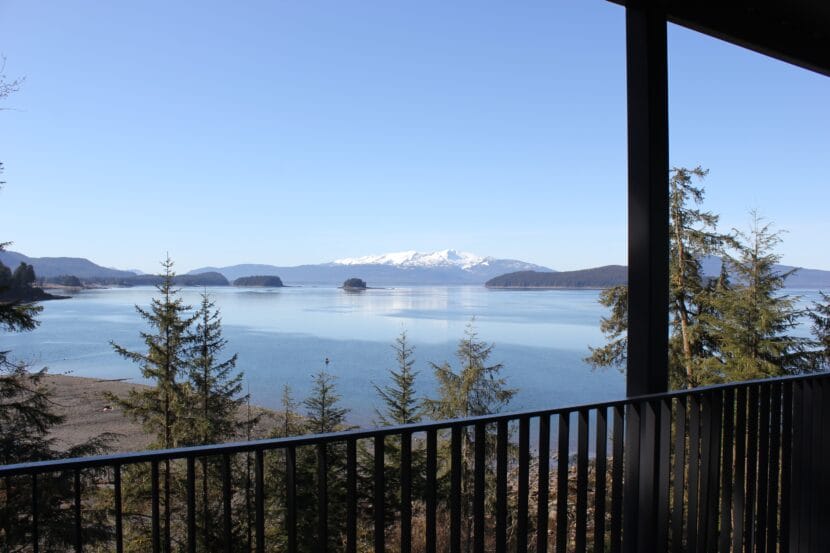
“This is the student lounge, which has a pretty stunning view out over Auke Bay and looking at Admiralty [Island]” said longtime professor of environmental science Eran Hood.
The brand new building is called Áakʼw Tá Hít, which translates to House at the Head of the Bay in Lingít.
In the 20 years since Hood joined the faculty, the department has always been a bit scattered, with offices and classrooms spread across campus. But starting next fall, faculty, researchers, and students in ecology, glaciology, geophysics and more will come together here.
“After many years of waiting, we have our own program space, which will be really fantastic,” Hood said.
The 16.1 million dollar construction project was funded with money from the university’s existing budget, along with reserves for building renewal and profits from the sale of the University bookstore building.
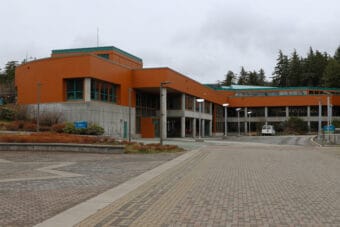
The project has been in the works since 2016, though COVID-19 pandemic delayed construction. But now, the two-story with modern gray wood paneling is nearly ready for people to move in.
It’s right next door to the Anderson Building, which houses the biology department. So the many students who study across disciplines will have an easy walk back and forth. Both buildings are just up the road from the university’s main campus on Auke Lake.
The lounge, with its high ceilings and a big wrap-around deck, will be the main gathering place for studying and group projects.
Faculty, including Hood, are just a few feet away.
“When I come out to have lunch there, I’ll be sitting with the students,” Hood said.
His office is just up the hall, in a row of offices that line one side, and his lab, which will be used for hydrology research, is right across the hall.
It will replace the old environmental research lab, which is a mile and a half away, in the Mendenhall Valley. Hood said that distance has been a challenge in the past.
“If I wanted to go from my office to my lab, I had to get in my car and drive. And if I wanted to have a student working with me, they had to have a way to get out there,” Hood said. “Now what you’ll see is, I can walk out of my office, across the hall and into the lab.”
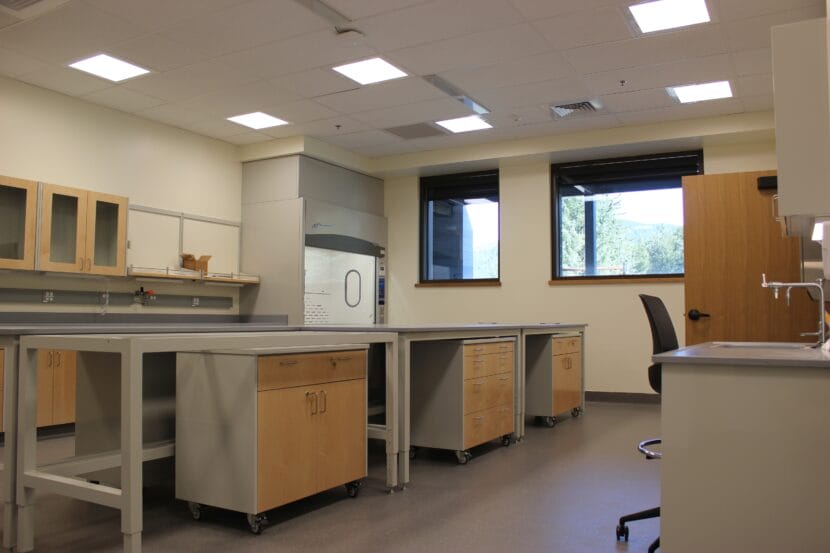
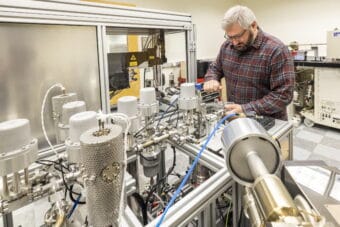
A lab next door holds the university’s research on glaciology and drones. Each lab is equipped with all the basics — benches, fume hoods, and plenty of storage space.
“Both of the lab spaces are very flexible, so as we get new and different faculty in the future, you could use this space for a lot of different kinds of research,” Hood said.
On opposite ends of the building, there’s a wing with offices for administrators and visiting faculty, and another wing with desks for graduate students.
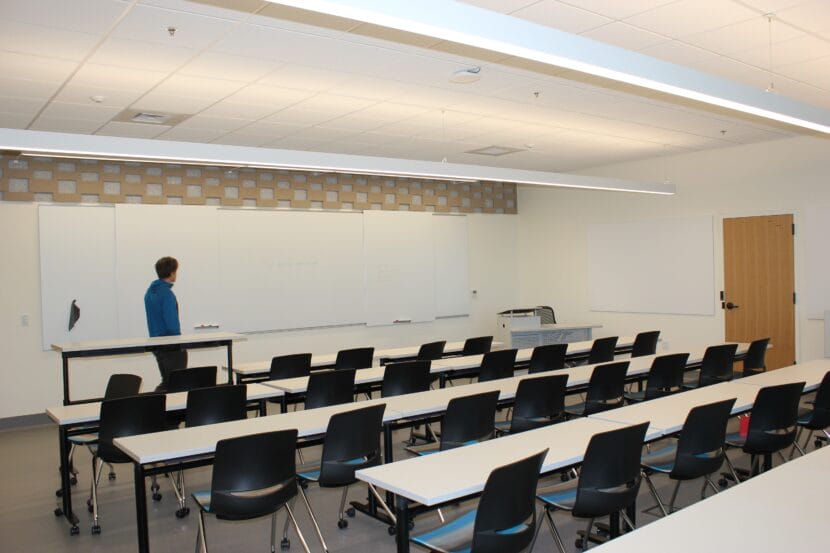
There are also classrooms. On the top floor, there’s a smaller one that holds about 20 students. Downstairs, a 40-person seminar room will hold introductory classes.
The downstairs also holds a lot of extra storage space and a dive locker for students studying marine biology and oceanography.
Almost all of the rooms have huge glass windows and doors, which let in sunlight and views of spruce trees and the beach.
“It really kind of opens to the environment,” Hood said. “Which is just what we were hoping for when developing the space.”
Hood said it will be a great place to study the natural world once students, faculty and researchers move in this fall.