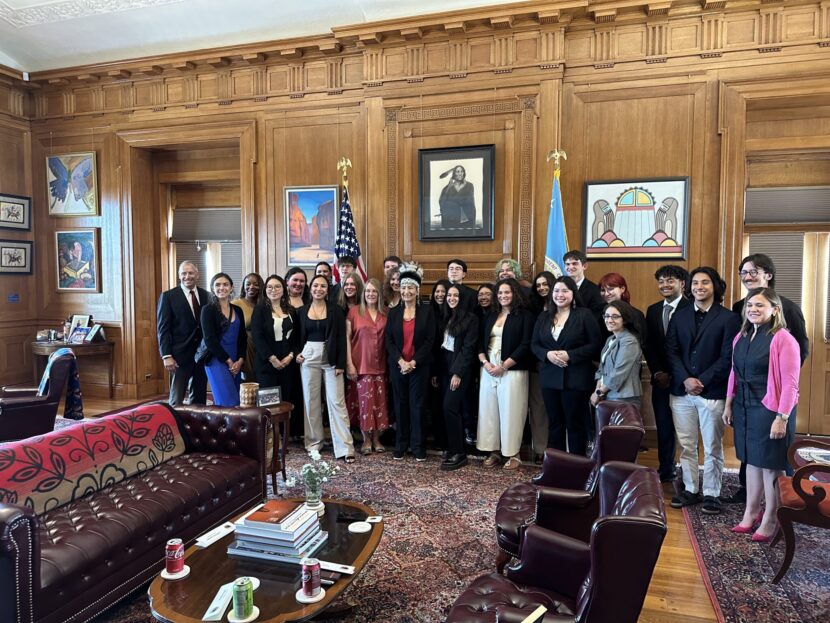
Students from University of Alaska Anchorage’s Alaska Native Science and Engineering Program will have increased opportunities for federal jobs after a partnership with the U.S. Department of the Interior.
The agreement will streamline the application process for Alaska Native Science and Engineering Program students. The program started in the 1990s with one university student, and has expanded to include 3,000 students as early as fifth grade.
Beth Spangler, a senior director with the program, said she’s been working towards this agreement since she joined the group 14 years ago.
“I feel just elated for the students because it is such a great opportunity,” she said. “Our Alaska Native and rural students should be part of the workforce in the communities that they live in. It is just an amazing opportunity for the students and I’m honestly very excited for their futures.”
Spangler joined the program after several years working with the federal government in order to promote diversity in federal jobs in the state.
The agreement, which was signed this month, includes a “direct hire authority,” which means ANSEP students, after working for the state’s university for a set number of hours and obtaining their degree, can be hired non-competitively for Department of Interior jobs for two years. A noncompetitive hire doesn’t have to compete with the general public for a job.
The program has already worked with the Interior Department to place students in internships and full time jobs with the U.S. Forest Service and the Bureau of Safety and Environmental Enforcement. The new partnership should open those opportunities to more students.
The jobs are primarily in Alaska, Spangler said, but can be anywhere in the United States. ANSEP has students in Washington, D.C., with the National Fish and Wildlife Foundation; in Washington state working for Boeing; and in Rhode Island and Texas. But she said she’s most excited about the local possibilities because it’s important to have Alaska Native students be able to work for the federal agencies that operate “in their backyards.”
“It’s going to be not only good for the community, but good for the resources, good for Alaska,” she said. “Our students have the academics, like a master’s or bachelor’s degree in natural resources or whatever their position is, but then they also have the local knowledge. They have an understanding that’s so much deeper.”
The agreement takes effect immediately, but Spangler said in practice it is likely to take off next season, as a result of agencies making fall hires for next summer.
This story originally appeared in the Alaska Beacon and is republished here with permission.