
Voters in Juneau are deciding in this municipal election whether to approve paying a slightly higher sales tax during the tourism season. The money brought in is supposed to help fund recreation.
Ballot Proposition C asks voters whether to approve a 1% seasonal sales tax that boosts funding for the city’s recreational facilities and programs.
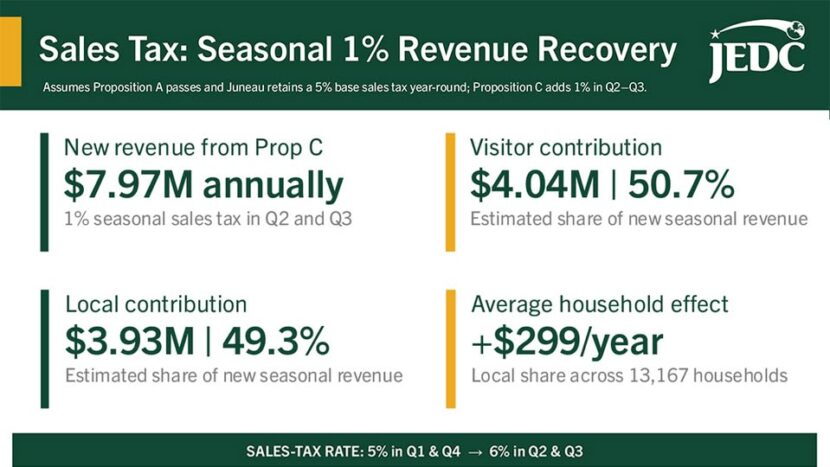
The additional tax is estimated to cost the average household about $300 a year, according to the Juneau Economic Development Council.
Ken Johnson, a shopper at Western Auto Marine, said he is in favor of the proposition.
“As long as it’s just going to the community, because I have a four-year-old, so I enjoy taking him to parks and all that,” he said. “He is very wild, and I don’t mind paying a little extra — it’s fine with me.”
The intent of the ballot question is to keep recreational facilities open.
“It’s about quality of life,” said Michael Cole, one Juneau resident behind the proposition. He’s a dad, a longtime resident and works at Eaglecrest Ski Area. He calls his family super-users of the city’s recreation facilities.
“It’s all about just (a) healthy release for our locals, and it’s not just our youth — it’s our senior citizens,” he said. “It’s just about everybody — in one way or another, uses an outdoor or a recreational facility.”
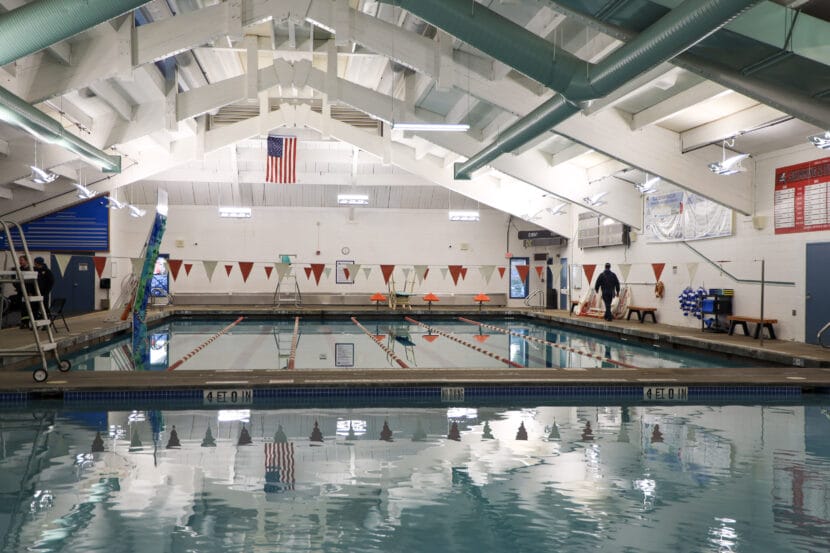
The proposed seasonal sales tax would be in place during the tourism season, raising the tax rate to 6% from April 1 to Sept. 30. Proponents say it’s intended to help fund city facilities, like Juneau’s two pools, Dimond Park Field House, Treadwell Ice Area and Eaglecrest Ski Area. This spring, the Juneau Assembly considered closing or reducing services at some facilities due to a budget crisis.
“We can’t have any of this stuff close. If it does, it’s going to have some negative impacts on our city and on our community as a whole,” he said.
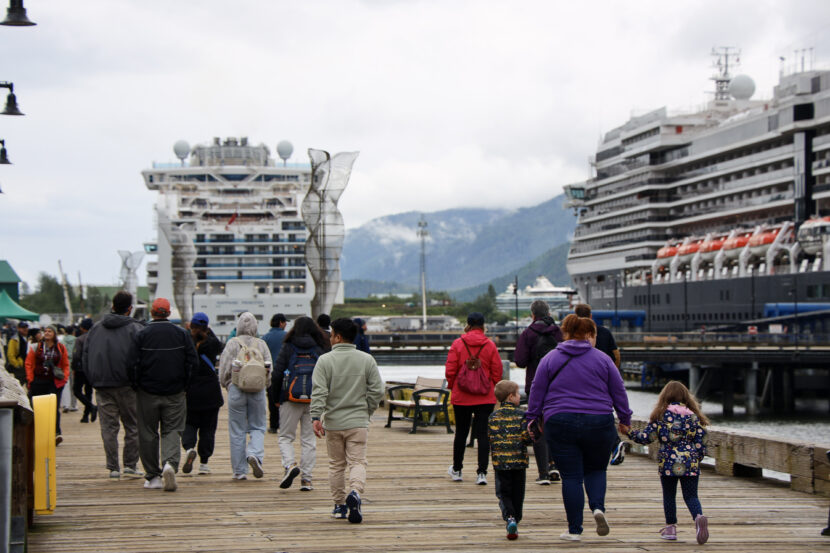
Those in favor of the tax said it would take advantage of the 1.7 million cruise ship passengers that come into town each year. Other Southeast Alaska tourism towns like Ketchikan, Sitka, Craig, Pelican and Skagway have already adopted seasonal tax structures.
According to data estimates, the proposition could bring in between roughly $6.8 and $7.9 million in revenue to the city annually. About half would come from tourists, and the other half from residents.
Not everyone is in favor, like Laura Martinson McDonnell. She owns Caribou Crossings, a local gift shop in the downtown tourism corridor and is a board member of the Juneau Chamber of Commerce.
“When it’s an extra 1% on all of your business operating expenses in a time when all of our expenses have gone through the roof in the last four years, it’s pretty significant,” she said.
Martinson McDonnell said she supports funding Juneau’s recreational facilities — something she and her 9-year-old daughter love to use. But she argues that this isn’t the way to go about it.
“It’s not that I’m anti-tax. It’s not that I have a problem paying tax for the services I love,” she said. “I just think we should be using responsible, equitable, broad-based, progressive tax policy.”
She said she’s also concerned about where that money will go. How and where the money gets spent would be up to the Juneau Assembly.
“The Assembly is constantly evolving and changing, and this is a permanent tax,” she said. “What happens in two years from now if there’s another kind of budget crisis and they decide that money needs to go to something else? What if the Assembly doesn’t value recreation in three years?”
Along with the three questions on the ballot are three open Juneau Assembly seats and two open school board seats. Voting is underway. The last day to vote in Juneau’s by-mail election is Tuesday, Oct. 6.
A previous version of this story included a quote with an incorrect calculation.

