
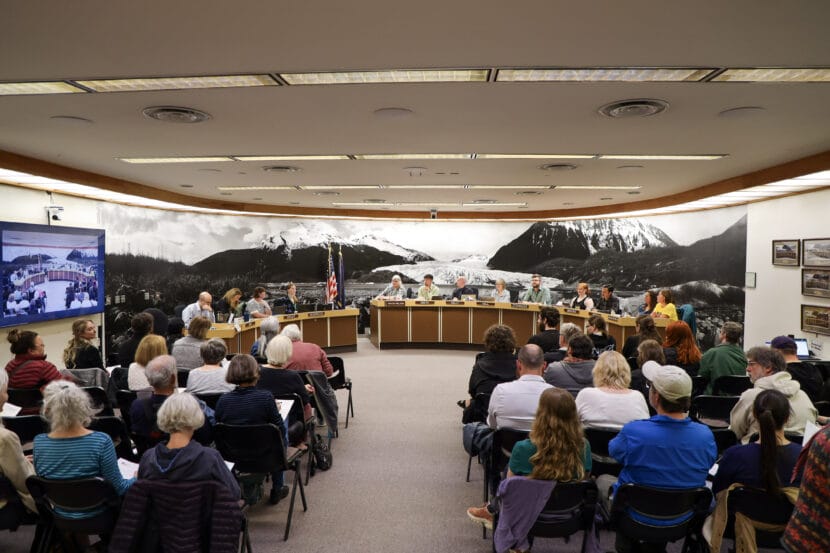
The City and Borough of Juneau has a finalized budget for the next fiscal year — but it didn’t come easy.
Over the past few months, the Juneau Assembly spent dozens of hours debating how to plug a multimillion-dollar recurring budget hole due to the tax exemption on food and utilities and the cap on the city’s property tax rate that voters passed last fall. Those ballot initiatives created a roughly $10-12 million annual revenue shortfall going forward for the city.
Service cuts and facility closures
The final budget closes one city facility and reduces funding to some services — but not as much as originally expected. The talk of this budget season was whether the Assembly would choose to make significant cuts to city services or close some facilities.
Ultimately, the budget the Assembly approved on Monday keeps open Juneau’s two pools, Dimond Park Field House, the Douglas Fire Station, and maintains social service grants. All were on a list of more than 40 city services and facilities up for potential cuts. The Assembly took those topics off the chopping block after receiving a flood of public outcry.
The budget does, however, reduce funding to the Juneau-Douglas City Museum by $261,000 annually, which will result in two staff members being laid off and a drastic reduction in the museum’s hours.
That decision came despite more than a dozen people testifying in support of fully funding the museum. Mary Pat Wyatt said the loss of staff members would be devastating.
“The museum without a director is like trying to lead an orchestra without a conductor, or running a school without a principal, or a town without a mayor,” she said. “I ask that all current staff positions at the Juneau Douglas City Museum be retained, fully funded to keep our heritage and history alive.”
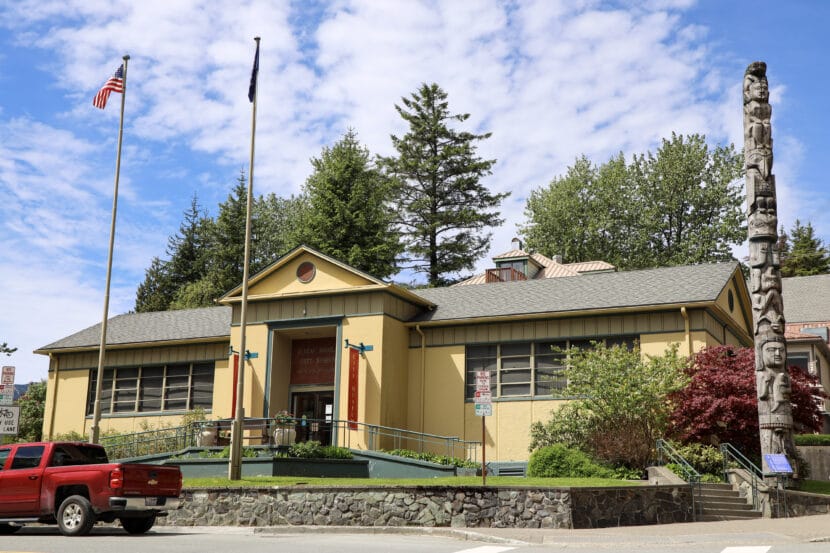
Assembly members Maureen Hall and Paul Kelly attempted to restore the funding to the budget in the final hour, but their efforts were voted down. Hall called the decision shortsighted.
“I do feel like it is disproportionately affecting this one institution, and I think our history is too vital to shutter the doors, especially at this point in our nation’s history,” she said.
Along with the reduction to the museum, the budget also includes the closure and sale of the Mount Jumbo Gym, and a reduction in funding to Travel Juneau, the city’s landscaping budget, the Juneau Economic Development Council, the Jensen-Olson Arboretum. The budget also eliminates an administrative support position in the city’s administration department.
New revenue
The Assembly approved some changes to taxation that are expected to increase city revenue, but by how much is unclear.
The Assembly voted to raise the city’s sales tax cap on single-item goods from $15,000 to $50,000 – with a caveat for vehicle purchases under $50,000. That caveat is that if you buy a vehicle for just under $50,000, you would only pay sales tax for up to $15,000. That means you’d pay about $750 in sales tax instead of $2,500.
The Assembly considered removing the tax cap entirely, which would have brought in close to $7 million in estimated revenue next fiscal year.
However, representatives from Coeur Alaska Kensington Mine and Juneau Auto Mall testified against that, arguing it would disproportionately impact large industrial operations and people purchasing vehicles in Juneau.
“Removing the cap would increase Kensington’s annual tax burden by approximately $5 million, roughly tripling the sales tax we pay today, a significant and ongoing increase that would directly affect operational decisions and long-term investment,” said Steve Ball, the general manager for Kensington Mine.
The Assembly ultimately voted against completely removing the tax cap. According to City Finance Director Angie Flick, it’s unclear how much the change to raise the tax cap will impact the city’s revenue for the next fiscal year.
Future uncertainty
The city is not out of the woods with its budget problems. The budget the Assembly approved relies heavily on savings and shuffling money from other city funding pots, rather than cutting services or increasing revenue, to get out of the red. Assembly member Christine Woll said that’s a problem.
“We have not cut enough. It puts us, the city, in a very precarious place now, given our fund balance size,” she said.
Without any major cuts or revenue increases this year, Woll and other Assembly members cast serious concerns about the next fiscal year. If spending stays the same, the Assembly is anticipated to face another $7 million revenue deficit that will need to be addressed. And that time around, they likely won’t have as much in the piggy bank to fall back on.
“Our fund balance right now is one bad sales tax quarter away from having no funds to deal with our operating expenses, let alone a major natural disaster or other disaster,” she said.
The fiscal year begins on July 1.
