
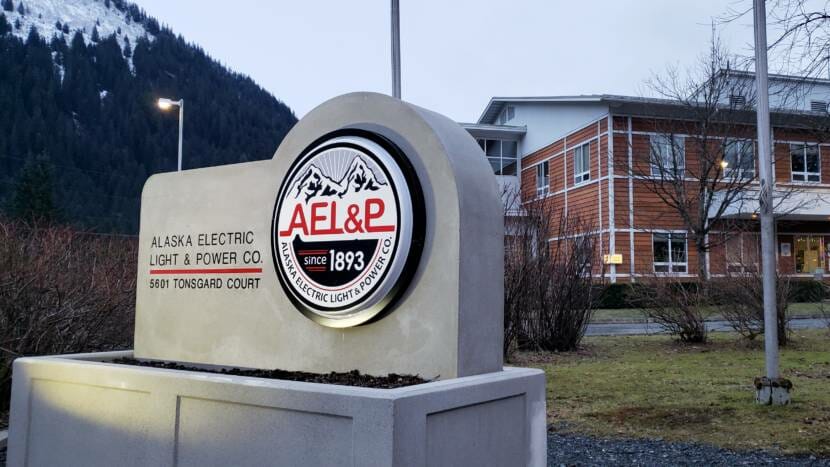
Juneau residents will see higher electricity bills starting next month.
Alaska Electric Light & Power, the city’s only electric utility, filed a rate increase case on Monday with the Regulatory Commission of Alaska to recover costs from infrastructure projects and inflation.
The power company expects the average Juneau household, which uses roughly 850 kilowatt-hours per month, will see monthly bills increase by somewhere between 18 and 20%.
AEL&P CEO Alec Mesdag said the power company spent $65 million in capital improvements since the last increase in 2022.
Roughly half went into replacing the steel pipe that moves water from the reservoir to the powerhouse at the Annex Creek Hydroelectric Facility – located northeast of Thane along the Taku Inlet. The facility supplies around 6% of Juneau’s power. The other half went toward replacing other aging equipment throughout the grid.
Mesdag said inflation has caused equipment to become more expensive.
“A lot of the things that we buy have gone up pretty dramatically,” Mesdag said. “We buy a lot of things that are made of steel, copper and aluminum.”
Prices have spiked for some metals due to President Donald Trump’s tariffs, supply disruptions and geopolitical instability.
Mesdag said the company is aiming to fill a $10 million gap called a revenue deficiency.
He said the electricity rate will rise in two phases. In June, it’ll increase a little more than one-and-a-half cents per kilowatt-hour. Then, next August, it could rise another cent per kilowatt-hour.
It would bring AEL&P’s rate up to nearly 15.99 cents per kilowatt-hour, which is just under the U.S. average that’s hovering between 17 and 18 cents per kilowatt-hour.
“If the commission were to approve this request in full, as we’ve submitted, we would still be paying in Juneau less than the national average for electricity on an isolated grid that is nearly 100% renewable,” Mesdag said
The Regulatory Commission of Alaska’s process for considering a rate increase takes 450 days and includes public comment. The schedule is expected to be announced soon.
The first phase of the rate increase will go into effect before that process concludes.
If the commission doesn’t approve the company’s new rate, and says it must be lower, then customers will get a refund that will, in most cases, come in the form of credit on their account.
