Lawmakers are considering new legislation to increase state funding for Alaska schools, and heard public comment on Wednesday evening that showed overwhelming support for more funding for public education.
The legislation comes on the heels of a historic increase to per pupil student funding last year — after political debate between lawmakers and Gov. Mike Dunleavy resulted in three governor’s vetoes and two override votes by the Legislature.
House Bill 374 would increase per student funding, known as the base student allocation, by $630 per student. The bill would take per student funding from $6,660 to $7,290 — totalling $158.6 million additional dollars for schools next year.
Sponsors of the legislation said they calculated that increase by assessing the current budget deficits of the state’s five largest school districts by student population — Anchorage, Matanuska-Susitna Borough, Kenai Peninsula Borough, Fairbanks North Star Borough and Juneau School Districts are all facing millions in budget shortfalls, and looking at cutting teachers and programs, increasing class sizes and potentially closing schools.
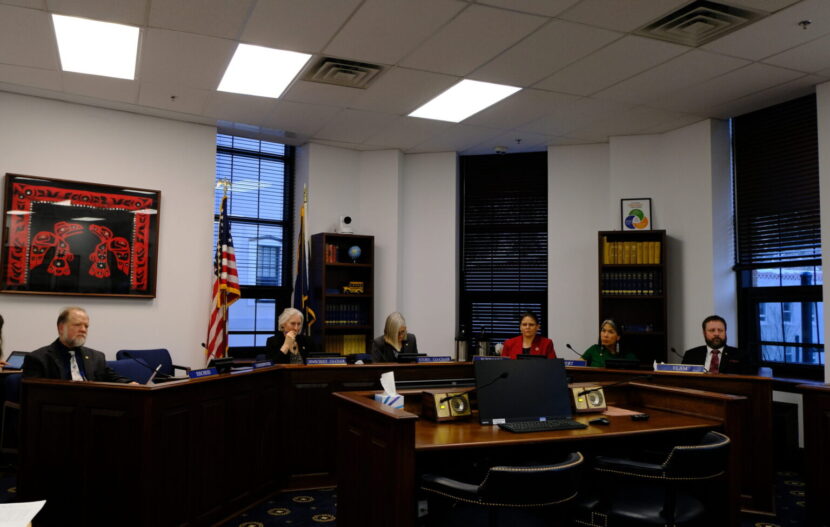
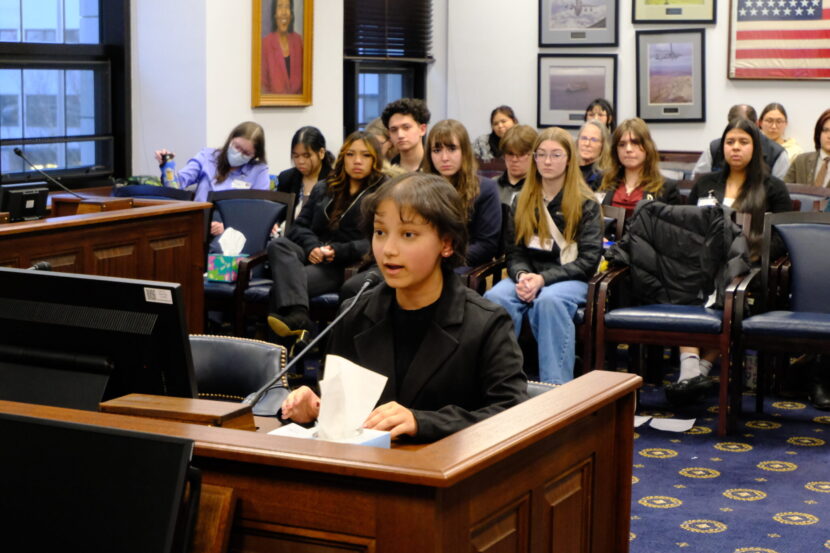
Dozens of Alaska students, parents, grandparents, teachers, nurses and superintendents from across the state called in and spoke in-person at the Capitol to the House Education Committee for two hours on Mar. 11, urging support for the legislation. There were no testifiers against the bill.
Sixteen-year-old Claire Tallis testified in person on behalf of her hometown school in Tok, and as a current student at the state-run boarding school, Mt. Edgecumbe High School.
“My personal experience with the education system has been challenging. When I was attending Tok school, it was blatantly apparent that I would not gain the level of education I wanted. There were constant funding issues, inconsistent hiring of teachers and lowered expectations based on the background of students. This forced me to choose between the best of two bad options,” she said.
Tallis said she ultimately chose to move 680 miles away from family to Sitka to attend Mt. Edgecumbe, which is also experiencing funding and management issues. She said the BSA needs to keep up with inflation.
“When the BSA stays frozen while the cost keeps rising, it feels like my generation is being asked to carry the burden. It feels like our future is being cut at the knees before we even had the chance to stand. Mt. Edgecumbe is my home away from home, and my last option for a fruitful education,” she said. “Please consider this when you make the decision whether or not to fund Alaskan futures.”
Emily Brubaker, a ninth grader at West High School in Anchorage, testified that her district is facing a $90 million budget shortfall, which could mean deeper cuts to student programs and opportunities.
“Countless extracurriculars in ASD, like sports and clubs, are getting completely cut, opportunities that the youth of today will never get to experience. On top of this, educational classes like art and music are being eliminated, as well as the educators who teach them,” Brubaker said. “School districts are doing all of this cutting. They are trying their best, and it isn’t enough.”
Several students and parents spoke about how budget cuts and school closures result in unmanageable class sizes.
“Right now, my school will lose four teachers,” said Audrey Brower, a fourth grader at W. L. Bowman Elementary School in Anchorage. “Which means classrooms will start at 40 to 45 students per class with combos of two to three grade levels. It’s not okay for me and my friends. We can’t even fit that many kids in one classroom.”
Several testifiers expressed frustration — some to the point of tears — that school funding is up for debate in the Legislature each year, rather than considered a state mandate.
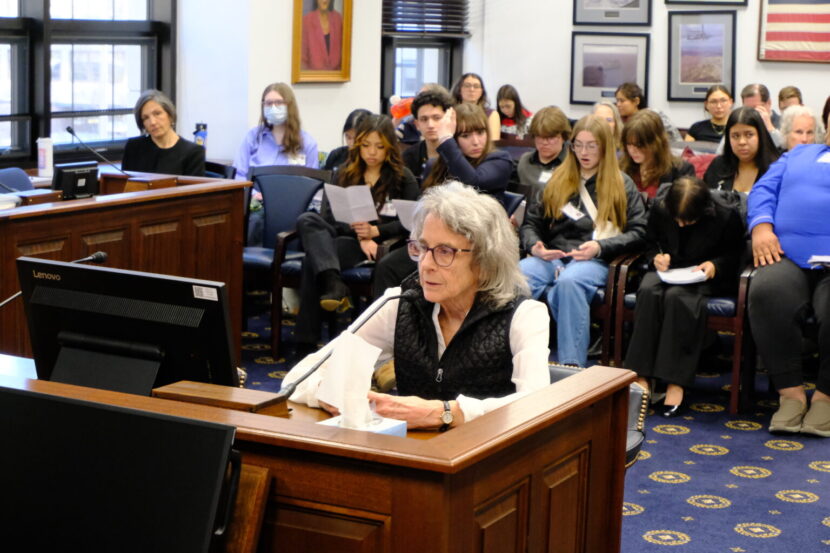
Fairbanks resident Sarah Lewis said she’s frustrated at watching agencies like the Alaska Department of Corrections overspend by millions, while the level of school funding is debated each year.
“Schools are community hubs. They are evacuation points. They are a place where many kids can depend on breakfast and lunch, and they’re even hostels, whether for a single visitor in remote areas, or for several dozen students from everywhere in the state,” she said.
“Our schools and the people who fill them are doing remarkable, important work that keeps Alaskan kids secure, sheltered, fed and informed. They’re the front lines in the system that keeps our kids safe,” she said. “But somehow we support them so poorly that buildings are literally crumbling around them and resources are few and far between.”
Superintendents called in from around the state to share their support for increased funding. They described continually having to make difficult cuts to staff and programs to offset increasing operational costs.
Cyndy Mika, superintendent of the Kodiak Borough School District, said her district is considering how to make at least $1 million in budget reductions ahead of next year — including potential cuts to counseling, nursing, special education and gifted support, instructional coaching and classroom aides.
“Last year, we closed an elementary school, and if our fiscal outlook does not improve, our community is already preparing for the possibility of closing another school in the 2027-2028 school year,” she said. “Stable and adequate funding through the BSA is essential.”
Lily Boron is superintendent of the Haines Borough School District, which serves an elementary, middle and high school, plus a homeschool program. She said the district could not afford a new bus contract this year, continues to struggle with hiring teachers and had to cut its library program. She said she worries about the district’s future solvency.
“We’ve cut, we’ve consolidated, we’ve deferred maintenance, and at this point, there simply is no more breathing room without a BSA increase. Without adequate funding for student transportation, major maintenance and mandated programs like the Alaska Reads Act, our school will not be able to remain solvent,” she sai.
Lon Garrison, executive director of the Association of Alaska School Boards, was one of several school officials who pointed out that last year’s increase was only $20 per student more than the one-time funding schools got the year prior. He said last year’s BSA increase did not fill the inflation gap, where the cost of goods and services is rising faster than state funding.
Garrison said state investment in students is well worth it.
“Ultimately, those student opportunities translate directly into community opportunity and strong schools help communities, large and small, attract families, develop workforces and sustain healthy economies,” he said.
The House Education Committee is now considering the bill. Members of the House majority caucus have discussed spending more on schools since the Alaska Department of Revenue is forecasting that the Iran war will prompt a surge in oil prices and state revenues, but that will be up for debate in the Legislature in the coming weeks and months.