The Alaska Fellows Program cultivates Alaska’s next generation of leaders. It places young professionals in communities across the state, where they work alongside nonprofit and public sector organizations while receiving mentorship, housing and a modest living stipend.
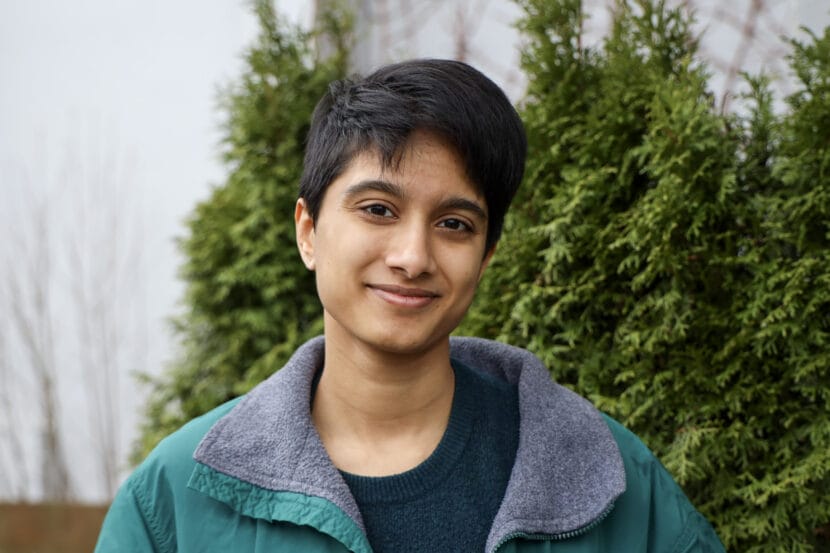
In Juneau, Akanksha Basil is tasked with improving the community’s disaster response.
KTOO’s Mike Lane sat down with Basil to learn about her efforts to strengthen and streamline disaster response coordination in Juneau.
Listen:
The following transcript has been lightly edited for clarity.
Mike Lane: You’re here in Juneau, working with United Way to establish a VOAD. So what is a VOAD? And why does it matter in Alaska?
Akanksha Basil: Yeah, so VOAD, “Volunteer Organizations Assisting or Active in Disaster,” is a group of community organizations from around a particular place that mobilizes in cases or events of disaster to coordinate resources where they need to be going, depending on the type of disaster and the people affected. So you know, who’s going to come in for feeding, and who’s going to come in for shelter. Who’s taking care of, you know, debris removal and construction, and who’s also looking at kind of a long term recovery part of this.
Mike Lane: How would a coordinated VOAD change the way Juneau responds to disasters compared to how things have been working up until this point?
Akanksha Basil: Sure, so a coordinated VOAD would streamline the process a little bit more. So currently, what’s really great about Juneau an Southeast is that we already have an established network of people that communicate and coordinate when disasters strike, but it’s more on an informal basis. But we’d like to make this process a little bit more structured and coordinated, so that we know exactly who to call in case of emergency, no matter what the prior existing connection would be, especially because organizations are changing and there’s turnover and disasters involve different different responses and different needs. So I think that having a coordinated VOAD in Juneau would make the process a lot more streamlined, stress free and fungible and adaptable, in case that was needed.
Mike Lane: And so far, what kind of organizations are currently involved or being recruited?
Akanksha Basil: So we have organizations from all kind of sectors and who take care of all different things, anyone from Juneau Animal Rescue to the food bank and Salvation Army and the Red Cross, various churches around town that already have really wonderful established feeding programs and and mutual aid networks. And I think that this is, this is a process that we’re really trying to make as public as possible. So we are really encouraging public participation, public leadership. We want to get the word out so that people know where to find us, and they know how to get involved. So any organization, anyone’s welcome, because this is a public — it’s a public process.
Mike Lane: So are there resources or support that are still needed to fully launch this particular VOAD?
Akanksha Basil: Yes, for sure. So, right now, we are a small but mighty network. We still have quite a few organizations that we need to get in touch with, reach out to, and we’re trying to get collaboration from a broader, a broader set of the population. So that’s been a major next step to look at.
Mike Lane: From the ground up, how long does it take to build a functioning VOAD?
Akanksha Basil: Oh, that’s a good question. I would say, quite some time, right? It’s definitely a process that we’re learning about every day. It’s changing every day. We’re still really in the initial processes of figuring out how to do this. A lot of my first couple months was researching the community, getting to know people here, making connections, figuring out what past disaster responses have looked like, and we’re just just about, kind of starting to structure structured committees, create internal policy. And you know, actually wanted to mention that we’ve also held a couple meetings so far that have been really productive have spurred some really great conversations. So we’re really happy about that, too.
Mike Lane: And how can people get involved?
Akanksha Basil: Yes, please. I would love for people to reach out to United Way. I’ve got an email address: voad@unitedwayseak.org … I welcome anyone, anyone to reach out and share your thoughts, share your opinions, inquire more about the process. Because we’d love people, more people to be involved in this process.
Mike Lane: Akanksha Basil, thank you for joining us.
Akanksha Basil: Thank you so much. Appreciate you.