Staff from Alaska Marine Lines and the Alaska Marine Highway System discussed EV shipping safety during a panel held by Renewable Juneau, an advocacy nonprofit, on Wednesday.
Electric vehicles have grown in popularity in Juneau over the years, but shipping safety concerns have now made it more difficult for people to bring them to Alaska or send them out for maintenance.
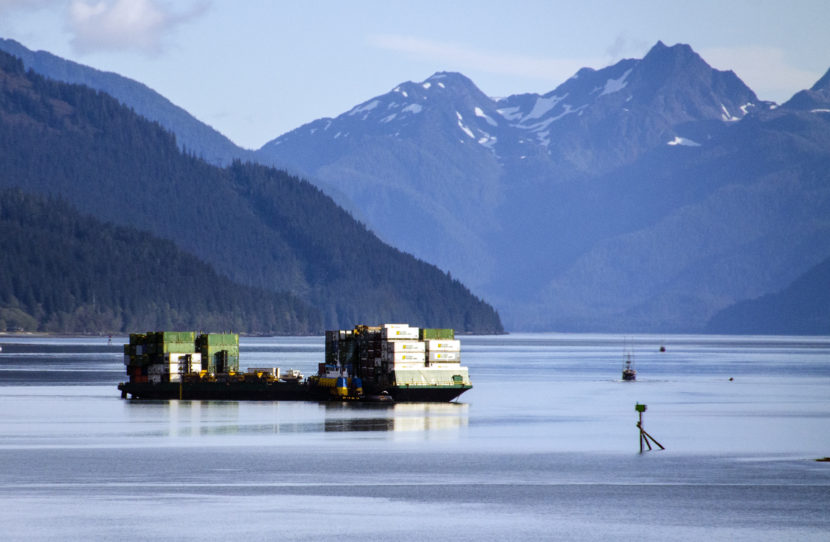
AML stopped shipping electric vehicles to Alaska last year due to the fire risk posed by lithium ion batteries. The decision came after another company’s cargo ship carrying hundreds of hybrid and electric vehicles caught fire in the open ocean off the coast of Adak, burned for days and sank. An AML spokesperson said at the time the company would reassess its policy as industry standards improve.
During the panel, AML President Don Reid said he wished there were reliable safety ratings for the various lithium ion batteries on the market.
“Every manufacturer you talk to wants to tell you that their product is perfectly safe,” Reid said. “And, you know, who are you supposed to believe?”
Reid said he wants AML to be able to ship all vehicles, but he’s spent a lot of time researching the issue and speaking with consultants, and said that shipping EVs that plug-in would be too risky for the company at this point.
“What I need is the confidence that the thing’s not going to catch on fire on the barge. That’s really what it comes down to,” Reid said.
AML was the last barge company to pull EVs off its Alaska shipping routes after Matson and Tote Maritime. Now, EVs can be shipped two ways: on the road system, which doesn’t extend to much of Southeast, or two-at-a-time on the ferry — creating a bottleneck for consumers.
Craig Tornga, marine director for the Alaska Marine Highway System, said people who want to ship an EV on the ferry from Bellingham might wait around three months.
To improve safety procedures, the agency hired a vessel firefighter with expertise in EV battery fires. The procedures include recommending EV drivers not charge the battery too much before boarding, placing EVs in areas of the ship easy for firefighters to access and repeatedly inspecting the vehicles while in transit.
“We have thermal infrared handheld cameras,” Tornga said. “We go around and we — every hour, on the hour — we shoot the battery to see what the temperature is and make sure we don’t see any changes.”
In addition to the handheld cameras, the ferry system plans to install other thermal cameras and purchased high-powered sprayers called Turtle Fire Systems that can flood a battery box to cool it down.
Disclaimer: The panel was hosted at KTOO, with staff outside the news department contracted to produce the event.