Landslides, storm-driven floods, infrastructure-damaging permafrost thaw and intensifying wildfires are among the expensive disasters that scientists link to Alaska’s rapidly changing climate.
Now a state legislator is proposing to levy a 20-cent surcharge on every barrel of Alaska-produced oil to fund programs that respond to and prepare for disasters related to climate change.
Rep. Andy Josephson, D-Anchorage, introduced the measure, House Bill 247, in advance of the legislative session scheduled to start on Jan. 20.
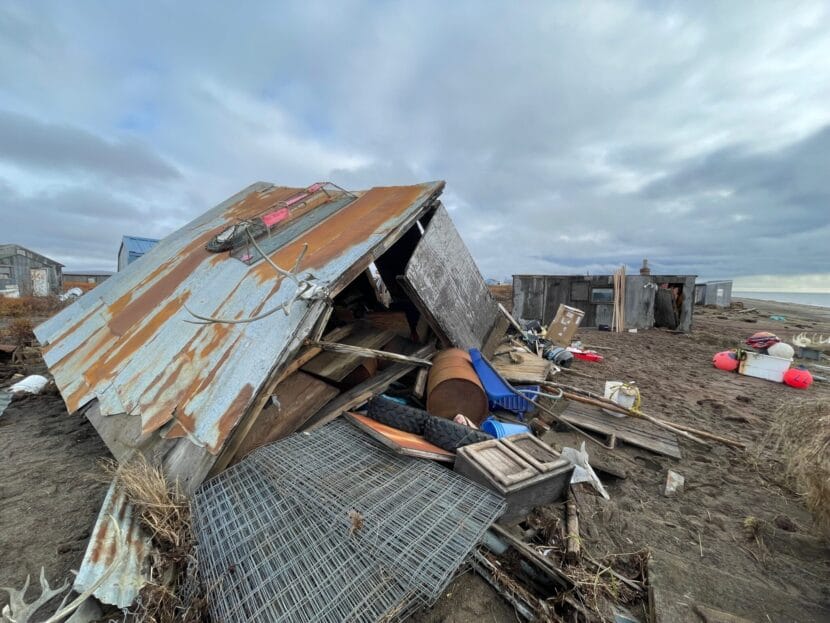
To explain why the state needs such a fund, Josephson ticked off a list of recent disasters in Alaska that imposed heavy costs — and, in some cases, killed people. Those events, which include deadly landslides in Southeast Alaska, landslides that have blocked roads, severe flooding in Western Alaska last October from the remnants of Typhoon Halong and similar damage in 2022 from the remnants of Typhoon Merbok, all had some links to climate change that is caused by greenhouse gas emissions from fossil fuel burning, he said.
“It’s a true statement that a lot of the disaster dollars we need right now are related to climate change. That, in my opinion, is sort of inarguable,” he said.
Disasters like those that have occurred in recent years are expected to continue in the future, he said: “We’re in a new normal.”
The bill is logical from a fiscal standpoint, Josephson said.
As of now, the state’s disaster relief fund is “basically a sub-fund of the general fund,” and it gets whatever lawmakers are able to appropriate, he said. But if there is a new stream of money as proposed by his bill, “we would free up those dollars we’re otherwise spending in the disaster relief fund.”
At 20 cents per barrel, the proposed surcharge would raise about $30 million a year, he said.
In comparison, Gov. Mike Dunleavy in December proposed that lawmakers approve a $40 million appropriation for the state’s existing disaster relief fund. The need could increase from that total if the Trump administration fails to reimburse 100% of the costs for Typhoon Halong relief rather than the normal 75%. The Biden administration in 2022 approved 100% reimbursement for Merbok-related costs.
As introduced by Josephson, the bill would give the Alaska Department of Environmental Conservation oversight over the money generated by the surcharge. It would distribute fund money in the form of grants to local governments and other entities for purposes like disaster response, disaster preparation and upgrades that make infrastructure better protected against climate change.
The surcharge idea has precedent in Alaska. The Department of Environmental Conservation already administers another fund with money coming from a per-barrel fee on oil produced in the state.

After the 1989 Exxon Valdez oil spill, the state began levying a 5-cent-per-barrel surcharge on oil that goes into the state’s Oil and Hazardous Substance Release Prevention and Response Fund. The fund itself was created by the legislature in 1986, with the surcharge established after the disastrous Prince William Sound spill.
That surcharge and rules concerning the fund’s operations have been modified over the years, broadening the purposes for which the fund can be used and boosting DEC’s reporting requirements, according to the department.
In its current configuration, each 5-cent-per-barrel surcharge sends 1 cent into a spill response account, to be used for spills that have been officially declared disasters. The other 4 cents goes into a spill prevention account, which can be used to address spills that have not been declared disasters, among other functions.
In 2015, refined petroleum products were added to the program. The state added a small surcharge, 0.95 cents per gallon, on refined fuel projects sold, transferred or used at the wholesale level, according to the DEC.
The idea of a similar levy to raise money for climate change preparedness and response is not new.
Rick Steiner, a retired University of Alaska marine conservation professor who founded and leads an environmental organization called Oasis Earth, has been advocating for the approach for several years.
“The legislature has so far seemed unable or unwilling to connect the dots between the many climate-related disasters we are experiencing — typhoon Merbok, wildfires, landslides, floods, coastal erosion, permafrost thaw, storm damage, infrastructure damage, subsistence impacts, commercial fishing impacts, etc..– to see the larger picture of the threat and costs these interrelated climate disasters pose,” he said in a letter to lawmakers sent last September. “The money to address these issues will have to come from government.”
In advocating for what he called an Alaska Climate Resilience Fund, Steiner said funding issues have become more pressing because of federal cutbacks.
The climate-response surcharge idea is not unique to Alaska, either.
Hawaii has put its version of a climate surcharge into law, a measure that seeks to raise money for responses to future disasters like the deadly 2023 Lahaina wildfire on the island of Maui.
In May, Hawaii Gov. Josh Green, a Democrat, signed a bill that increases the state’s hotel and lodging tax by less than a percentage point. The increase is applied to the state’s Transient Accommodations Tax, known at TAT. The governor said the increase would amount to an additional charge of about $3 on a $400-a-night hotel room fee. It is expected to generate about $100 million a year, according to state officials.