When it snows, crews fan out with plows, graders, blowers and more to clear the streets in Juneau.
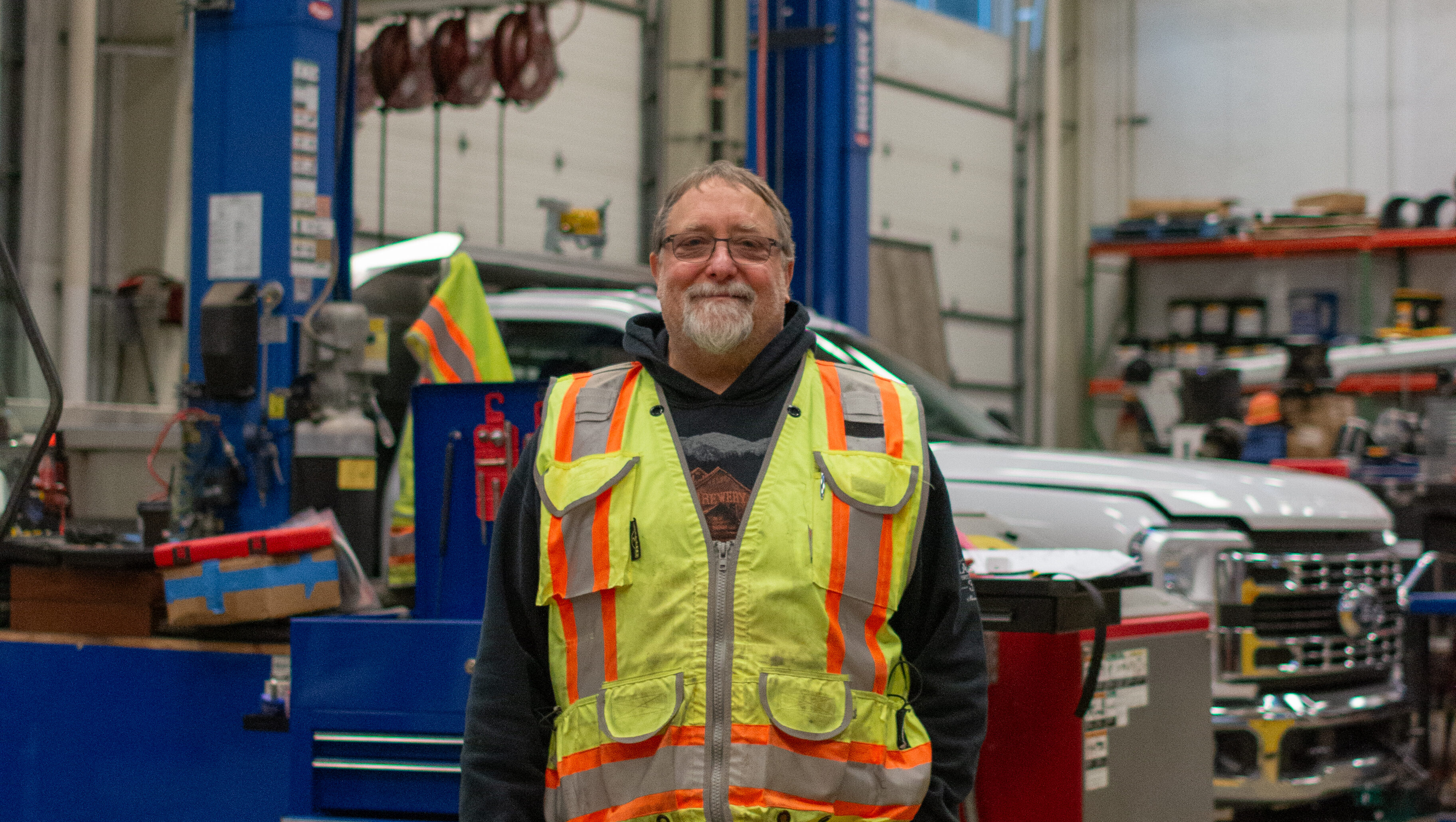
Morning Edition Host Mike Lane recently sat down with CBJ Streets & Fleet Superintendent Scott Gray to learn more about local snow removal operations.
Listen:
This transcript has been lightly edited for length and clarity.
Mike Lane: The city and the state both share responsibility in keeping Juneau’s roads safe and plowed during the snowy months. Can you explain how that works and who is responsible for what?
Scott Gray: Let’s start with CBJ. So CBJ basically takes care of all — pretty much all — the residential areas, downtown area, anything that’s not on the main arterial, like Egan Drive, Back Loop, Loop Road, Fritz Cove and Douglas Highway — that’s all DOT. There’s a number of other smaller streets. They go all the way out the road. They do Engineers Cutoff. They do Nine Mile Creek Road out Douglas. So DOT has quite a few roads locally here in Juneau that are kind of residential too, but we take care of a lot of the residential areas, more populated areas.
Mike Lane: So what does a typical snow removal day look like for your department?
Scott Gray: We have a town crew. The town area crew comes in at 1 o’clock in the morning and they get off at 9 o’clock in the morning. Then we have another crew that comes in 8 in the morning, and they get off at 4 p.m. So we stagger them. We have two guys that work four tens, so they’ll work Sunday through Wednesday, Wednesday through Saturday, and they work from 5 o’clock in the morning until 3 in the afternoon.
Mike Lane: What equipment do you use and or need for the job? And how has technology changed when it comes to snow removal in Juneau?
Scott Gray: Well, so we use graders a lot. We also have loaders with bull blades, and they come from, you know, like 12-foot bull blade to 14 feet, and they’re heavily chained up, and they can go anywhere. They’re pretty amazing pieces of equipment out there. And we have 10-yard trucks with plows, belly blades. We have blowers, so when everything’s all calmed down, hopefully we can go through the neighborhoods. We can blow the big berms out of the way. We have a contract with multiple trucking companies here in town for hauling snow, because a lot of our trucks are already outfitted with sanders, and unless we have a big lull in between storms, we don’t pull those sanders out.
Mike Lane: What do you recommend as the best strategy for residents to deal with the berms?
Scott Gray: You really need to think about snow placement. So when you shovel your driveway, the best way to do it is to put that snow up in your yard or somewhere where the plow can’t get a hold of it again.
Mike Lane: What about sidewalks? Whose responsibility is it to keep those cleared?
Scott Gray: Well, actually, it is the property owner’s responsibility to clear the sidewalks, and we understand that isn’t doable in a lot of areas. There are some people out there, though, that are really good about, you know, cleaning up their sidewalks, and I have to give them kudos for that. It’s a lot of work.
Mike Lane: How do you plan for back to back storms?
Scott Gray: That’s a tough one, you know? I mean, we try to keep our equipment up and running. We have a whole fleet department, you know, that takes care of us and other departments. The Fleet department, they take care of 260 pieces of equipment and vehicles. So we, we try to go through all the equipment in between storms, so we’re ready. So when it does hit, we’re good to go.
Mike Lane: Where do you put all the snow that you remove from, from neighborhoods, etc.?
Scott Gray: So we have multiple areas that we pull, or we we haul the snow to, in the Valley. We also have an area in Lemon Creek where we haul snow to. And then we also have an area out at Thane.
Mike Lane: What should people do when they encounter a plow or grader on the roads?
Scott Gray: You know, give them room. Give them space. A grader only does 22 miles an hour, but that piece of equipment, it takes a lot to get it stopped on a slippery road. So give them space. Their visibility behind them is none.
Mike Lane: Now, Scott, you’re the superintendent for CBJ streets and fleet, and you have quite a few people on your teams in staggered shifts. Do you have a full boat of employees? Or are you still looking for somebody?
Scott Gray: We currently have two positions that are open. We have an operator one position, and it’s a flex position. And then there, then we also have a seasonal position.
Mike Lane: So I would assume that if somebody wanted to apply for either of those positions, they would go to juneau.org and do that through the website. Okay, excellent. Is there anything you’d like to add to this?
Scott Gray: Well, I’ve got to say, my team is out there doing a great job, and they’re clearing the roads. I appreciate them, and I couldn’t do my job without them.