Listen to this story:
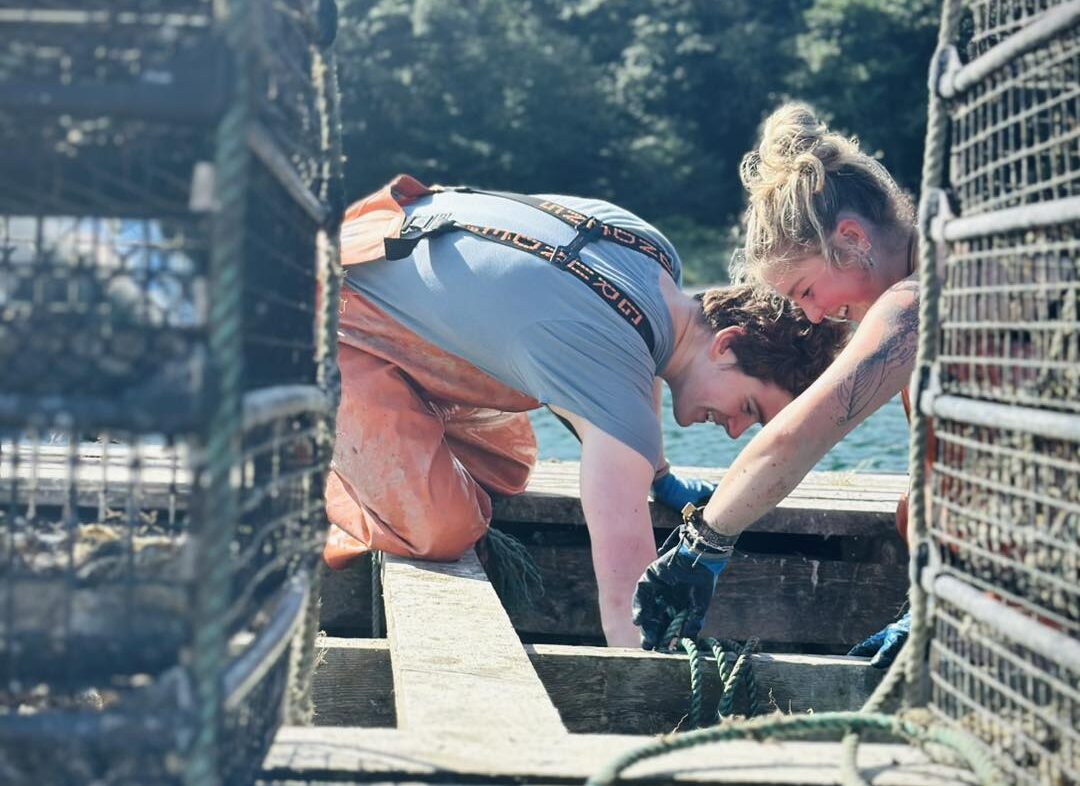
In Bridget Cove, Meta Mesdag grows thousands of oysters arranged in rows of floating mesh bags. She owns Salty Lady Seafood Co., the only Pacific oyster farm in Juneau.
Some years, naturally occurring toxic algal blooms have shut down her farm for weeks at a time. That motivated Mesdag to ask researchers: Can she predict when it will happen?
“It’s such a mystery,” she said.
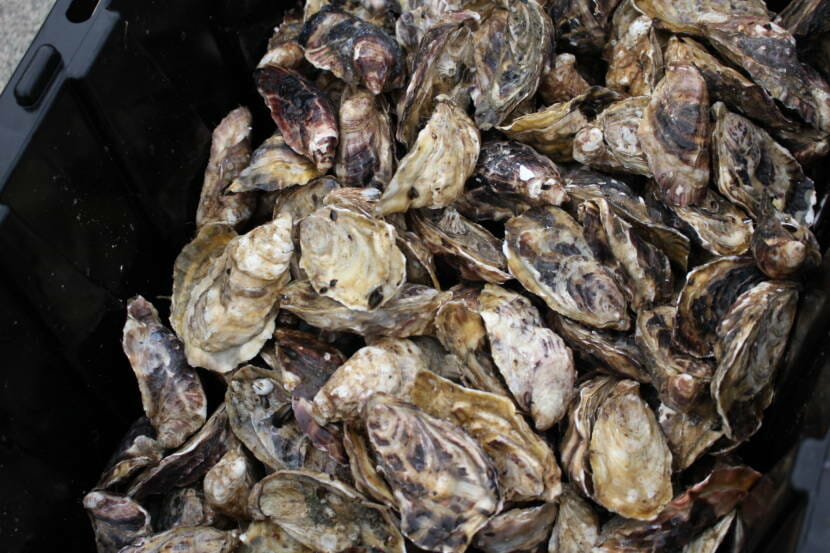
On Mondays, Mesdag takes samples of her oysters and sends them to the state lab in Anchorage to test for toxic algae called Alexandrium catenella. The algae produce a neurotoxin that builds up in shellfish when they eat it. Just one milligram can kill a person. Testing is federally regulated.
If the test comes back clean, she harvests. But if the oysters test over the FDA limit for the toxin, the farm shuts down.
In 2023, Mesdag said she had to shut down for half of her 20-week harvest season.
“When you’re not making any money, but you’re spending money on labor, that can be really expensive and hard,” she said.
Since the farm couldn’t sell oysters at the time, she said she lost clients and had to lay people off. Once a closure is in place, the farm has to pass a series of tests to reopen.
“We just have to wait, and we don’t know how long it takes,” she said.
That loss of sales isn’t great for business.
The federal government is invested in boosting mariculture in Alaska’s waters, and there are still questions about how the environment here affects the health and quality of oysters. The state is invested in those questions too – about a decade ago it set a goal to grow Alaska’s mariculture into a $100 million industry by 2040, with 40% of that revenue coming from oysters.
Researchers studied Mesdag’s oyster farm between 2021 and 2023 to understand the environmental conditions there and what it might say about the challenges and opportunities for growing shellfish in Southeast Alaska. So far, 20 oyster farms have permits in the region.
The study had a humble start. Mesdag’s question about harmful algal blooms landed on Courtney Hart’s desk when she was studying paralytic shellfish poisoning as a graduate student at the University of Alaska Southeast. Now she’s a crustacean shellfish program manager with the Port Gamble S’Klallam Tribe in Washington.
“The first year, I was just trying to figure out if there was an easy way to monitor for Alexandrium or harmful algal blooms on her farm so I could help warn her essentially when a bloom was coming,” Hart said.
But she hit a dead end.
“We didn’t really solve that problem,” she said.
Sometimes the researchers would detect the toxic algae in the water and not see it in the oysters. Other times they’d see it in the oysters but not the water. Hart said the problem is not unique to Alaska — harmful algal blooms are notoriously unpredictable.
“Whether that bloom becomes toxic for shellfish really depends on so many factors that scientists have been studying for a long time and haven’t quite pinned down,” she said.
But Hart said the study morphed when NOAA researchers joined. They wanted to answer a bigger question: What environmental conditions impact the overall health and quality of oysters in Southeast Alaska?
The scientists found that the spring phytoplankton bloom provides oysters a feast for only a short period, and they practically starve over the winter.
“Often it may mean that it takes three years for your oysters to reach the right size, versus just two years, which is more typical down here in Washington,” Hart said.
The research team also looked at salinity. In the summer, during the primary harvest season, freshwater flows into the cove from melting snow and ice, making Mesdag’s farm less salty. Calm seas can prevent the freshwater from mixing into the saltwater below.
When that happens, Mesdag said she can taste the difference — sometimes her oysters aren’t briny at all.
But there are benefits too. The consistently cold water prevents oysters from spawning, so they retain high levels of lipids — healthy fats that make for a high-quality oyster.
“As far as health of an oyster for humans, it’s good,” Hart said.
While environmental conditions play an important role in how the industry develops, Bobbi Hudson said reaching the market is key.
Hudson is the executive director of the Pacific Shellfish Institute. She splits her time between Washington state and Gustavus and is working with Southeast Conference, the region’s economic development agency, on an upcoming report about investments in the mariculture industry.
“Alaska can have tremendous goals, but at the end of the day, if there’s not a market for those products, or a really strong market for those products, they’re not going to be able to reach those goals,” she said.
She said that scaling up production, setting up cold chain distribution networks and making paralytic shellfish toxin testing more efficient could help Alaska’s shellfish farms grow.