Listen to this story:
Thunder Mountain Middle School sits beside Mendenhall River, which has surged over its banks and devastated homes in the Valley twice over the past two years. Floodwaters came close to inundating the school last year.
Eighth grader Vivian Esmiol just learned why.
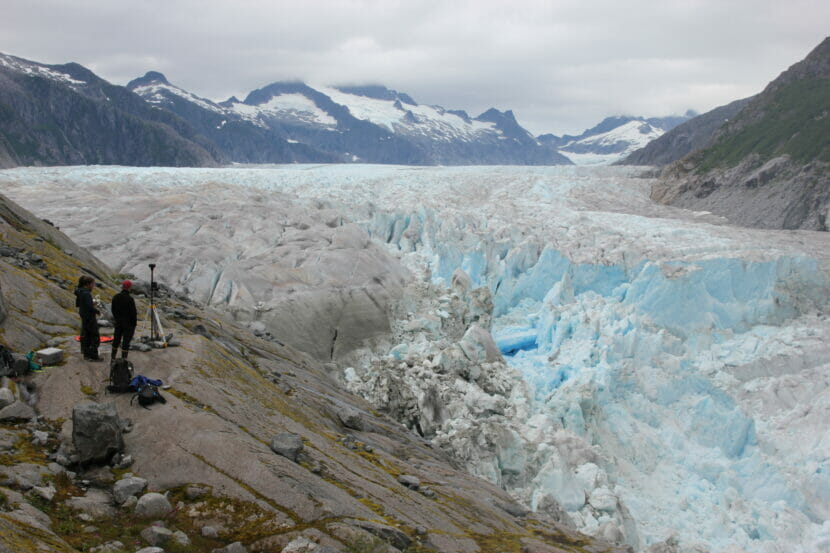
“The root problem is, well, it’s the Suicide Basin, which is between the Mendenhall Glacier,” she said. “It’s like a little area where water can build up, and the reason why it formed in the first place is because global warming, as we all know, has been melting down the glaciers.”
She described how rain and glacial meltwater collect in the basin over the spring and summer, causing pressure to build up against the ice.
“Then, at once, it can burst through, like, an entire large amount of water,” Esmiol said. “That’s how these floodings are happening and why they’re happening yearly.”
She learned all of this in Jess Stanley’s Earth science class. Most students said they didn’t know what a glacial outburst flood was before taking the class.
“I came in absolutely clueless,” Esmiol said. “I’m surprised I didn’t even know about this stuff in the first place.”
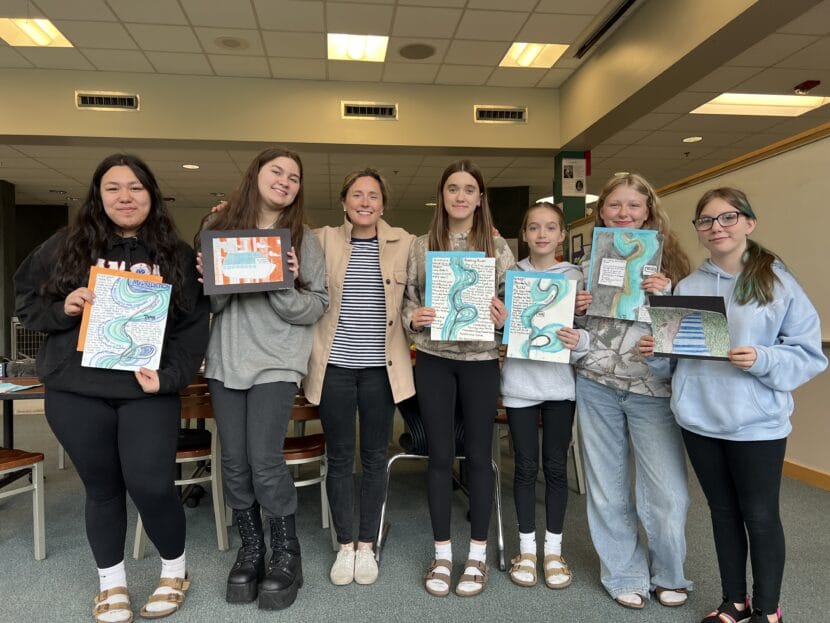
Now, the students know all about the science behind how it happens, and what’s being done to protect their school and neighborhoods. They mapped the river, plotted rainfall and snowpack and learned about how the melting Mendenhall Glacier affects downstream communities. Local scientists even visited their class and walked them down to the river.
Stanley said this was her first year teaching Earth science at Thunder Mountain Middle School. Her goal was to engage the students on a topic that was close to home.
“I just wanted to have an opportunity for the kids to learn something place-based, something that’s here — literally in the backyard of our school,” she said.
That approach to teaching about the climate clearly made an impression on the students. Allie Simonson is a seventh grader in the class.
“I think it’s really cool we get to learn about something that’s happening right now. Because in school, usually you learn about stuff that’s gonna happen in the future or happened in the past,” Simonson said.
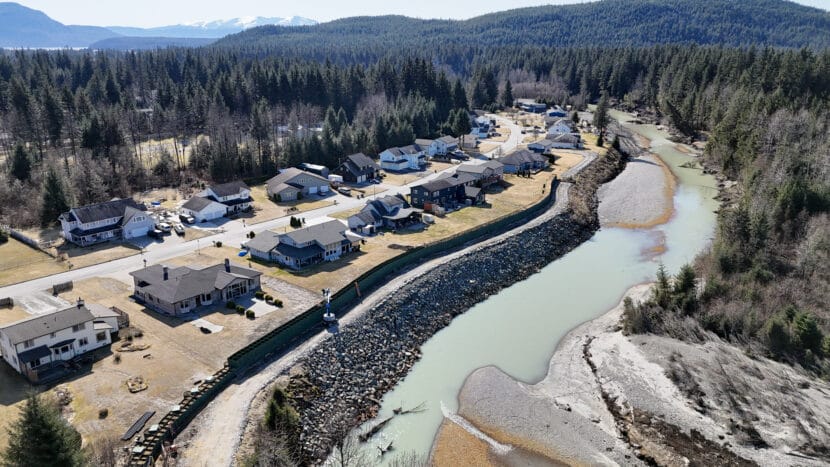
Now, when the students gaze out the big picture window in the common area at the end of the hall, they see bulldozers and a huge pile of sand by the river. The city is extending the levee further downstream to protect their school alongside several businesses and homes from possible floods that could be higher than those in the past.
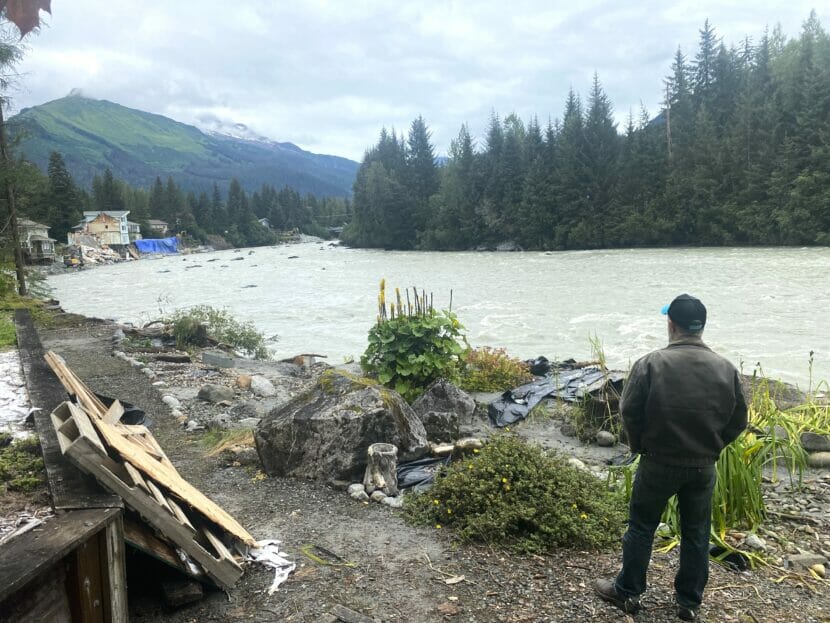
Stanley said a row of trees is getting chopped down near the track and a gravel road has gone in for heavy machines to build the HESCO barriers that make up the levee.
Ryder McMillan, an eighth grader, said the class learned about that project, too.
“We talked a lot about HESCO barriers and how they’re being built,” he said. “The most interesting fact that I learned was that they’re really expensive to build, and you wouldn’t assume that because … you think they’re just like, little green blocks with a bunch of sand in them.”
In their notebooks, the students sketched HESCO barriers, including the small outflow pipes to drain rainwater. They also wrote their lingering questions about glacial outburst flooding — some that adults don’t have answers to yet.
“Nobody really knows what we’re going to do to permanently fix the solution with the Suicide Basin flooding yet,” Esmiol said. “Of course, we have those HESCO barriers up. But besides that, people are still working on it. People are still making ideas, and that’s going to take a while.”
In the meantime, Esmiol said people should try to plan for flooding. For the last two years, the major outburst flood has occurred during the first week of August.
The students are taking what they’ve learned beyond the classroom. They’re making posters about how Valley residents can prepare for floods, featuring QR codes that link to more information. They plan to tack them up around town this summer. The kids say to pack an emergency kit, sign up for the city’s emergency alerts, and when the floodwater comes, don’t swim in it.