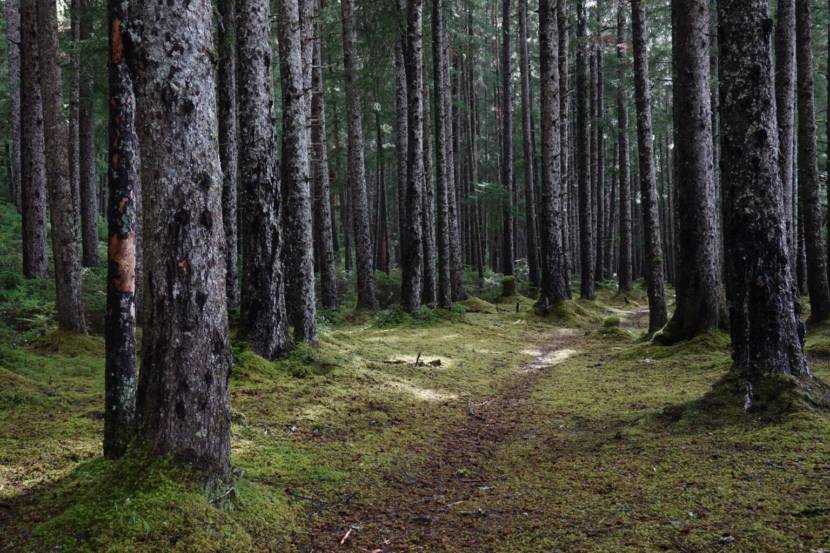
The U.S. Forest Service has completed assessment reports on over 20 topics that will inform how the Tongass National Forest will be managed in decades to come.
The last comprehensive plan for the Tongass was done in 1997. There have been a few amendments since then, but the plan is still missing a lot about the way the forest is today.
Barb Miranda is a spokesperson for the U.S. Forest Service.
“Our economic fabric has shifted from timber to tourism,” she said. “The reason why we are doing a plan is not just because we’re required to, but everything’s changed in the last 25 years.”
The assessments are a comprehensive look at what the federal agency knows about the Tongass now and will help inform the new plan. They cover timber, energy and minerals to subsistence and the status and uses of the land. Nearly all assessments mention climate change as a future challenge. For example, the assessment on subsistence cites salmon as an “integral part” of both salt and freshwater ecosystems, but their population can be affected by numerous climate-related factors.
Another new topic in the plan is carbon stocks. It’s the measurement of how much the trees and soil can store carbon dioxide, which is a greenhouse gas that contributes to climate change. Human activities produce a lot, but the 17-million-acre Tongass can store a lot.
The assessment says carbon and carbon stewardship must be part of Tongass land management.
“It’s not going to be easy, there’s a lot of competing interests on the Tongass,” Mirada said. “It’s a vast forest and, of course, a lot of people have, you know, really particular interests in a particular area, because it’s our backyard, and we’re so fortunate to have it as our backyard. But you know, we’re looking for those sweet spots where we can all agree.”
Another area that the old plan didn’t detail was Indigenous knowledge. The Forest Service wants the new one to have more input from the Tlingit, Haida and Tsimshian, who have been living in the region for thousands of years. The new assessment says every part of the Tongass is associated with Native Alaskan tribes.
To prepare the new plan, the Forest Service met with a few dozen communities in the region, sharing their latest reports on the status of the Tongass. Altseen Esther Reese is the tribal administrator for Wrangell. She said the Forest Service has done “a wonderful job” with outreach this past year.
“They brought a tribal liaison to town and just really went into depth on what the tribal priorities are for our specific community and the lands of the Shtax’heen Kwaan [Stikine River People] and what we want to see included in that 25-year plan because as the original stewards of this land, it’s very important that our voice be heard,” Reese said.
She said there are many issues the tribe wants to collaborate with the federal government on, including addressing climate change and transboundary mining.
Wrangell suffered a landslide that killed six people in 2023. Reese said they’d like to create an early warning system for landslides and other natural disasters. They’re also concerned about upriver mining across the border in Canada.
“So we talked about transboundary mining issues,” Reese said. “We talked about fisheries restoration. We talked about stream monitoring, we talked about mapping plans. So it’s been a good collaborative relationship.”
The Forest Service expects the overall comprehensive plan revision to take three to five years. This spring, they plan to revisit Southeast communities to hear the details of what the new plan should include.
They want feedback on the new batch of assessments, which can be found on the Forest Service’s website. Comments on those are due Feb. 24.