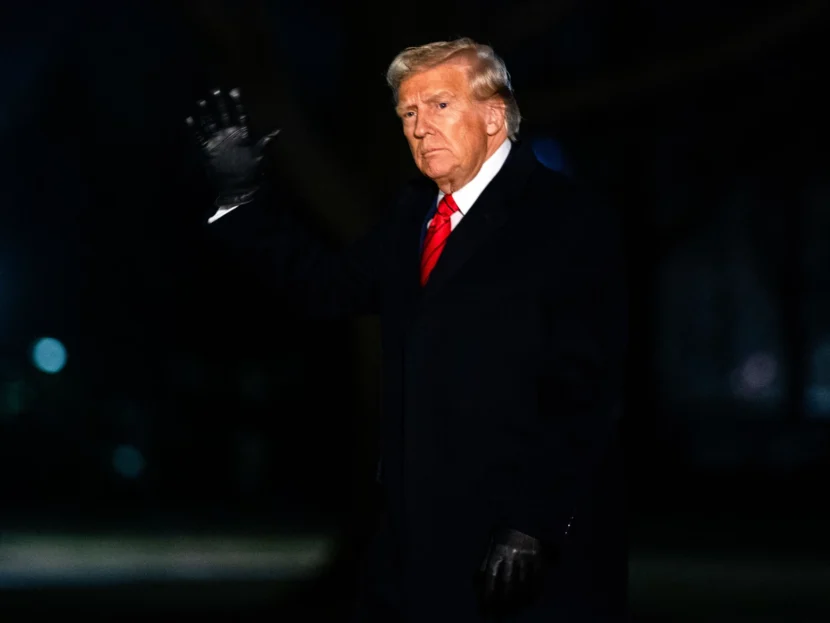
A federal judge has temporarily blocked an effort by the Trump administration to pause federal payments for grants and other programs, suspending a plan that caused widespread confusion on Tuesday.
The order by U.S. District Judge Loren L. AliKhan ensures that federal agencies, states and other organizations that receive money from the federal government should continue to receive funds beyond a previously set deadline of 5 p.m. ET.
“This is a sigh of relief for millions of people who have been in limbo over the last twenty-four hours as the result of the Trump Administration’s callous attempt to wholesale shutter federal assistance and grant programs that people across this country rely on,” said Skye Perryman, president and CEO of the group Democracy Forward, which led a legal challenge to the policy.
The challenge included the groups the National Council of Nonprofits, the American Public Health Association, Main Street Alliance and SAGE. The judge’s pause on the order is in effect until Monday, Feb. 3.
What the order said
The Office of Management and Budget memo, obtained by NPR, had said that a temporary pause in funding would take effect at 5 p.m. ET Tuesday, but a senior administration official told NPR that the pause could be as short as a day if an agency determines its programs are in compliance.
The official said the directive should not be interpreted as a full funding freeze. The official, who was not authorized to publicly discuss the internal memo, said that agencies are supposed to review their grants, loans and programs to ensure that they align with the new administration’s priorities.
Administration officials have insisted that the impacts are misunderstood, but the actual text of the memo is far-reaching and the follow-up guidance has been vague. On Tuesday afternoon, the White House issued a fact sheet that said “the pause does not apply across-the-board” and that “any program that provides direct benefits to Americans” — like Social Security, Medicare and food stamps — “is explicitly excluded.”
The memo followed dozens of executive actions signed by President Trump over the past week. Those documents included calls for reviews of various programs and funding. Trump has explicitly said all DEI programs should be halted, for example, and is generally pushing for more government efficiency and less spending by the federal government.
The new administration is also seeking to make broad changes to the federal workforce.
Critics call the demand for a funding freeze unlawful because Congress has already approved the money to be spent, but the administration is arguing that this action is not full impoundment — and instead a temporary review.
Court challenges to the order are growing
The spending memo quickly drew legal challenges on Tuesday.
The nonprofit organizations that won the temporary stay had claimed in their filing: “The Memo fails to explain the source of OMB’s purported legal authority to gut every grant program in the federal government; it fails to consider the reliance interest of the many grant recipients, including those to whom money had already been promised; and it announces a policy of targeting grant recipients based in part on those recipients’ First Amendment rights and with no bearing on the recipients’ eligibility to receive federal funds.”
Several states, including New York, also signaled plans to challenge the policy in court. New York Attorney General Letitia James wrote on X: “These chaos cuts jeopardize resources that millions of Americans rely on.”
Confusion and concern from providers
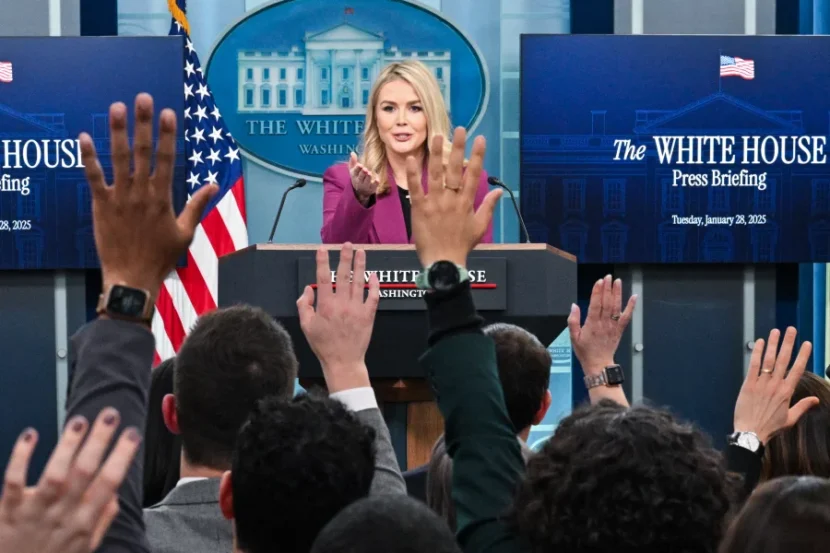
The order stirred confusion among the public, across government agencies and in Congress.
Oregon Democratic Sen. Ron Wyden said his staff confirmed that Medicaid spending portals were down in states across the country Tuesday, but White House press secretary Karoline Leavitt wrote on X that the “White House is aware of the Medicaid website portal outage. We have confirmed no payments have been affected — they are still being processed and sent.”
Experts said that a slew of federal programs, like community health programs and childcare, could be significantly affected by even a short pause in funding.
Rricha deCant — director of legislative affairs at the Center for Law and Social Policy, which advocates for assistance for people with low incomes — told NPR that it appeared many federal programs wouldn’t be exempt from this pause because funding first goes “to the states or to local entities, and then it’s distributed to the individual people.”
And even a short pause in funding, deCant said, could force providers to consider pausing some services.
“If people are not able to access the databases, if they’re not able to draw down funds tomorrow, I think that’s very, very disheartening because a lot of these places don’t have a lot of reserve funds for emergencies,” she said. “They rely on sort of the steady flow of federal dollars coming in and there’s not really a contingency plan.”
Sharon Parrot, the president of the left-leaning Center on Budget and Policy Priorities, said it’s likely some programs could face a long period without funding as agencies figure out what programs align with the recent executive orders. And the longer the pause, she said, the more likely some organizations will have to close their doors altogether.
“We could see services stop and we could see service providers be unable to make payroll, unable to pay their rent,” Parrott said.
Republican lawmakers face questions about separation of powers and impact of orders
Republican lawmakers gathered in Miami, Fla., at Trump’s Doral Resort on Tuesday for an annual issues conference. Republican leaders have not addressed the order freezing federal grants during Tuesday’s program, according to multiple GOP attendees. And as lawmakers left the various sessions, few, if any raised concerns about the legality or impact of the order.
The one House Republican who did raise concerns publicly, Nebraska Rep. Don Bacon, told reporters it “would have been wise” to notify Congress.
He said, “How are we supposed to defend if we don’t know what’s coming out and what it really means and I’ve got constituents calling so it’s just part of life.”
Bacon originally raised questions about the order, telling reporters, “There are real people that depend on these grants” and that his constituents were calling his office about the cuts.
Rep. French Hill, R-Ark., said he hadn’t read the order but that he believed that the president “under his executive order has the right to look at spending by category.”
Asked about whether the move amounted to impounding money already approved by Congress, Hill said, “I don’t think the courts have supported that over the years. Let’s wait and see. Let’s let him do his review and see what the result is.”
Rep. Ryan Zinke, R-Mont., backed Trump’s move to freeze grants, saying, “I think it’s a fair proposition that the taxpayers know where the money goes.”
Zinke, who served as interior secretary in Trump’s first term, said he reviewed grants then and as a member of the foreign affairs panel. He said it’s “shocking” that there is no database on foreign aid, and that grantees should agree to an audit and demonstrate there is no conflict of interest.
Asked about Trump taking away Congress’ power of the purse, Bacon said that the president “likes a little bit of disruption and we’re getting it.”
Democrats warn of a constitutional crisis
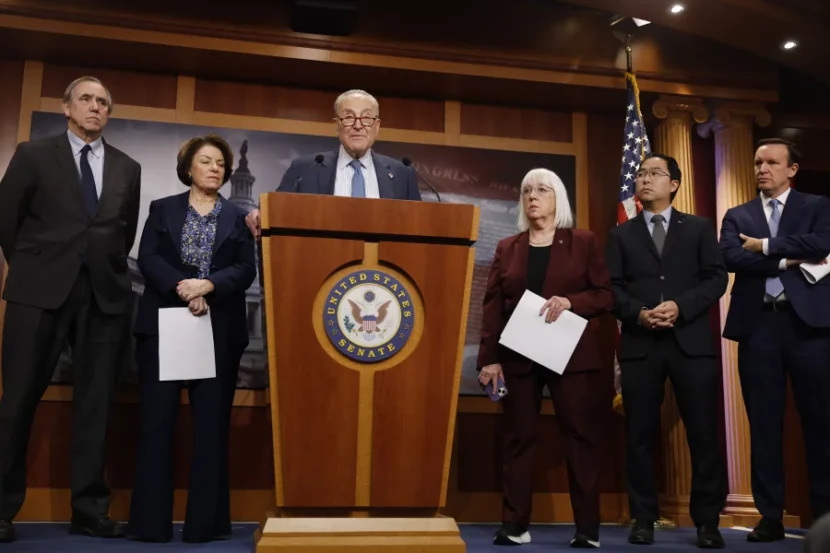
Top Senate Democrats were warning about the massive potential impacts of a freeze — both for groups and individuals who rely on federal funding and for the relationship between Congress and the president.
“In an instant, Donald Trump has shut off billions, perhaps trillions, of dollars, that directly support states, cities, towns, schools, hospitals, small businesses and most of all American families,” Senate Minority Leader Chuck Schumer of New York said on Tuesday.
Schumer and other leaders emphasized that the move would affect American families in red and blue states who rely on federal funding.
Schumer specifically pointed to funding for disaster relief efforts, local law enforcement, rural hospitals, food assistance, aid to the elderly, infrastructure programs, cancer research and opioid addiction treatment, among other things.
“They need tax cuts for the ultra-wealthy, and these cuts they think will fund them,” he said.
Senate Democrats said their offices have been deluged with calls from people in a panic about what a lack of funding — even a temporary pause — would mean for their programs.
Sen. Patty Murray, D-Wash., vice chair of the Senate appropriations committee, called the administration’s action “unprecedented.”
“Last night, in a brazen and illegal move, the Trump administration is working to freeze huge amounts of federal funding passed into law by Republicans and Democrats alike,” she said at a press conference on Tuesday. “Trump’s actions would wreak havoc in red and blue communities everywhere. This is funding that communities are expecting, and this memo is creating chaos and confusion about whether these resources will be available to them.”
Murray said she is calling on the Senate budget chair, Republican Lindsey Graham of South Carolina, to postpone a committee vote on Russ Vought, Trump’s nominee to head the Office of Management and Budget. That vote is currently scheduled for Thursday.
“Republicans should not advance that nomination out of committee until the Trump administration follows the law,” she said.
This story has been updated with new information.