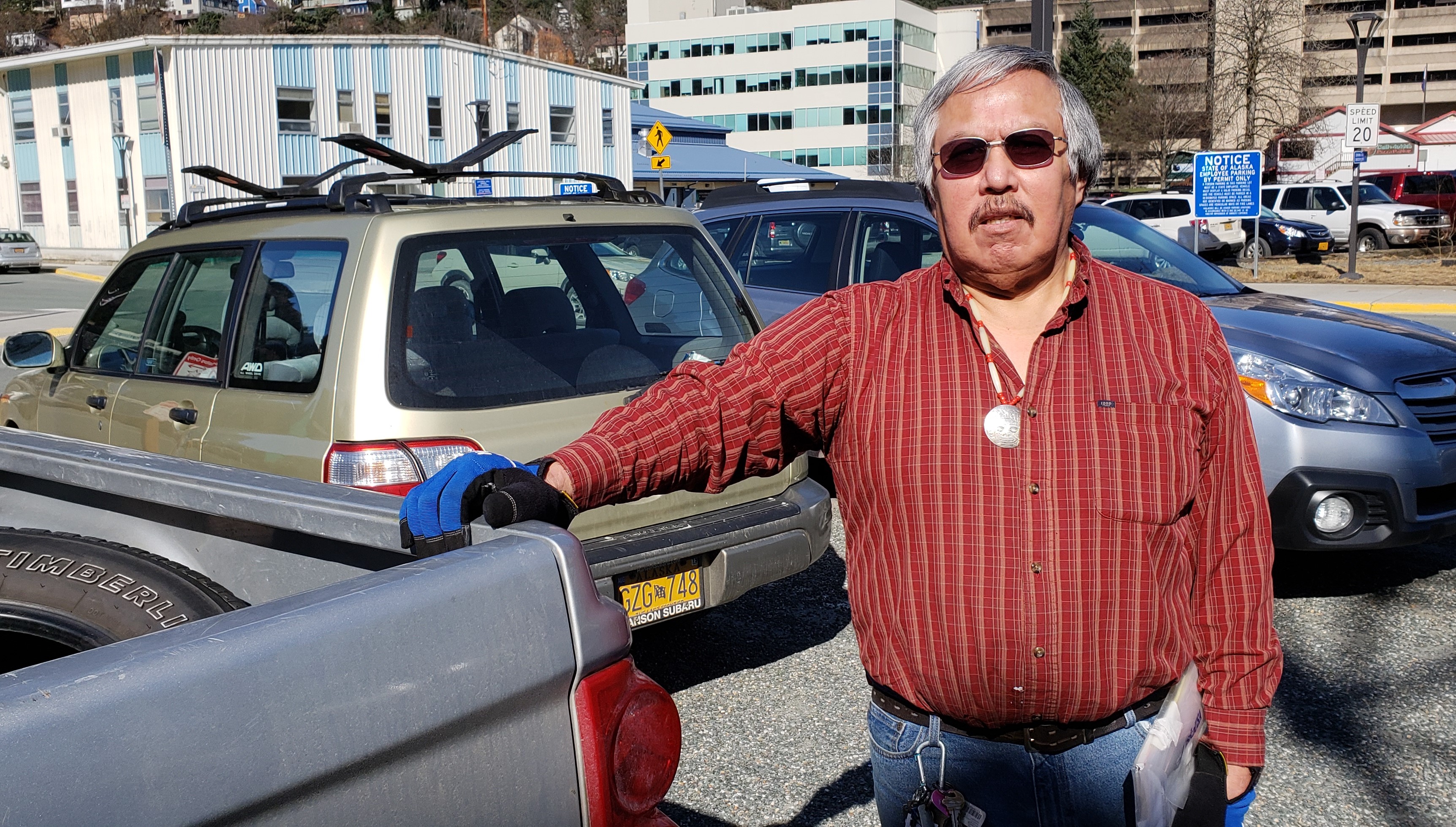
Alaska Wildlife Troopers paid Jeffery Katasse a visit last spring. They asked him about his last subsistence harvest of herring roe in Sitka.
As he tells it, there wasn’t any drama and they parted with a handshake. Life went on. Then last week, the Douglas man was served a court summons. Now he could face years of jail time and thousands of dollars in fines for subsistence violations.
Katasse sat down for an interview Wednesday to tell his side of the story.
“It’s a very nice delicacy,” he said.”It’s a nice thing to have, you know? It only happens once a year.”
Katasse has a long history with herring eggs. He remembers his parents teaching him how to harvest them as a kid when he lived in Sitka. It’s both a personal tradition he’s taken part in for decades, and a traditional Tlingit treat.
He likes them plain and also uses them for herring egg salad.
“You know, just dip ‘em in, dip’em out, take the eggs off the branches and make a herring egg salad,” he said. “Or you could pickle ‘em.”
When he was a teenager living in Sitka in the early 1970s, he said he harvested them with his dad, Henry Katasse.
“It’s just something I do every year,” he said. “Ever since I can remember, you know? I love gathering herring eggs. It’s a lot of fun.”
Back then, Katasse said they’d share the eggs in Kake – that’s where his dad was from – and Hoonah and Petersburg. They’d give the communities a heads up over CB radio.
“We would announce that we’re coming to town, and people are more than welcome to come down and help themselves,” he said. “And people were very happy when we showed up to share our herring eggs with them.”
Nowadays, the 63-year-old lives in Douglas and is on Social Security. He said the annual trip to Sitka has gotten expensive. Ferry tickets for his truck and 22-foot boat doubled from 2016 to 2017. He started taking orders.
“I was putting them in 50-pound Wet-Lock boxes and I was charging 150 a box to help cover the cost,” he said. “Last year, the price for going over and back was close to $3,400. And, it just goes up every year, I mean, have no control — people raising their prices, you know?”
In a dispatch posted Wednesday, the troopers said he illegally harvested subsistence herring roe in Sitka and sold them to at least six people in other communities. Wildlife troopers investigated him last April. Katasse said he was up front with the troopers then — and still is.
“This is the expenses, and I have nothing to hide,” he said and brandished a folder full of his receipts and notes.
He said he keeps good records and doesn’t profit. Be that as it may, state law is pretty clear on selling subsistence harvests: you can’t do it.
“The definition of subsistence uses is the noncommercial, customary and traditional uses of wild, renewable resources. So, by definition, sale is not permitted,” said Lauren Sill, subsistence resources specialist for the Southeast region with the Alaska Department of Fish and Game.
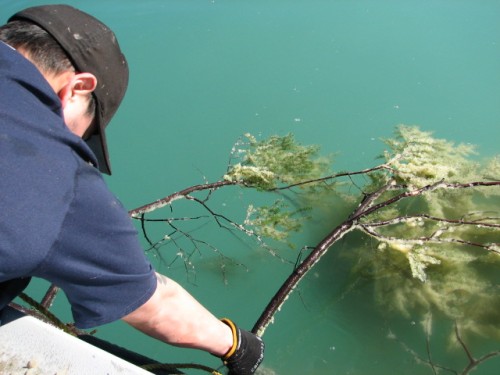
She said there are limited exceptions in the region for certain kinds of trade. But in Katasse’s case, he harvested the roe on hemlock branches, which isn’t covered.
When the exceptions do apply, trade can include “minimal” amounts of cash.
“For ‘minimal amounts of cash,’” Sill said. “So there’s not, like, a hard and fixed cash amount value which is unacceptable.”
Online court records show Katasse faces 12 misdemeanor charges. He said he plans to teleconference into his April 24 arraignment in Sitka, and enter a not guilty plea. He doesn’t have a lawyer.
Carole Holley is the state’s attorney on the case with the Office of Special Prosecutions. She declined to comment on the case, citing the defendant’s due process rights. She said that the Office of Special Prosecutions handles fish and game cases by default.