For many Alaskans, the scandal at the Alaska Army National Guard is long over. Top brass lost their jobs after investigations confirmed a toxic work environment that harbored sexual misconduct, even crime.
But nothing is resolved for the family mourning Michelle LaRose Clark, a pregnant soldier who died in 2011 of unknown causes. A special state investigator said last summer the death deserves further review. Clark’s family and a retired officer can’t let go of the idea that her death is related to what she knew about crime within the Guard.
Clark was 31 years old, in the seventh month of an uneventful pregnancy. She collapsed on the floor at her home in Eagle River. Paramedics tried to resuscitate her. Doctors at Providence continued CPR even as they operated to remove her baby, a girl. Both died that night, Jan. 16, 2011.
The state autopsy report lists her cause of death as “undetermined.”
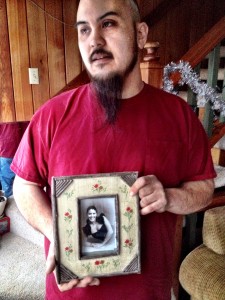
“Not having any answers, there’s so much torment in the family,” said her brother, Randy LaRose Jr., of Wasilla. “If it was natural causes, I could accept that. But the fact that the autopsy wasn’t done right, you have to question.”
Clark’s family does question, and after five years with no answers, their doubt has hardened into suspicion.
They suspect the medical examiner, who did not find a cause of death.
They suspect the Anchorage Police of not looking hard enough for answers, and because several of them are also in the Guard.
They suspect the lawyers they hired to help them get answers.
They suspect Clark’s husband, a pharmacy technician.
They suspect murder, but Clark’s brother acknowledges they have no hard evidence.
“I’d give everything I had for answers,” he said.
Clark’s older sister, Angela LaRose of Anchorage, said no one has adequately explained her sister’s death or the setting when Clark’s husband found her at their condo.
“I want to know. Get on the floor, like how my sister was, and show me … Because it just doesn’t make sense,” she said.
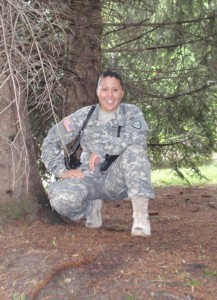
Clark was a staff sergeant in supply at the Alaska Army National Guard, which at the time was teeming with misconduct and mistrust. Clark told a chaplain’s assistant she’d been raped by someone in her chain of command when she and other Alaska Guard members were deployed to Kosovo in 2009. And she told him the perpetrators were committing crimes in Alaska, too. One of the last people she approached was a National Guard officer named Ken Blaylock:
“Basically, she stopped me in a hallway and asked if she could talk to me. I said yes. She had tears in her eyes. She said she had personal knowledge of drugs and sexual assaults within her organization. She was afraid of her family. She was afraid of people in her unit. She was afraid of some of her friends. She was afraid for her life and the life of her baby.”
Lt. Col. Blaylock, now retired in Palmer, said during that five-minute conversation, Clark worried she’d be seen talking to him. He was at the time something of a clearinghouse for sexual assault victims. Blaylock said he tried to get Clark to talk to police or a chaplain that day, the Friday before Martin Luther King Day, 2011.
“I said ‘look, we need to go do this right now,’” Blaylock said. “And I was trying to convince her. And she said: ‘No sir, they’re going to kill me.’”
Blaylock said they agreed to talk again Tuesday. But Michelle Clark didn’t survive the weekend.
“On Sunday I got a phone call saying that she’d been found dead,” Blaylock recalls.
Blaylock was a polarizing figure in the Guard. He got severely crossways with Gen. Tom Katkus and other Guard leaders; Blaylock said because he was trying to address wrongdoing. He said Guard leaders portrayed him as a nut, but he said his reputation is redeemed by the investigations that confirm the Guard was rife with sexual assaults, reprisals, bullying and favoritism.
“Everything else that I pushed that everyone was calling me psycho on has now been vindicated and proven to be true,” he said. “So this was just another piece of it. It’s not done yet.”
Blaylock is pressing for more investigation.
Retired Juneau judge Patricia Collins served as a special state investigator to examine sexual assault and abuse in the Guard, and how the authorities responded. She said in her report last summer that Blaylock may be well-intentioned, and a number of Guard victims put their trust in him, but Collins said she didn’t find evidence to support some of his allegations.
Blaylock is still consumed by his suspicions of the Guard and a large constellation of events he believes may be connected to Clark’s death. He talks to Clark’s family, who’ve adopted many of his allegations. They say he’s a hero for trying to draw attention to her death. Blaylock said he can’t drop it.

“Here I am, a commissioned officer in the United States military and I have a pregnant woman come to me telling me that she’s going to be killed, and two days later she’s dead,” he said. “At what point do I let it go?”
Blaylock wasn’t the only guardsman Clark confided in on the final Friday of her life. A noncommissioned officer, who spoke on condition of anonymity to avoid reprisals, agreed Clark did seem terrified that day.
“She was extremely afraid and extremely nervous. She didn’t want to say anything on the work phone. She didn’t want to say anything in the office where she was. She was extremely nervous and afraid.”
The NCO said she urgently wanted to tell him something in private. Based on their prior conversations, he took that mean she wanted to tell him about crimes within the Guard.
“(There are) people at work she was extremely afraid of,” he said.
But unlike Blaylock, the NCO believes it’s more likely Clark died of natural causes, which he thinks could have been aggravated by intense stress.
Blaylock said there’s a way to put all his suspicion to rest.
“It’s simple: find an actual cause of death. A real one.”