Listen to this story:
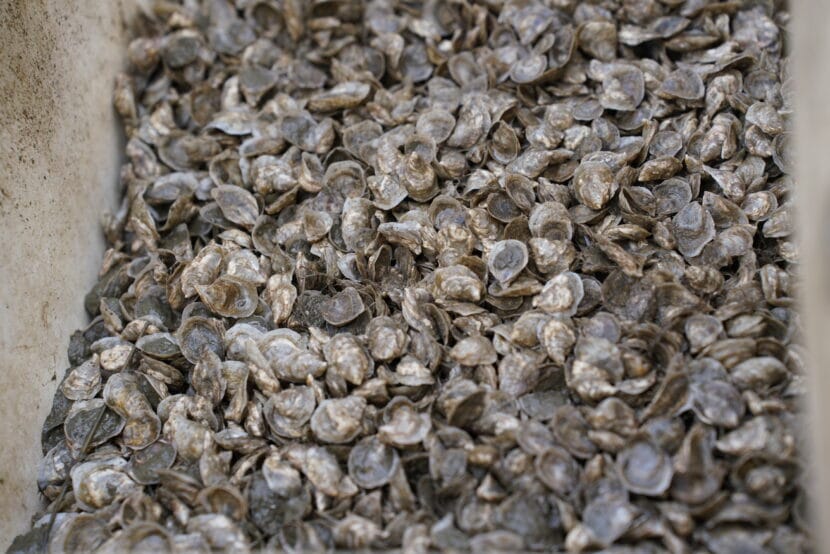
At the end of a dock in Auke Bay, an oyster farmer lifted a creaky hatch door on an unassuming floating platform. Inside were bins holding thousands of young oysters, called spat.
The platform is called a floating upweller system, or FLUPSY, and it’s one way oyster farms can keep more stock.
“This is just a cheaper way to buy spat in a smaller size, much bigger quantity,” said Maranda Hamme, owner of Shinaku Shellfish Company, a small, family-run Pacific oyster farm in Klawock. Hamme was part of a small group that visited Juneau for a day-long mariculture workshop organized by Alaska Sea Grant and the Central Council of the Tlingit & Haida Indian Tribes of Alaska last week.
Nutrient-rich water flushes through the FLUPSY, so the tiny oysters can quickly grow big enough to fit into mesh bags out on a farm. The oysters in the FLUPSY are around the size of a penny — they’ve been growing here for roughly 9 months.
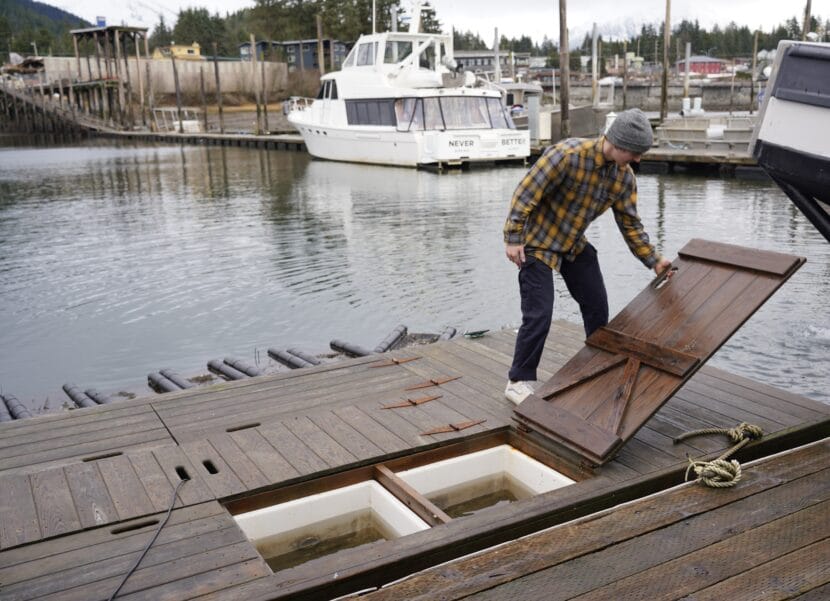
The FLUPSY in Auke Bay belongs to Salty Lady Seafood Company, the only oyster farm in Juneau. Hamme said she’s planning to stock her own FLUPSY in Klawock because it can help her scale up, even when there are bottlenecks in the supply chain.
“Currently, there’s only so many FLUPSYs in the state, and as a farmer, we’ve already not had seed needs met,” she said.
Most oyster farmers in Alaska, including Hamme, have to ship in spat from out-of-state hatcheries in Hawaii, Washington, Oregon or California. Sometimes there are shortages at those hatcheries.
Spencer Lunda manages the University of Alaska Fairbanks’ mariculture research hatchery at Lena Point. He said developing in-state hatcheries can help solve that problem.
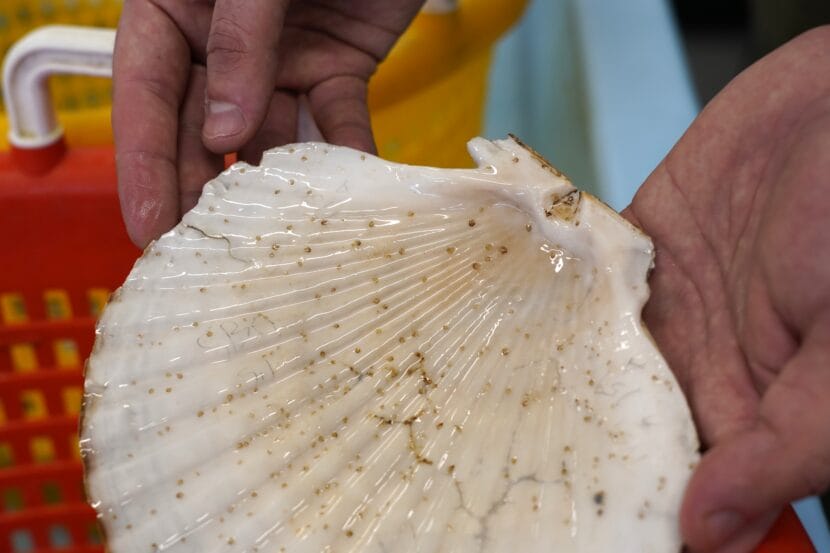
The facility pumps in seawater that gets heated and flows into troughs filled with oysters, where Lunda and his team are studying ways to produce spat locally for farms across Alaska.
“It would be nice to have spat production in the state, and be able to produce oysters that perform better in the conditions of Alaska, because the water is very cold here compared to where oysters are typically grown,” he said.
Lunda said the ultimate goal is to breed oysters that grow relatively quickly in cold water and form a deep cup with a lot of meat — traits desirable for both farmers trying to turn a profit and consumers slurping them from the half-shell.
Back on the dock, Hamme said the lease process to enter the industry is another issue that could be improved.
“I’m here sharing about being a farmer and the struggles and challenges that we face firsthand so other Indigenous farmers can get into the industry,” said Hamme.
She said it took two years to get an aquatic farm lease through the state. She also said the process doesn’t include tribal consultation to see whether proposed farm sites would overlap with subsistence seafood harvest sites.
“I think it’s crucial that the state of Alaska incorporates tribal consultation, rather than just city government,” Hamme said.
But developing mariculture operations could become a boon for Native communities, too.
Frank Nix, the cultural foods manager for the Organized Village of Kasaan, attended the workshop to see how mariculture could bolster economic development and food security in his small village.
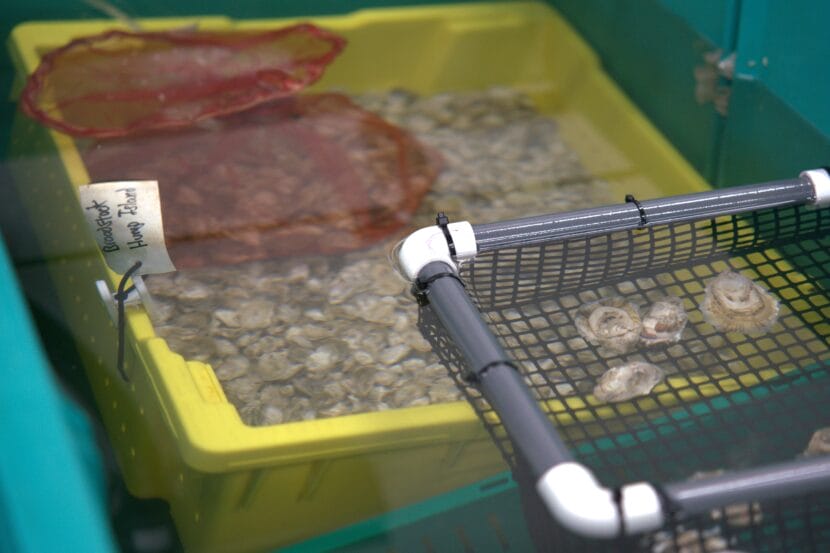
“Most of us are already working three or four jobs, and all of our facilities are running three or four programs,” Nix said after touring the small Auke Bay oyster hatchery. “So when it comes to looking at opportunities like, well, maybe we don’t have the manpower to run a farm — but, you know, it seemed like one or two people could manage a space of the size that we were just in.”
He said he’s grateful to attend the workshop on a travel scholarship, and the recent availability of funding and training in Alaska mariculture makes the industry attractive.
“I think one of the most valuable things that I’ve seen so far is that this seems perfectly doable,” he said.