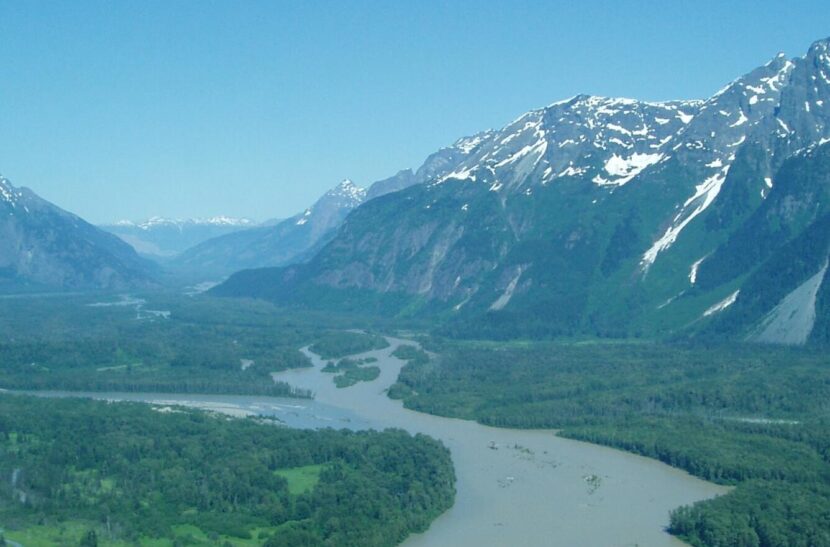
A glacial outburst flood on the Taku River south of Juneau crested early Wednesday morning.
Water rushed out of Lake No Lake, a basin dammed by the Tulsequah Glacier in British Columbia.
Aaron Jacobs is the senior service hydrologist at the National Weather Service in Juneau. He said the release began sometime Tuesday morning and was confirmed by a resident in the remote area.
“We haven’t heard any reports of any damages or injuries or anything like that,” Jacobs said.
The Taku River crested at 4:30 a.m. Wednesday, reaching 40.44 feet. That’s about the size of the glacial outburst flood that crested at 40.97 feet on the same day last year. It’s below the height that would make it a minor flood, which is 43 feet, so the river did not breach its banks.
The water level is expected to fall throughout Wednesday, according to the Weather Service forecast.
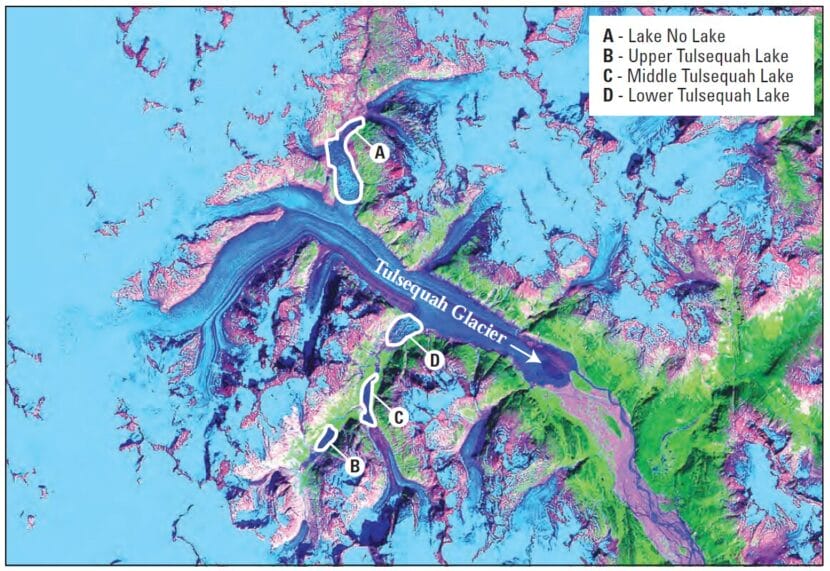
Outburst floods generally follow a bell curve over their lifetime, which can span many decades. The floods start off small, when icebergs displace a lot of the water in the dammed lake and prevent it from filling too much. Then, the floods grow larger and reach their peak as that ice melts and the lake expands. Finally, the floods get smaller again as the glacier thins, lowering the ice dam wall and reducing the amount of water the lake can hold.
But Jacobs said year-to-year variation and a lack of detailed monitoring make it difficult to tell whether the Taku River has passed its flood peak already.
“It’s really hard to say where we lie on that type of bell curve, or on the size of floods that we could have, because we saw a record flooding event not too long ago,” Jacobs said.
According to the National Oceanic and Atmospheric Administration, the Taku River had its largest recorded glacial outburst flood in 2021 at 45.54 feet.
Jacobs said it broke the record due to compounding factors. An above average snowpack the preceding winter, rainfall from an atmospheric river and a heatwave all added water to the river at the time of the flood.
Before 2021, the largest outburst flood recorded on the Taku took place in 2004.
Jacobs said the Taku River will probably have a second, smaller glacial outburst flood this year, sometime in August or September.