Alaska’s rural communities are seeing an increase in bedbug infestation. It’s a problem that can feel overwhelming, embarrassing and difficult to control.
Now, the Bristol Bay Area Health Corporation and the Tanana Chiefs Conference are helping rural Alaskans fight bedbugs with a $100,000 grant from the U.S. Environmental Protection Agency.
It was the dead of winter, about six years ago, when Tina Tinker first started finding itchy bites on her body.
“That’s how I found out. I’m kinda allergic to bedbugs because I swell up really bad. I mean, I get a big welt.”
She and her husband did the first thing she thought of: they threw out everything in the bedroom.
“We moved the bed, the dressers, everything out of my room and we stuck them all outside. At the time it was like 30-40 below,” says Tinker.
She’d find out later that freezing isn’t the best way to kill bedbugs. But this was just the beginning.
Tinker lives in the village of Aleknagik – she’s the IGAP environmental coordinator there. And when the bedbugs struck, she didn’t own a washing machine. So her next step was a major trip to the laundromat, about a half-hour away.
“So I had to bring them down to the Dillingham laundromat, and that cost me about $700 just to dry and wash those clothes.”
Over the next year and a half, Tinker waged an all-out war against her bedbugs. She says there wasn’t any program or resources to turn to locally. So she was going off hearsay and her own research.
“I basically went on Google, and did some reading, and from there I kinda took it in my own hands,” says Tinker.
It was an expensive effort. She had to order supplies to be shipped in from Anchorage, and she once took a week off work to steam-clean, scrub and vacuum her entire house.
And Tinker says her infestation cost her social life, too.
“You go through a change in your personality,” Tinker recalls. “I felt embarrassed, and I felt like people kinda shunned me once they found out that I had bedbugs. They just kinda kept away. But then I kinda told my friends too, you know, you shouldn’t be coming to my home because you could bring them back and infest your home.”
Tinker says she lost a lot of sleep to stress over those months. But her diligence and hard work finally paid off. The bugs were gone and stayed gone for four or five years.
Then a few weeks ago she had another scare when her son came home from a trip and found bites on his body.
This time, though, Tinker wasn’t alone. She went to the Bristol Bay Area Health Corporation, to the office of environmental health specialist Jen Skarada.
Skarada is heading up a two-year effort, in coordination with the Tanana Chiefs Conference, to fight bedbugs throughout rural Alaska.
Bedbugs infestations have been on the rise in the U.S. in recent years. But Skarada says the issue is even worse in Bush Alaska, where people depend on air travel to get anywhere.
“The bedbug is actually known as the hitchhiker bug, it generally crawls onto a person or their luggage, so since we have to get on a plane pretty much to go anywhere,” says Skarada. “Also, in rural Alaska we just don’t have tools that we do on the road system or lower 48. It gets out of control because you don’t have the tools.”
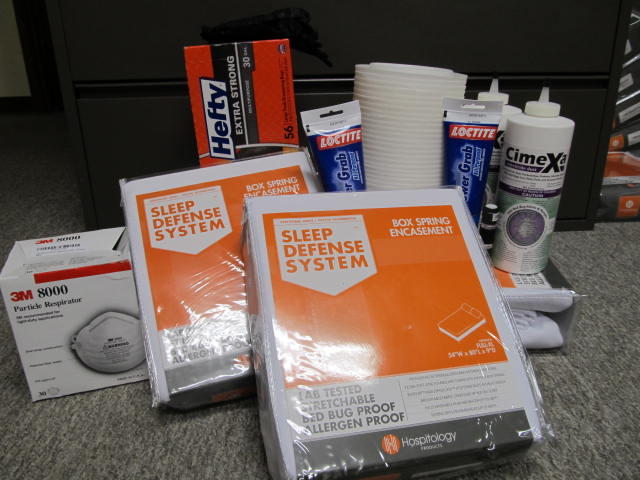
This is Skarada’s main focus right now. She’s already sent out nearly 30 tool kits, which include mattress covers, trash bags, gloves, caulk to seal up little crevices, “climb-up” to put on the legs of beds, and CimeXa dust, a fine powder that kills bugs by dehydrating them.
Along with the toolkit, Skarada gives out information. She’s trying to squash misconceptions about bedbugs.
“A lot of people ask, all the time, they’re like is this a bedbug bite? And they’ll hold out their arm or whatever,” says Skarada. “But you know, we have a lot of biting insects in Alaska. Some people don’t even react to the bites, because it’s an allergic reaction. Some might break out into hives; some might just have a small red dot.”
“So that’s the first thing I try to let people know – don’t use the bite as a sign.”
It’s better to look for the flat, reddish brown bug itself, or for the skin it sheds five times on the way to becoming an adult. Or, says Skarada, you might find bedbug poop.
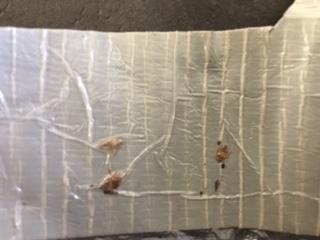
“A lot of times that’s the first sign people see — the fecal stains. They can look almost like reddish rust stain, and sometimes even like a mold color.”
So, bedbugs are gross, they cause stress and loss of sleep… But maybe the worst thing about having bedbugs is the social stigma.
“Just because they have bedbugs doesn’t mean they’re dirty people. Don’t shun them because we all have feelings,” reminds Tina Tinker.
“My Auntie Paulie, she’s an elder in her 70s, she says like this: don’t be embarrassed that you got bedbugs because they just bite, they so she said not to be embarrassed about it because everyone will get them.”
Anyone can get bedbugs, but BBAHC and TCC are trying to slow that trend. They plan to send out over 100 more toolkits around the state.
Next year, phase two of the project will go even bigger, giving out tent-like hot-boxes so communities can work together to turn up the heat on their bedbugs.