
After a battle with pancreatic cancer, elder and tribal leader Joel Jackson died at Mt. Edgecumbe Hospital in Sitka in August. He was Haida and Lingít, a Káach.ádi clan member and child of the Tsaagweidí clan. His loved ones held memorials in Juneau and Kake, where they spoke about his advocacy, his humor, and his passion for subsistence fishing.
Kaanaheík Todd Antioquia spoke at a service for Jackson in Kake on Sept. 4. He’s a Tsaagweidí clan member.
“When we have and suffer loss, we always talk about always looking for our uncle’s footsteps, our auntie’s footsteps, and that Joel, being born and raised here, left footsteps across this community from the time he could walk as a toddler,” he said. “As those footsteps grew, his presence grew, his vision grew, his leadership grew, His wisdom grew.”
Antioquia said they are big footsteps to fill.
“And while our feet might seem tiny amongst his footsteps today,” he said. “That collectively we will grow. We will continue to learn from his lessons, and our feet will grow into his, and carry on his work.”
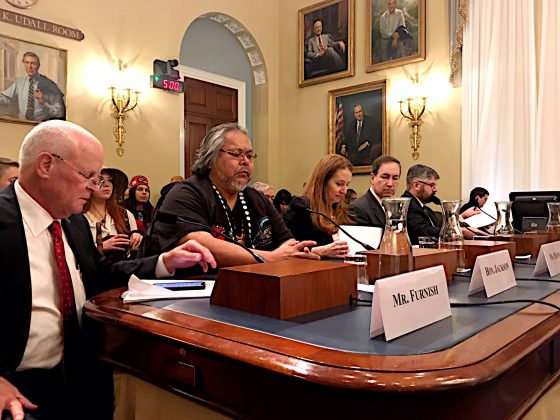
And that work is extensive. Jackson advocated for the preservation of the Roadless Rule and the Tongass National Forest for decades. The rule currently protects much of the Tongass from road development, but the federal government filed to rescind the rule last month.
In a 2025 interview with KTOO, Jackson said the forest is vital to the existence of Lingít people and all nonhuman residents of Southeast Alaska.
“It takes care of everything that we depend on: the berries and medicinal plants and the animals — the deer, moose, bears,” he said. “But one of the most important, I think, is the shade from those old growth trees along our streams that the salmon return to every year after year, providing us with the food, the fish that we need. Because we are salmon people.”
And he said there is a lot to appreciate about being in the forest.
“When you walk into the old growth forest, whether it’s on the trail or you’re just hiking, it’s like walking into one of the most beautiful cathedrals you could ever walk into anywhere in the world,” he said. “It’s so perfect.”
Jackson also advocated ceaselessly for resources that would allow his community to heal from generational trauma in Kake. He received the U.S. Navy’s apology for the 1869 bombardment of Kake.
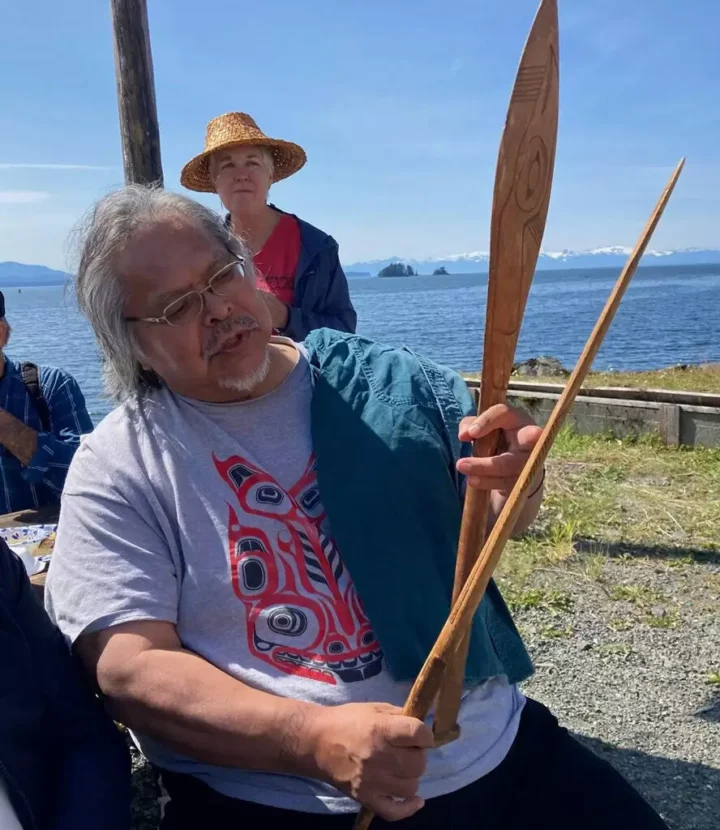
In a 2024 interview with KTOO, Jackson says this work taught him a vital truth.
“What I learned over the years is that to teach our people where they come from, who they are, not only their biological family, but their extended clan family which reaches all across Southeast Alaska,” he said. “So that’s an important part in letting them know who they are and they’re never alone. We’ve seen it over the years where that has instilled pride in who they are.”
Jackson championed building a healing center in Kake to further tribal citizens’ connections to their culture, clans and identities. That project is still ongoing.

