
The State of Alaska is constantly looking for budget savings. One of its lesser-known ways? Relying on the prison population to do state work on the cheap. Some advocates argue the pay is too low.
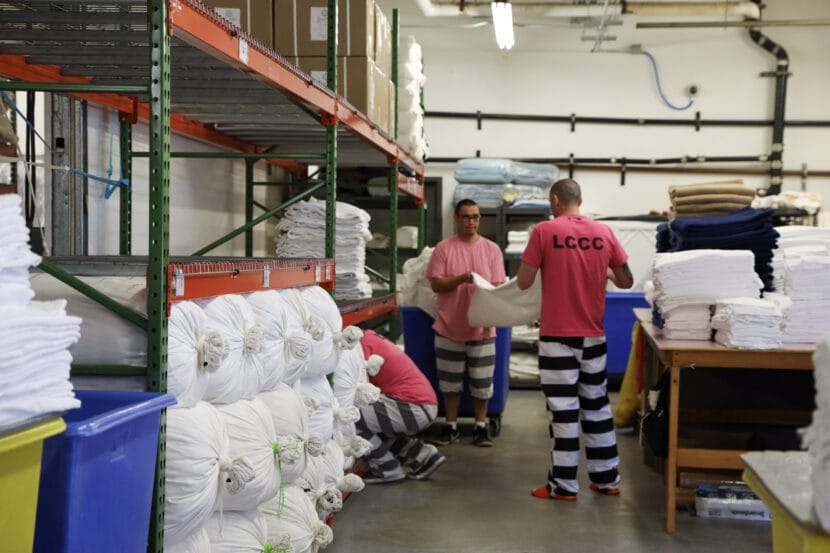
In Juneau, a hidden workforce inside Juneau’s Lemon Creek Correctional Center helps to keep the state’s ferry system afloat.
Listen to this story:
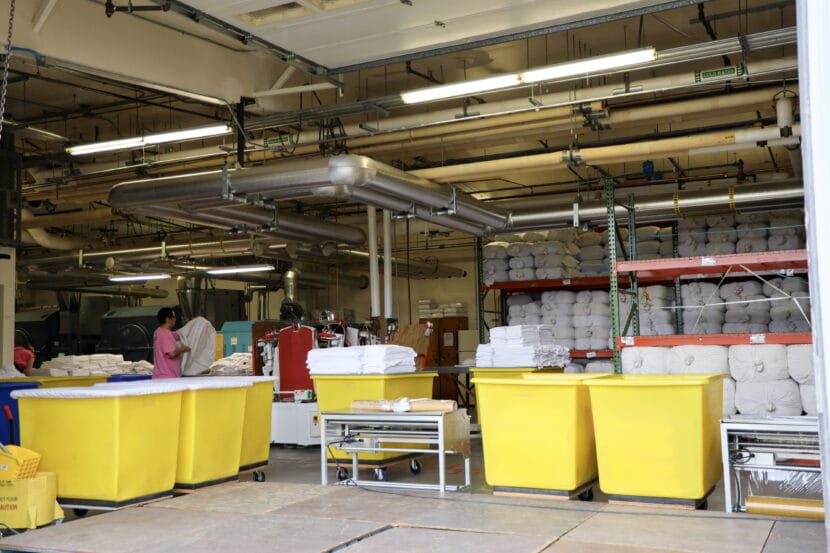
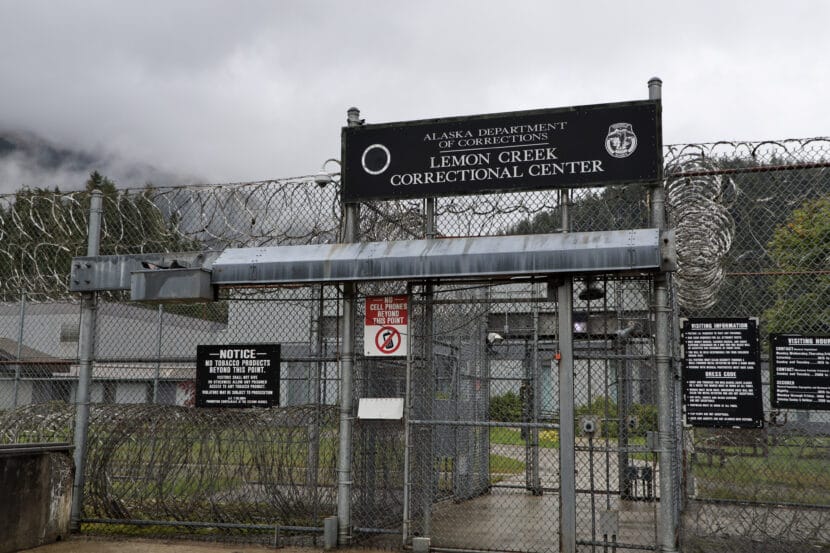
To get to the back side of Lemon Creek Correctional Center in Juneau, you have to walk through gate after gate and door after door. There, surrounded by barbed wire and armed guards, is a warehouse.
“I would say the majority of the state has no idea we exist, so it’s a real hidden gem that the state provides, Lemon Creek provides,” said Kevin Dumont, who runs Lemon Creek’s laundry service program.
Lemon Creek Correctional Center houses roughly 164 people, both men and women. It’s nestled on the outskirts of a neighborhood in the middle of Juneau.
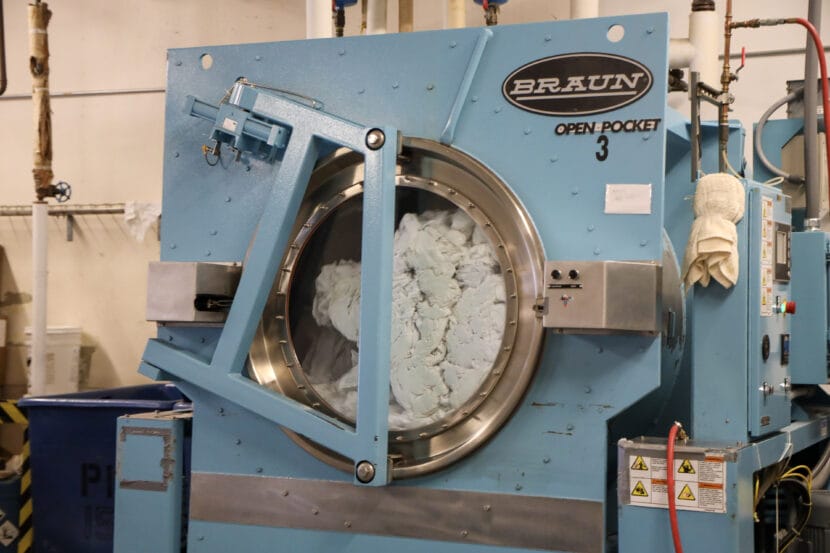
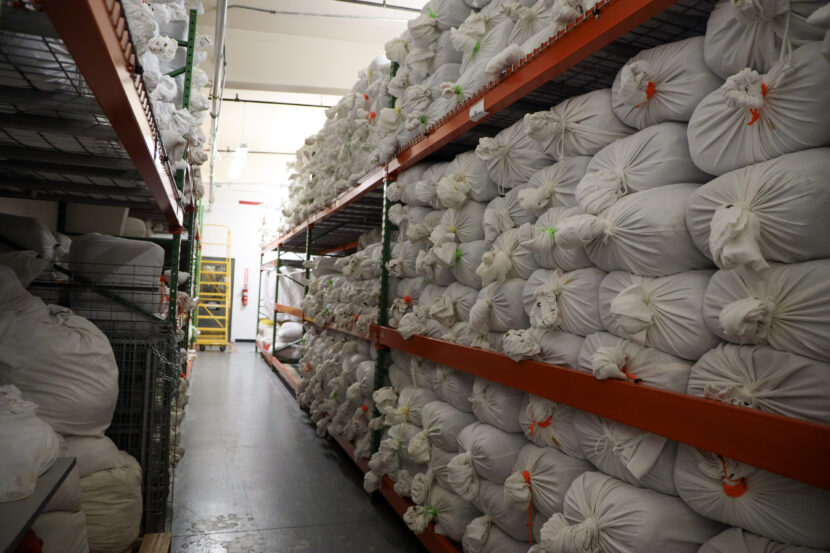
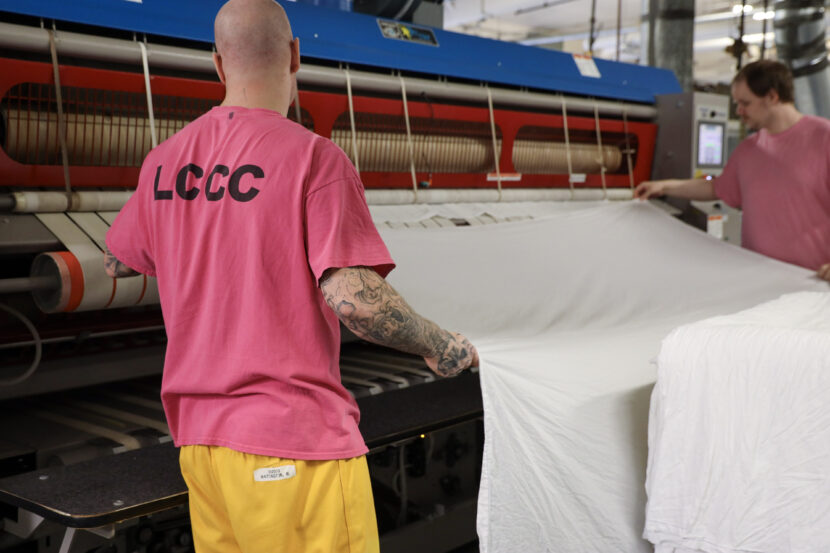
Since 1996, a small crew of people incarcerated at the prison has worked full-time doing all the laundry for Southeast ferries. Picture your standard run-of-the-mill laundromat but on steroids. It’s loud, it’s busy, and the machines are humongous.
“Like you could just do all of your household laundry in one load — have everything done, all your bedding, all your comforters. It’s pretty neat,” Dumont said.
They wash basically everything for the ferries — fitted sheets, blankets, pillowcases, towels, tablecloths. You name it, and they’ll clean it.
Dumont said it’s typical to go through up to 2,000 pounds of laundry each day.
And it’s an opt-in program. People incarcerated at Lemon Creek can choose from a variety of paid work programs within the prison. The laundry program is particularly coveted. Josh Youll would know. He’s been working there for about three and a half years.
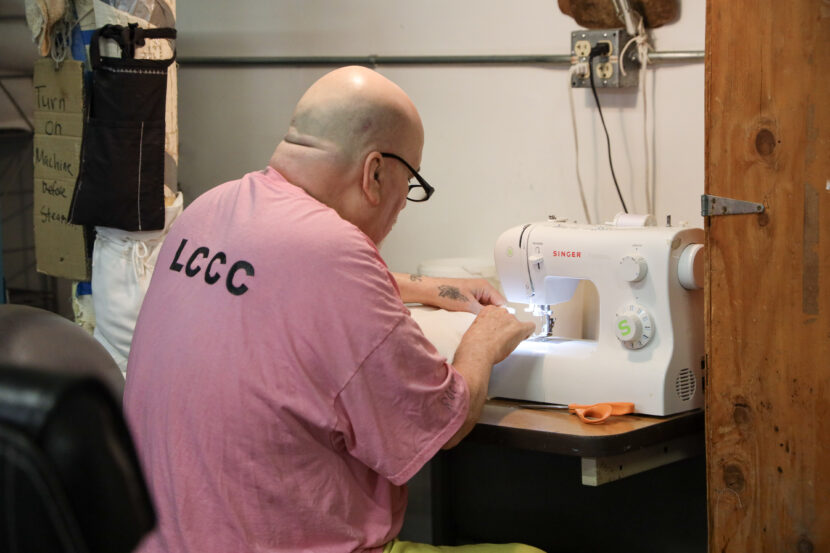
“It’s one of the better jobs out here. You’re gone all day. You’re busy. You get away from all the nonsense that might be happening inside,” he said. “It’s like having a real job.”
It’s the highest-paying job at the prison, but that’s relative. Laundry workers get paid between $1.10 and $1.65 an hour. According to state statute, incarcerated people’s wages in Alaska are not allowed to exceed 50% of the state’s minimum wage, which is currently $14 an hour.
At a full-time 9-5 schedule, that pencils out to an annual income of about $3,500. The program has saved the ferry system millions of dollars in labor costs over the three decades it’s been operating.
But when an hour of work isn’t even enough to buy a pack of gum, saving money is hard. Youll said he’s only been able to save about $700 ahead of his upcoming release.
“I set aside each month to help me for when I get out to help me get back on my feet,” he said.
Before he came to Lemon Creek, he worked at a cannery. Now, Youll said he finds a lot of purpose in having a job while incarcerated.
“It means a lot,” he said. “I don’t want to say a second home per se, but it just means a lot.”
Dale Whittington agrees. He’s been incarcerated at Lemon Creek since last June and began working at the laundry facility last month.
“I think it helps people prepare for getting out, releasing, reintegrating into society, it helps them prepare to work a normal job,” he said.
Unlike Youll, however, Whittington said he hasn’t been able to save hardly any of his wages.
“I don’t really have any savings right now because I’m trying to pay out child support,” he said.
While the people incarcerated didn’t mention increasing their wages, Megan Edge, the director of Integrated Justice for the ACLU of Alaska, argued they should be higher.
“I think the battle with prison labor is that there is a fine line between employment and essentially slave labor,” she said.
According to data from the Prison Policy Initiative, the average daily wage of an incarcerated worker is 86 cents an hour. Edge said living in Alaska, period, is already expensive. Trying to reenter society after prison?
“It’s really, really extra challenging on people,” she said.
She said people exiting prison will be more successful if they can earn more money while they’re inside.
Juneau’s prison isn’t the only one in Alaska to have specialty programs for people incarcerated. Earlier this month, a crew of incarcerated workers at Point Mackenzie Correctional Farm near Wasilla harvested more than 240,000 pounds of potatoes from its correctional farm.

