
Listen:
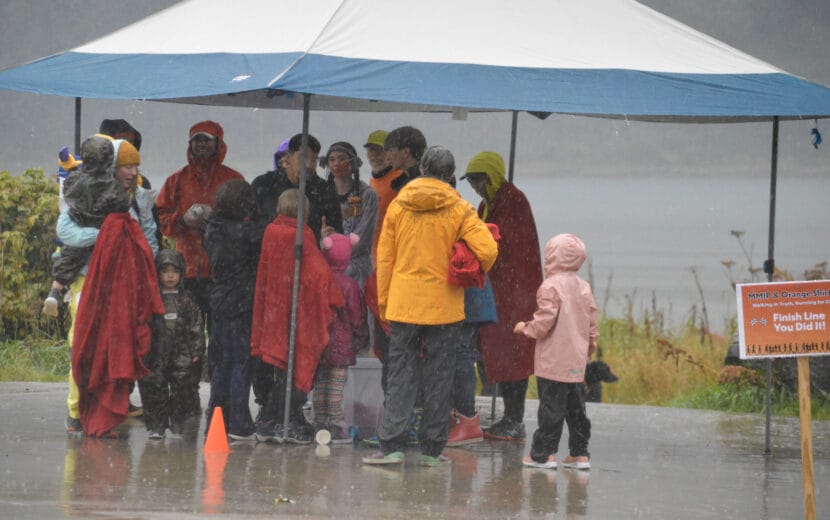
Runners gathered in a cabin at Sandy Beach on Sunday. They hid from the driving rain. Some had red handprints over their mouths or on their cheeks.
Megan Lingle initiated this run — she’s with Tlingit & Haida’s Community & Behavioral Services Healing Center. She told those gathered — runners, walkers and a few dogs — that this is a different kind of running event.
“Today is not about how fast we move; it is about why we move,” Lingle said. “We are walking in truth. We are running for change. We are standing together for our Missing and Murdered Indigenous relatives, for boarding school survivors, for the children who never came home, and for generations of people who are still healing.”
The gathering is for Orange Shirt Day. It’s a day to commemorate the loss of life, language, and culture caused by residential schools across the United States and Canada. Many Indigenous children were taken from their families and brought to these schools against their will.
On Sunday, for the first time, Juneau organizations came together to host a run and walk to bring attention to the day, as well as the Missing and Murdered Indigenous Peoples crisis.
S’eiltin Jamiann Hasselquist took the megaphone next.
“We are gathered at Anax̱ Yei Andagan Yé, the original Lingít place name for where we stand today, meaning ‘where the sun rays touch first,’” she said. “I guess the sun forgot that part today.”
She shared the history of this piece of land: It was once a Lingít village, until city officials burned it to the ground in the 1960s. Up the hill is the site of a former day school, which aided in the colonial effort to eradicate the Lingít language.
“So when we talk about Orange Shirt Day, MMIP missing murdered Indigenous people and children being taken from their homes, we aren’t talking about something that happened somewhere else,” Hasselquist said. “We are standing in it.”
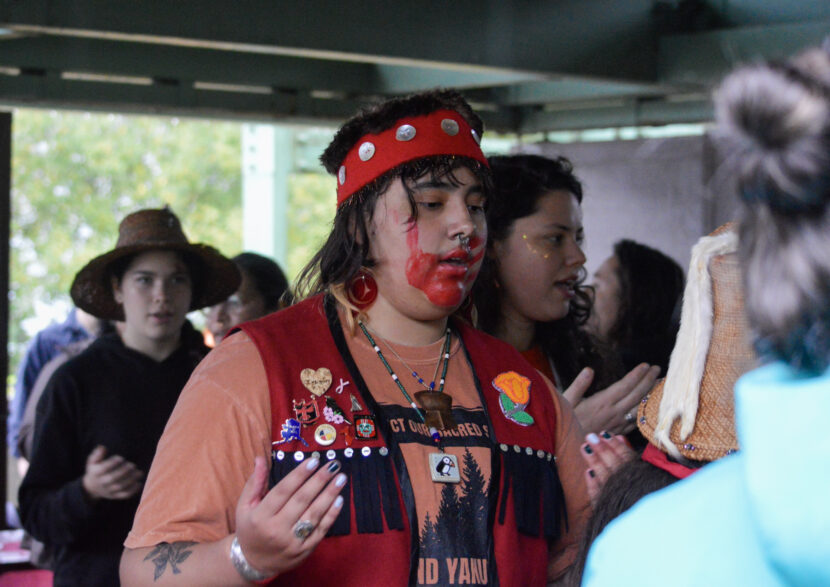
After organizers addressed the crowd, two dance groups performed, bringing the runners into the dances.
Then, the races began, on either side of the totem pole, or kootéeyaa, in the park — runners darted into the woods, and walkers took off towards the baseball field.
After Lingle finished her 5K, she said, for her, a run and walk is a chance to combine community-based activism with healing and physical movement.
“I think this is another way to encourage our people to get active, connect with community, connect with each other, get off our screens, and be active on the running course,” she said. “Because at these road races, I’m often one of the few minorities, and I would like to see more Native people involved.”
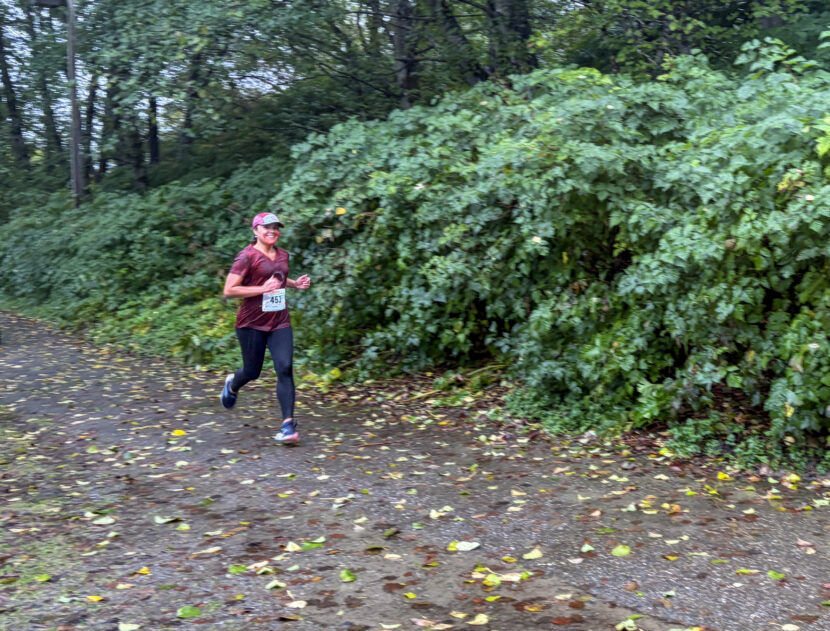
She said she hopes this is one of the first of many runs that center Indigenous people in Juneau.
