
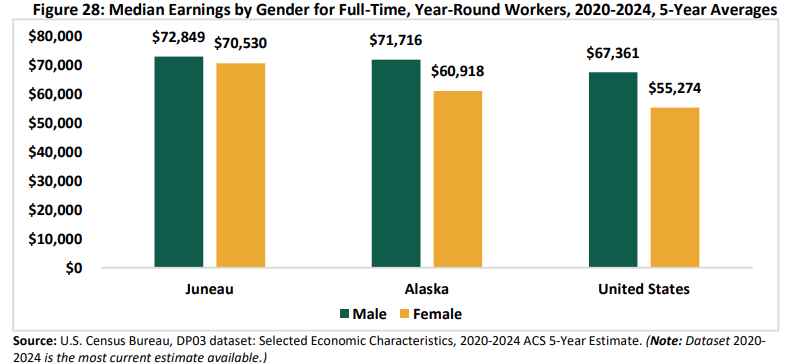
Women earn nearly 97% of what men earn in Juneau. That makes the gender wage gap here significantly smaller than in Alaska and the rest of the nation, according to data from the Juneau Economic Development Council.
Brian Holst is the executive director of the council, which recently shared the findings in its annual economic indicator report for Juneau and Southeast.
“It would be great if everyone was paid equally, right? But it is nice that in Juneau, the gap is relatively small compared to the nation and the rest of Alaska,” he said.
In Alaska, state statute outlaws employers from paying women less than men for the same work. But gaps still persist.
According to data, the median income for a woman working year-round in Juneau in 2024 was about $71,000 compared to men who earn about $73,000 — a roughly 3% gap. Compare that to across Alaska, where women earn 15% less than what men make and 18% nationally. Another study found the gender pay gap in Alaska also widens with age.
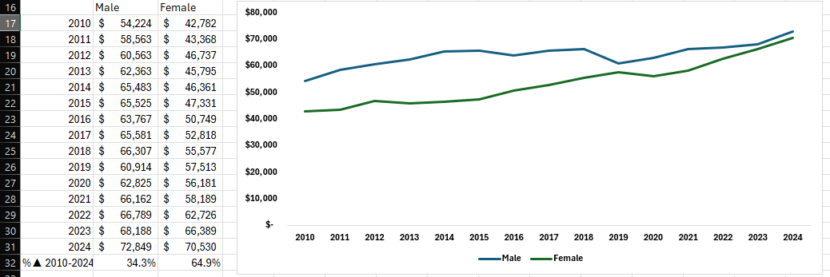
Holst said, at least for the past decade, Juneau’s gender wage gap has always been much smaller than the rest of the state. He said that’s likely because of the high number of government jobs based in the capital city.
He warned, though, that this could be subject to change. In 2025, private-sector employment in Juneau increased to a record level, while overall government employment declined. Much of that decline was led by the federal government. It follows the Trump administration’s push to shrink the federal workforce and reduce government spending after taking office for his second term.
“We have a lot of jobs in government still, even though the private sector is growing quickly,” he said. “State jobs are really important, and those jobs tend to have less wage disparity than other jobs in the private sector.”
Holst highlighted other changing aspects of Juneau’s economy too, like its steady decline in population and birth rates. Over just the past decade, Juneau’s population has decreased by nearly 7%. That data tracks with a different report by the state, which found Southeast’s overall population projected to drop by about 17% by 2050, or roughly 12,000 people. Juneau is also getting older. In the last 10 years, the median age increased from roughly 38 years old to 41.
Holst said cruise ship tourism and mining continue to be major drivers for Juneau and its economy, though each comes with its own trade-offs.
