
This is Tongass Voices, a series from KTOO sharing perspectives from the homelands of the Áak’w Kwáan and beyond.
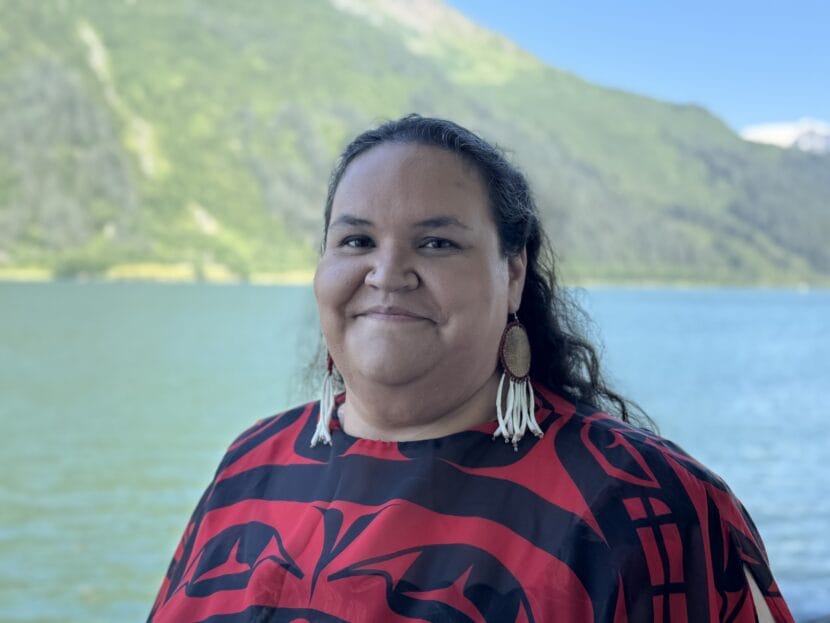
T’set Kwei Vera Starbard is an Emmy-nominated writer who has written six plays and multiple episodes of shows like Molly of Denali and Alaska Daily.
Starbard is the librettist for Ḵutulagaaw — an opera about the 1802 battles between Lingít people and Russian invaders in Southeast Alaska. That means she wrote the script, which language teacher X̱’unei Lance Twitchell translated, and composer Ed Littlefield put to music.
The production premiers at Thunder Mountain Middle School on Friday Sept. 11. The show runs through Sept. 20.
And Starbard says, the idea came from Sealaska Heritage Institute’s Rosita Worl.
Listen:
This transcript has been lightly edited for clarity.
T’set Kwei Vera Starbard: She came to me at play premiere or Perseverance Theatre 8 and a half years ago, and was like, “Someone should really make the Battles of Sitka into an opera.” And I was like, “Oh, that’d be amazing! Like, wow, that’d be really cool.” She’s like, “Yeah. Someone should really write that into an opera.” and I was like, “Yeah, like, couldn’t you imagine?” She’s like, “Someone should definitely…” I was like, “Are you saying I should write this as an opera?” She’s like, “What a great idea!”
It was, it was a very not subtle, subtle way, and she’d had the idea from years before. She’d always thought that would be an amazing thing to do. So, I do want to include that this whole idea came from one Lingít woman’s mind.
I’m Vera Starbard, T’set Kwei yóo x̱at duwasáak. Leeneidi x̱at sitee, T’aḵdeintaan yádi. I am the librettist for the opera, which means I wrote the script or the English lyrics.
It’s an entirely Indigenous cast and I’ve never worked with this many Lingít people on a single project either. Like I generally need to like add up how many, but it’s Lingít weapon specialist, Lingít choreographer, Lingít language upon language upon language experts helping the singers. It’s Lingít dancers who contribute their pieces to that. Lingít my mother who’s making some objects, and my brother just did a little costume piece. He wove a little costume piece. We just have so many people that have been lending their little pieces of expertise to it.
It was never going to be a sort of Western opera of what they call like “park and bark,” where you stand and you sing, and maybe you move a couple feet, and then you stand and you sing, and it’s beautiful to hear, but there’s not a lot going on on the stage, and that’s just not Lingít. Like if you’ve ever seen a Lingít performance, there’s so much movement, there’s so much drama. There’s so much action going on visually for you.
For Lingít people, I mean, performance art was illegal for generations.
The people who held on to these and kept the knowledge of how to do it, who did it anyways and defied those laws. Our grandparents, our great grandparents, our ancestors held on to these things, passed on how to do them.
So bringing in performance art to anything, to whether it’s bringing it to opera or whether it’s bringing in at Celebration is something that is a statement in itself.
There has been this renaissance, like starting in the 70s with my parents’ generation, of bringing them back to the level that they were, which was expert master craftsmen, master artist level.
Our generation now gets to play with that, and while we’re still honoring all of the tradition that came before, so this kind of performance art is, in many cases, the first time those are all coming back together. Those were individual for so long, because they had to be like you, you couldn’t do this publicly.
And now to see them all as they were meant to be, as we did them for 1000s of years before with Lingít fiber artists, Lingít carvers, Lingít painters, Lingít musicians, Lingít songwriters, Lingít storytellers. It’s all coming together.
And that part I get really emotional about as far as “Wow, they they really held onto these things so we could bring it out.” And that’s a direct message of the opera itself, because yes, it’s an opera about our history, but the art of it, the opera itself, is a statement for now. Like this is who we are, who we have always been.
Our history, our stories have always been performed. They’ve been performed big. They’ve been performed in amphitheaters. They’ve been performed with huge production value, and that’s what we’re bringing back.

