
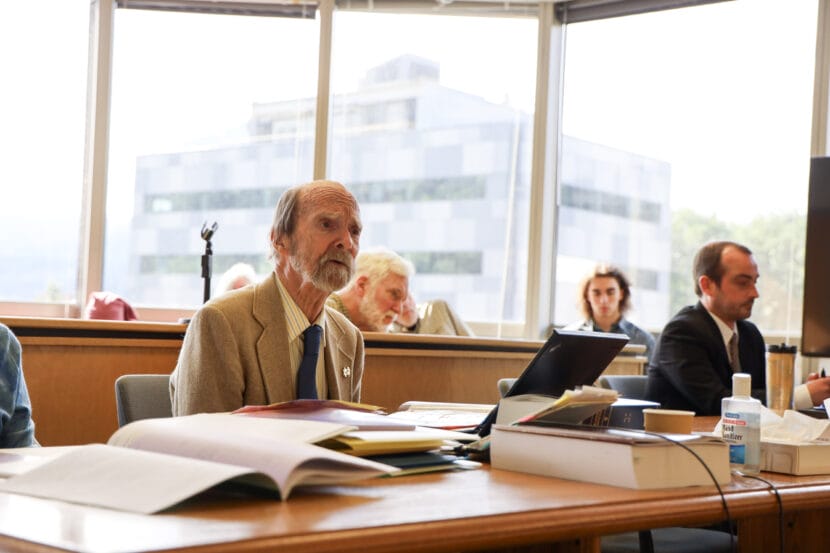
A Superior Court judge heard oral arguments on Tuesday morning for a civil lawsuit about the legality of the city’s planned redevelopment of the downtown Telephone Hill neighborhood.
The lawsuit pits former tenants of the neighborhood against the City and Borough of Juneau. The former tenants filed the joint civil case last fall, when the city was attempting to evict them and begin site preparation for redeveloping the neighborhood.
At the Dimond Courthouse in Juneau, attorneys on each side had an hour to argue their case. Several former tenants were in the audience.
“The ultimate issue here is really the fear — we’re afraid over here. There’s a room full of people behind me, and they’re all afraid,” said Fred Triem, the former tenants’ attorney. “They’re afraid that these historic ancient buildings are going to be smashed down, and there’ll be no replacement for them.”
The Telephone Hill neighborhood is city-owned, and sits on roughly four acres in the heart of downtown Juneau. All the people living there had been renting their homes since the state took ownership of the neighborhood in the 1980s. The state then transferred ownership of the land to the city in 2023.
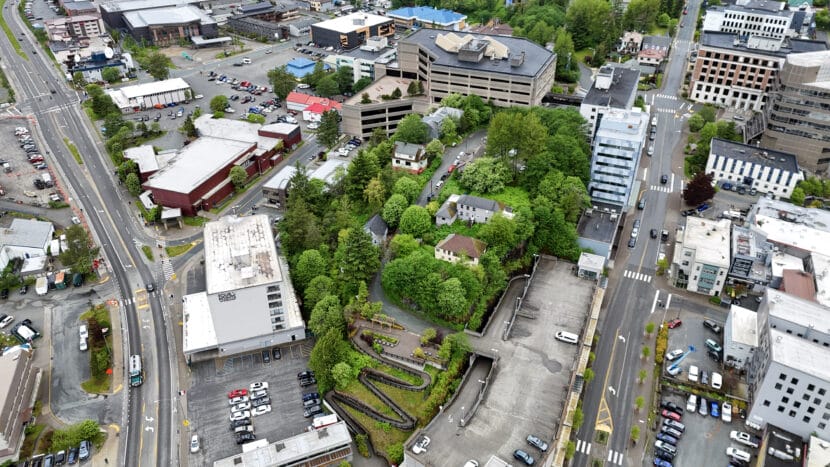
Last year, the Juneau Assembly approved demolishing the neighborhood and redeveloping it into newer, denser housing to address Juneau’s housing shortage.
The former tenants’ lawsuit seeks to halt that from happening in order to preserve the homes, which they argue are an important part of Juneau’s history and character. The hill and many of its houses were a part of the early Juneau townsite in the late 1800s.
The former tenants claim that the city had improperly evicted them, and that the city’s redevelopment project is illegally phased and fails to comply with federal and state historic preservation acts.
Triem, the former tenants’ attorney, largely focused his argument on the historic value of the homes and the city’s lack of a developer before moving forward with the redevelopment. He said his client’s principal fear is the demolition of the homes before a clear plan of what’s next.
“Once the demolition happens, there’s no way that we can restore the historic value of the neighborhood,” he said.
But Clinton Mitchell, the city’s attorney, argued that the city hasn’t done anything illegal to warrant halting the project.
“These are all basic understandings in the law, and I feel like plaintiffs have been unable to support any of their argument by citing any case law, statute, municipal code, or anything that supports their claims in this case,” he said.
Rather, he said the former tenants’ claims aren’t based on the rule of law.
“The arguments are more based in feeling and nostalgia and a desire to preserve historic homes, which I can appreciate,” he said. “However, these are not legal arguments and should not support their claims made.”
Superior Court Judge Amanda Browning did not issue a decision on the case on Tuesday. After the arguments, she said it could be weeks before she makes a ruling.
The city is currently still full steam ahead on the demolition unless directed otherwise by the Assembly or by Browning.

