

Democrat Jonathan Kreiss-Tomkins, a former state representative from Sitka, has a substantial lead in the race for governor as first-round votes begin to trickle in.
With 98% of precincts reporting, Kreiss-Tomkins leads with 49% of the vote.
“We’re pretty pleased with the numbers we’re seeing so far,” Kreiss-Tomkins said shortly after the first results were released.

Three Republicans make up the rest of the field: business owner Bernadette Wilson is in second with 29%, former Anchorage Mayor Dave Bronson is in third with 14%, and former Alaska Attorney General Treg Taylor is in fourth with 7%.
If Kreiss-Tomkins holds on to win, he’d be the youngest governor in state history and Alaska’s first Democratic governor since Tony Knowles left office in 2002.
In a state that routinely elects Republicans to statewide office, Kreiss-Tomkins, 37, made his “high-energy, bipartisan, problem-solving approach” a centerpiece of his campaign.
Also known as JKT, he described himself at a debate as a “man of the middle” and said he plans to build an administration made up of Democrats, Republicans and independents.
Fractured Republican field trails Kreiss-Tomkins
In second place is Republican garbage-hauling business owner Bernadette Wilson, a pugilistic former conservative activist and radio host endorsed by President Trump. She placed third in the primary behind Democrat Tom Begich, who dropped out shortly after the primary.
Wilson campaigned on revitalizing what she described as a “stagnant” economy and has promised large Permanent Fund dividends that would likely require breaking a statutory cap on withdrawals from the state’s oil-wealth nest egg. It’s Wilson’s first try at winning elected office.
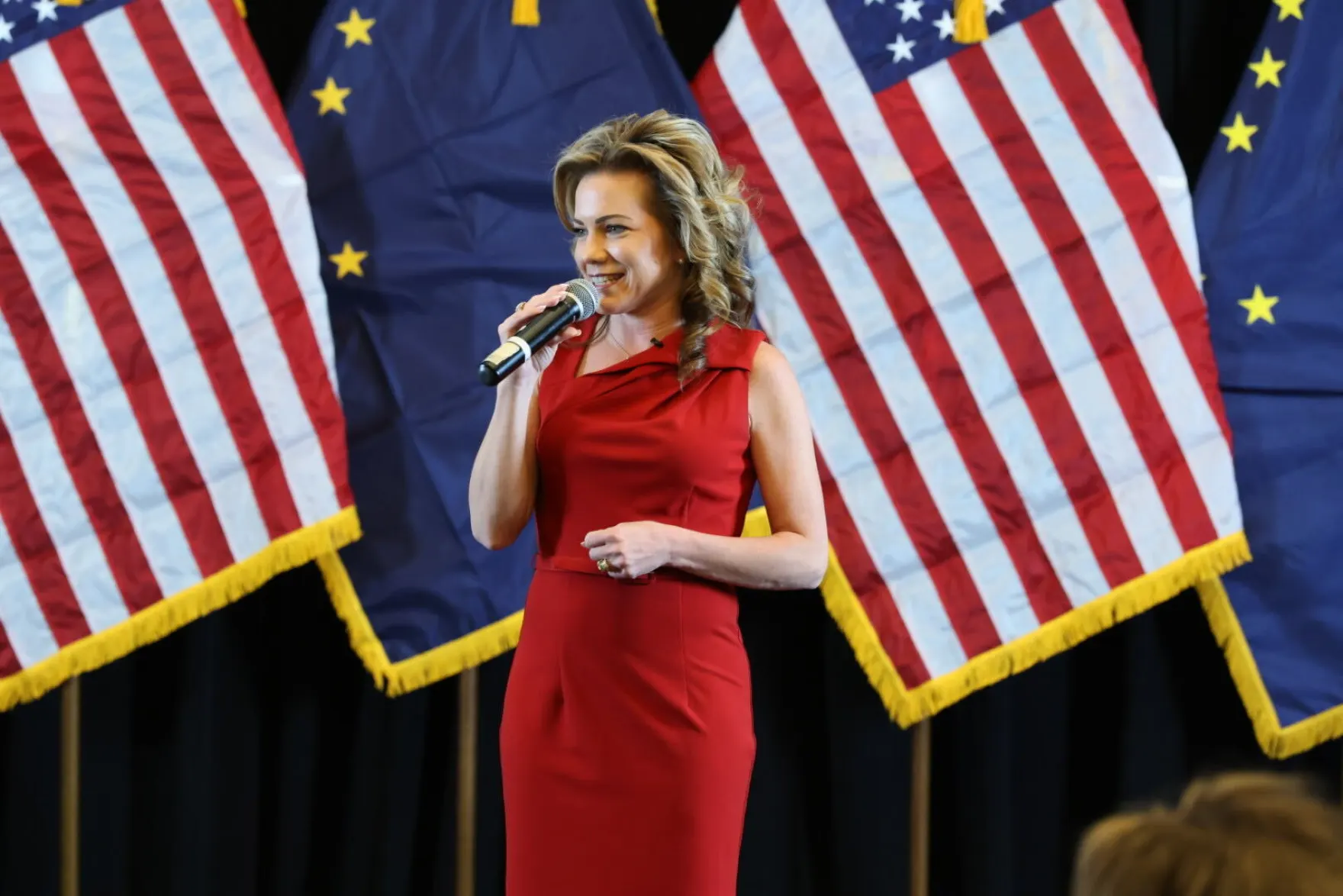
Wilson and other Republicans derided Kreiss-Tomkins as “Just Keep Taxing,” a play on his initials, over his plan to expand corporate income taxes on oil producers and a 2017 vote in support of a statewide personal income tax.
At an election results watch party in Anchorage, Wilson told supporters she was confident she’d overtake Kreiss-Tomkins when election officials tally ranked choice ballots Nov. 18.
“For two weeks, we get to fast together, and we get to pray together, because we are just getting warmed up,” she said. “We are right where we expected those numbers to be tonight, so we feel great.”
Former Anchorage Mayor Dave Bronson is in third place. Bronson emphasized his experience during the campaign, saying his three years leading Alaska’s largest city made him the best candidate to head up state government. He criticized Wilson repeatedly and publicly over her plans to pay large dividends, her lack of experience and a history of lawsuits over unpaid bills.
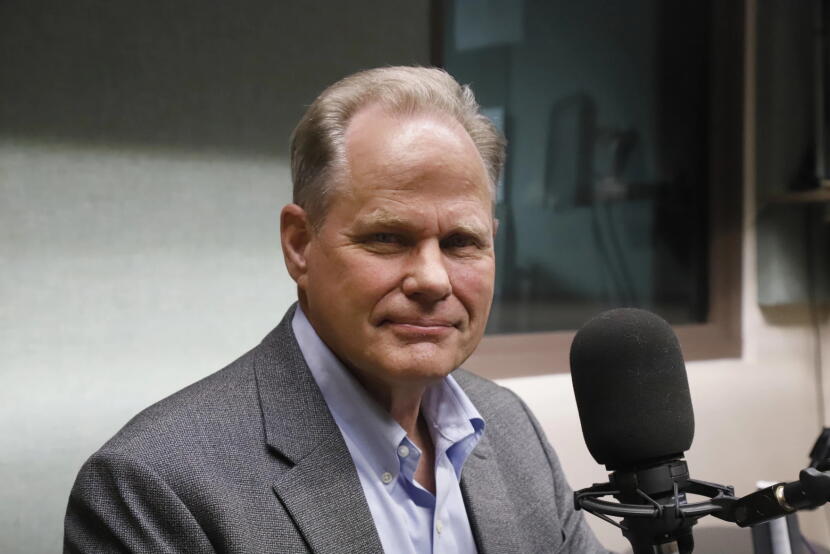
Bronson resisted calls, including from Trump, to end his campaign and throw his support behind Wilson.
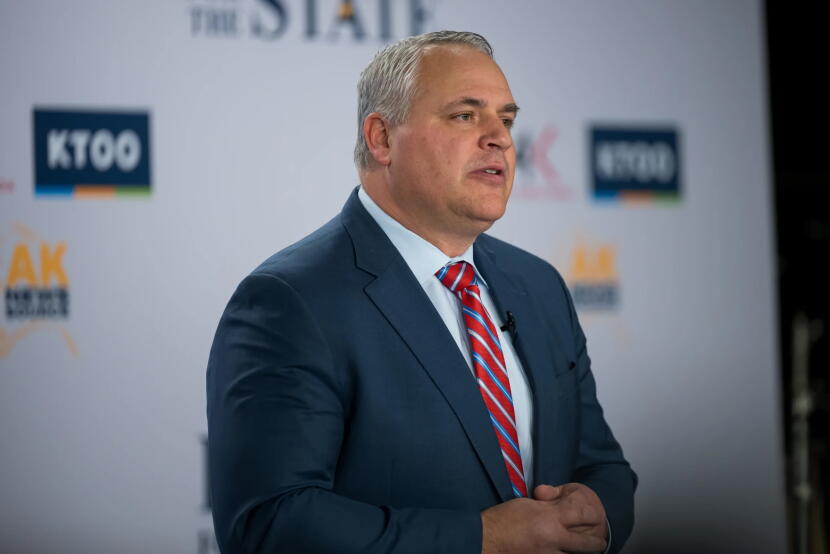
In fourth is former Alaska Attorney General Treg Taylor, who said he’d fight for conservative values while working across the aisle when necessary. He faced an uphill battle to get on the ballot: Lt. Gov. Nancy Dahlstrom initially disqualified him from running after regulators found he hadn’t filed a financial disclosure form properly in time. Dahlstrom later reversed herself and placed Taylor on the ballot.
‘People just want things to work’
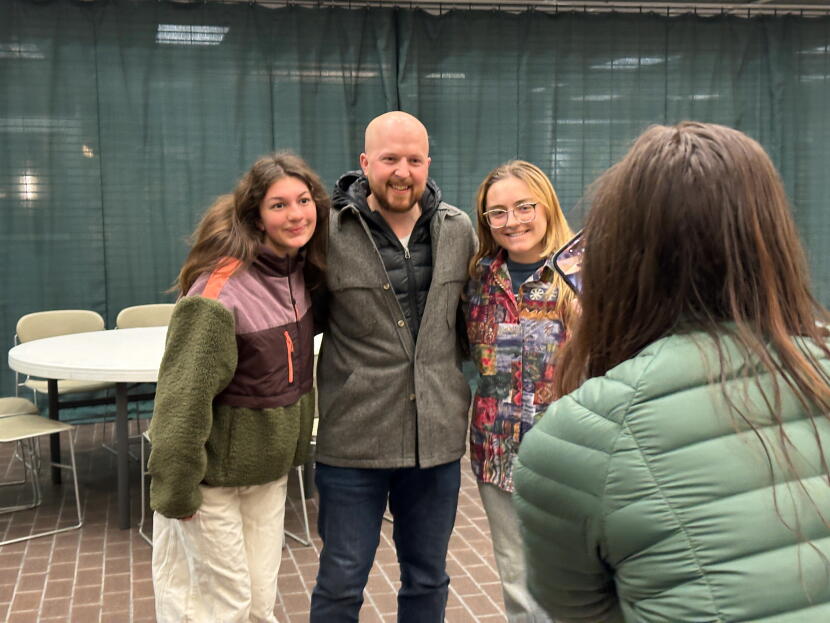
In an interview Tuesday morning, just before voting in Anchorage, Kreiss- Tomkins said Alaskans have had enough of partisan politics.
“I strongly believe people just want things to work, and want people to work together,” Kreiss-Tomkins said.
Whoever wins will take office in a state where voters have loudly complained that things aren’t working as they should.
Rising costs and relatively flat state funding have forced schools to close and class sizes to rise. Already-high costs for food, fuel and housing have risen sharply, and a looming shortage of easily-accessible natural gas is threatening to push prices higher.
Alaskans have been migrating out of the state for more than a decade.
Kreiss-Tomkins said his conversations with voters have yielded a “very, very long list of things that I’m really excited to fix.”
He barnstormed the state during the monthslong campaign, traveling 40,000 miles by car, boat, plane and snowmachine. He visited everyAlaska community with more than 2,000 residents along with dozens more smaller towns and villages, his campaign said.
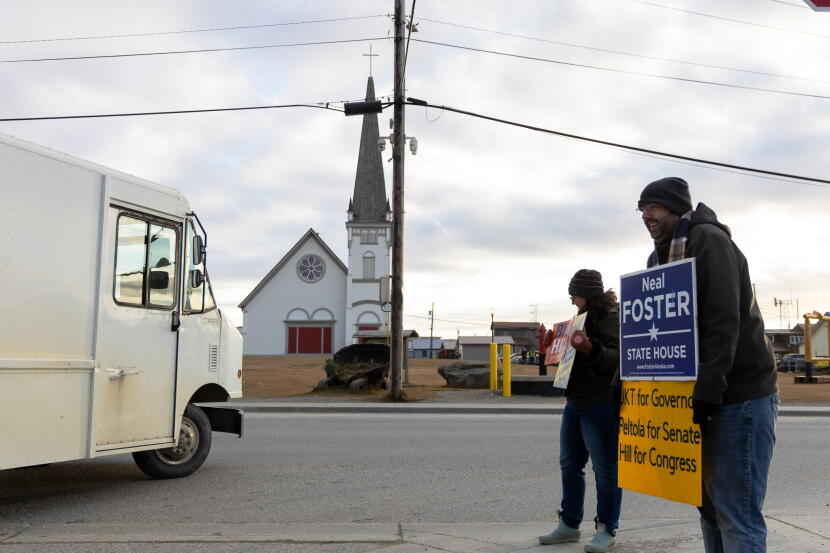
Kreiss-Tomkins spent the final weekend of the campaign traveling the Dalton Highway to Deadhorse, on the Arctic Ocean, while a campaign blimp with his initials flew over Midtown Anchorage.
“We’re playing every card in our hand,” Kreiss-Tomkins said.
The candidates are vying to replace outgoing Gov. Mike Dunleavy, a term-limited Republican who has been governor since 2018.
The winner is set to take office at noon Dec. 7.

