
Finding childcare in Juneau is difficult and can be especially challenging for healthcare workers who work nontraditional hours.
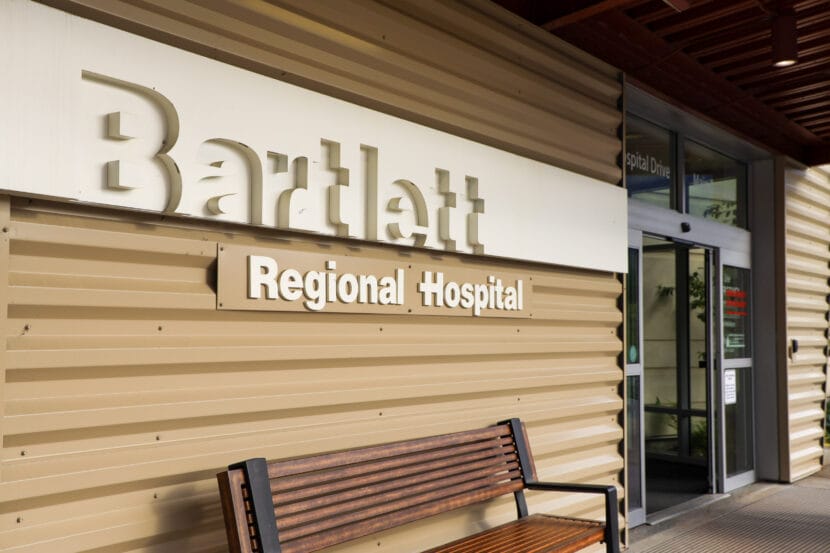
The strain may be slightly eased after a Juneau nonprofit received grant funding under the Rural Health Transformation Program. Approximately $215,000 will go toward creating a childcare center for Bartlett Regional Hospital employees.
Blue Shibler, executive director of Southeast Childhood Collective, said providing childcare to hospital employees can help with recruitment and retention, which will improve healthcare in Juneau.
She said the goal is to cater childcare access to employee needs.
“So if we hear that yes, we need to have a sort of a swing shift at the childcare center and be open until 8 or 9 p.m. or we need the opposite end, we need to be open at 6:30. We’re going to try to design it for that,” she said.
It’s a flexibility that many families need, like Kate Dempsey’s. She’s an obstetrics and forensic nurse, as well as a mom to a 1 and a half year old. Her current position is filled with 12 hour and longer shifts, as well as night and weekend shifts.
She loves working in obstetrics, but said balancing childcare with weekend and night shifts is challenging. Instead, she’s moving to a different department with more consistent hours.
“It’ll be a lot easier to find childcare for the same three days every week, as opposed to having monthly changes in my schedule or having to work night shifts, which kind of throws off my whole family’s life at this point,” she said.
Dempsey said she doesn’t know of any providers in Juneau that can currently accommodate her schedule. Her husband is a fisherman, so when he goes for weeks or monthslong fishing trips, Dempsey has to take time off from work to care for their child.
She said having childcare that works with her schedule would extend her longevity in the community, too.
“I think that Juneau is a really special community that I’m not ready to leave, but it’s getting more and more tempting, and a lot of that has to do with who’s taking care of my kid and who do I have to help with my kid,” Dempsey said.
Shibler, with Southeast Childhood Collective, said they already found a potential provider located about two miles from the hospital. Glacier Bears Childcare Center was displaced by the 2024 glacial outburst flood and eventually relocated to the current location. According to Alaska’s childcare provider search, the center was most recently licensed on Sept. 1 and can take in 30 children.
But more work needs to be done before the program can begin. Shibler said they need to figure out the childcare needs of employees, create an agreement between the hospital, nonprofit and childcare provider, and to prepare the center to fit family needs.
While the program will prioritize hospital employees, Shibler said families currently at Glacier Bears will not be removed from the program.
In addition to starting the program, two other grants will expand the collective’s ongoing programs. More than $150,000 will go toward its Parents as Teachers program to support families in the first three months after having a baby.
Another roughly $230,000 will expand its apprenticeship program to train people in Southeast Alaska to become early childhood educators.
More than a dozen other projects that include Juneau also received grant funding, which will go toward supporting various healthcare initiatives.

