
When someone experiences sudden cardiac arrest in Juneau, the average response time for Capital City Fire/Rescue is 9 minutes. On Sept. 1, CCFR launched an app that aims to cut down that response time. PulsePoint instantly alerts people trained in CPR to the exact location of nearby cardiac events.
The following transcript has been lightly edited for clarity.
Mike Lane: For people who have never heard of the app PulsePoint, what exactly does it do and how does it work?
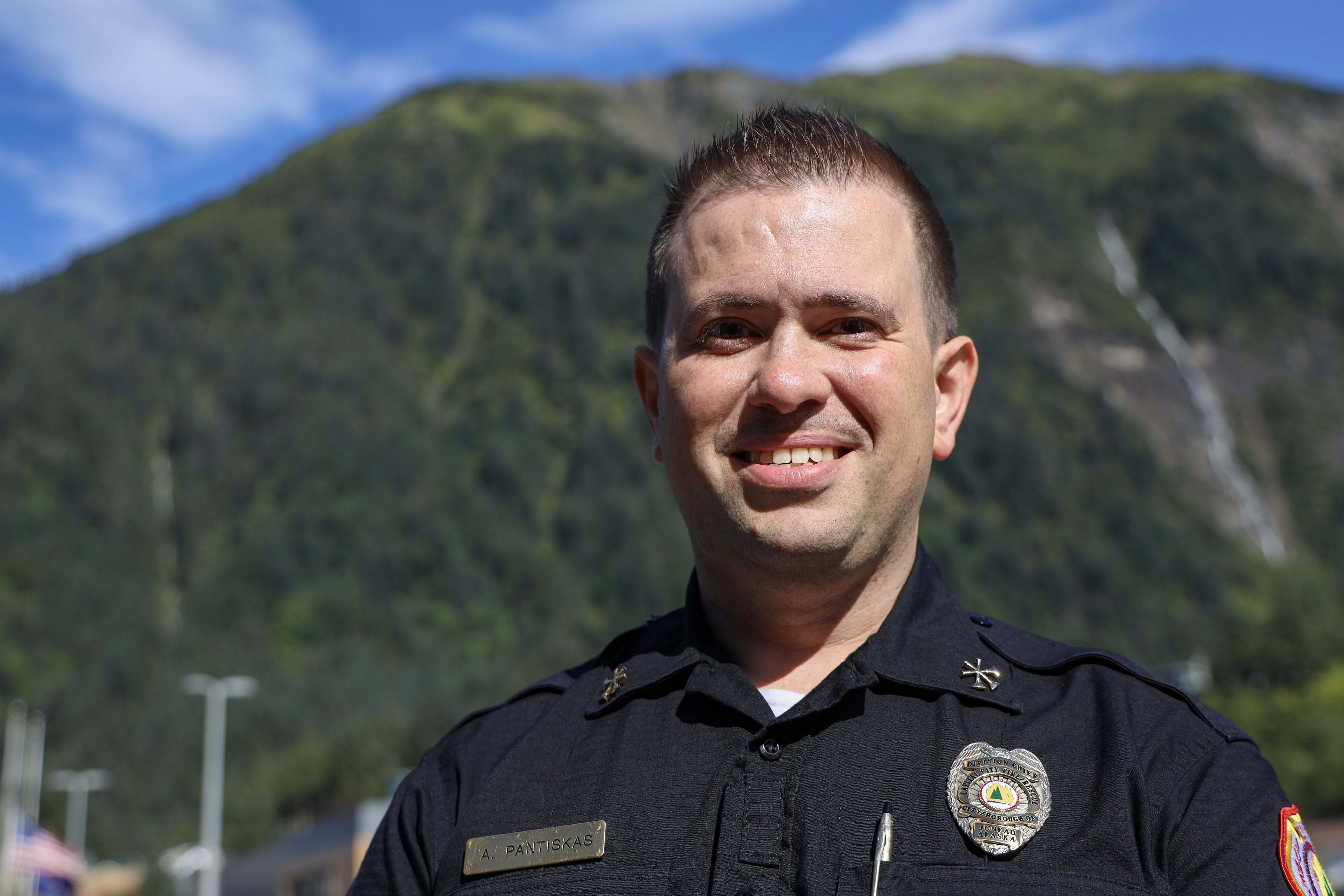
Andrew Pantiskas: PulsePoint is an application where, when someone calls 911 saying that someone’s in cardiac arrest or might be a cardiac arrest, it alerts trained bystanders to respond to the scene and initiate chest compressions. So through our normal dispatch processes, we alert PulsePoint, and it shows anyone who has the application and is trained in CPR where the event is and where the closest AED is, so that they can respond to scene to get high quality CPR started while we’re in route.
Mike Lane: How close does somebody have to be to the cardiac arrest victim to receive an alert?
Andrew Pantiskas: Right now, it’s about half a mile. We’re looking at over the next four or five months how many responders are pinged on our events, and we might expand, we might contract, but we’re working on that now. But right now, it’s about half a mile, quarter mile from the incident. What we want to do is get people who are close by, who are trained, who don’t necessarily have to get in their cars, drive there. It’s all about the ones that are able to get there first and start high quality compressions with an AED. So we’re going to play with it over the next year. Some agencies that use PulsePoint do a mile. Some do two miles. Some do quarter mile. It all kind of just depends, and we have vast geographic differences between Douglas, the Valley, Echo Ranch, and so we’re kind of playing with that right now.
Mike Lane: If someone receives a CPR needed alert, what exactly are you asking that person to do?
Andrew Pantiskas: So what we want them to do is one, receive the alert. Look at where it is. Think to themselves: Can I affect a difference? Can I get there quickly, safely? And then, can I bring an AED to the scene? Show up, grab an AED, and start high-quality compressions until JPD or ourselves arrive.
Mike Lane: And does the app tell the user where the nearest AED would be?
Andrew Pantiskas: It will as long as we have it mapped.
Mike Lane: How many AEDs are currently mapped in Juneau?
Andrew Pantiskas: As of right now, 169, which is absolutely amazing. I am so proud that at our rollout we have this much, and part of that’s due to our partners like Southeast Extinguisher, Bartlett [Regional Hospital], Tlingit and Haida, the Red Cross; we’ve been adding these over the course of the past six months.
Mike Lane: Why again did CCFR want to bring Pulse Point to Juneau?
Andrew Pantiskas: So we have a response time across the board of about nine minutes. And what most cities have found is most fire departments, we are we are at our station, we are in house, we get the alert, we’re out the door within two minutes, and we still have to drive to that area or get to the call. On average, it’s about nine minutes, and every one minute without high quality compressions is a 10% decrease in survival.
And so we wanted to bring this partly because we have people who go into cardiac arrest on trails. We may have someone who’s closer and able to the response. Prime example, Peter Metcalfe, who was one of my colleagues and one of the main impetuses in rolling this out, he went into cardiac arrest on Brotherhood Bridge Trail. There was almost no one around him from a responder standpoint. It took us quite a few minutes. His sister actually did 14 minutes of CPR on him prior to our arrival. With PulsePoint, we may be able to cut that 14 down to five. There may be someone jogging down the trail that knows CPR, can turn around and come back. We find that throughout Juneau, we have so many people in law enforcement, in the military, in the Coast Guard, Docks and Harbors, like people who are trained in CPR through CBJ, SEARHC, Guardian and Airlift — that if we can alert them, we can cut that nine minutes down to like hopefully a minute or two. This can save a ton of lives.
We do a good job, but the thing we can’t do, we can’t go build a ton of stations next to people that are going to have a cardiac arrest. We can’t bring an AED down a trail. But what we can do is use something like this to alert people who are trained to get there quicker.
Mike Lane: What training should someone have before they volunteer to respond?
Andrew Pantiskas: Any CPR training. People need it for their captain’s licenses, for their work in healthcare. And then there’s community AED CPR classes, teaching people to pump hard and fast on the chest and and grab an AED. Either of those is helpful. What we need is not someone who’s trained in the second half of the cardiac arrest response, we need people to show up, identify that they’re not breathing and they’re unresponsive, and start compressions.
Mike Lane: Where could I get the training I need before I sign up for PulsePoint?
Andrew Pantiskas: So if you already have the training, just download the app and go to PulsePoint. If you don’t have the training and want the training, there’s four places we really send people: Generation Southeast through Tlingit and Haida will do public classes, Southeast Extinguisher, Bartlett Regional Hospital, and the Red Cross. And if there’s any more that are listening to this that are not in that list, please reach out to me because I want to send you people.
The public can reach Andrew Pantiskas at Andrew.Pantiskas@juneau.org, or go to Capital City Fire Rescue’s website at juneau.org/fire.
