
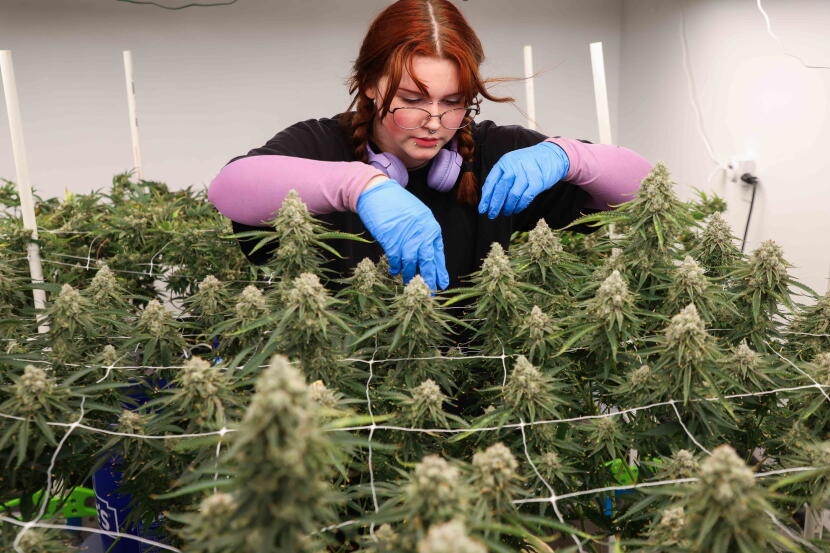
Many Alaska cannabis industry leaders say the way the state taxes them is broken, leading to lower revenue for the state and increased participation in the black market.
Since Alaskans voted to legalize recreational cannabis in 2015, the state has imposed an excise tax on each ounce growers sell to retailers and manufacturers. Ultimately, that gets passed on to consumers.
Many in the industry say the system needs reform, and one Anchorage lawmaker has proposed legislation to do that. But with the state facing many other issues and industry leaders divided on the path forward, the bill got little movement in the last legislative session.
At the same time, the number of licensed growers fell nearly a quarter between 2023 and 2025, according to data from the Alcohol and Marijuana Control Office. That’s a decline industry advocates attribute to increasing operational costs and what they say is a tax rate that is too high to be sustainable.
The growers, the tax and the state
Among those who would like to see changes are Shawn and Melissa Clark, who opened a retail store in South Anchorage called High Standards after more than a decade growing cannabis.
They got into retailing cannabis because they were no longer making enough profit through growing, Shawn said.
“This product, the price of weed, everything is coming down. Cannabis is coming down, but everything else is going up via our electricity, our fertilizer, our labor, everything,” Shawn said. “With the excise tax going on and hitting us cultivators as hard, we’re doing everything we can to figure out how to make a dollar.”
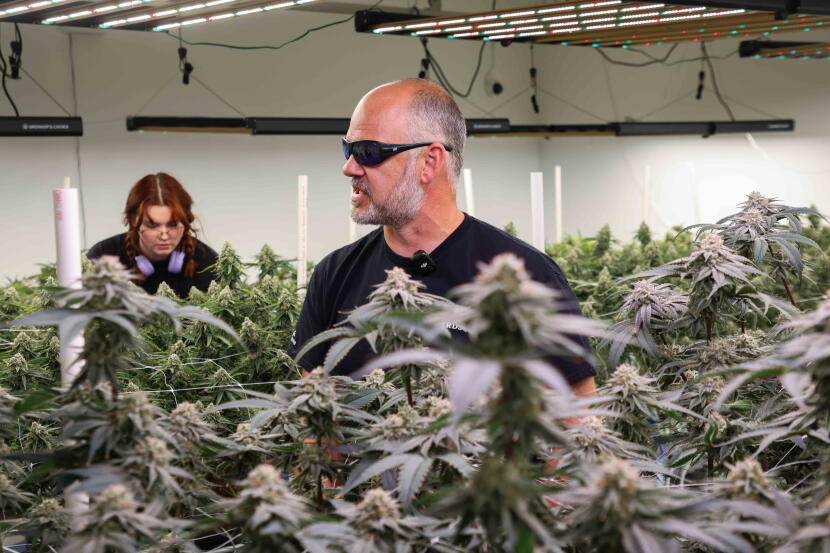
Of the 24 states that levy a cannabis tax, Alaska is one of only five states that tax based on weight. The majority of the other states use a sales or potency tax.
In Alaska, the best buds are taxed at a rate of $50 per ounce. For immature buds, it’s $25 per ounce, and what’s known as “trim” is taxed $15 per ounce.
Growers and advocates say that fixed tax does not account for changing market prices. Some say it is also too open to interpretation, with some growers miscategorizing products to pay lower taxes.
Problems with the tax structure are leading to lower revenue for the state, said Leif Abel, a cannabis grower and co-owner of Greatland Ganja in the Kenai Peninsula town of Kasilof.
Abel has been in the cannabis industry since the very beginning. His farm was one of the first to be licensed by the state, and he served on a task force Gov. Mike Dunleavy created in 2022 to find ways to improve the industry.
During any given month, Abel said, more than half of his income goes to paying taxes on the cannabis he grows. For example, if he sells 16 ounces of premium buds to a retailer, he has to pay the state $800 in taxes, no matter how much the product is going for on the market.
With little oversight from the state, some growers label their premium buds as lower-quality trim to avoid paying the higher tax rate, Abel said.
“We’ve been given these categories, and we’ve been told we’ve got to categorize them properly, and yet there’s not much oversight on the cultivators from the Department of Revenue, which creates this situation where how do we know what’s even common trade practice?” he said.
The trend industry leaders say they’re seeing, with growers reporting that they’re selling more lower-quality products, can be seen in reports to the Alaska Department of Revenue.
The amount of premium buds that Alaska growers sold retailers and the manufacturers of other cannabis products declined more than 70% from 2020 to 2025, while the amount of trim more than doubled, according to state data.
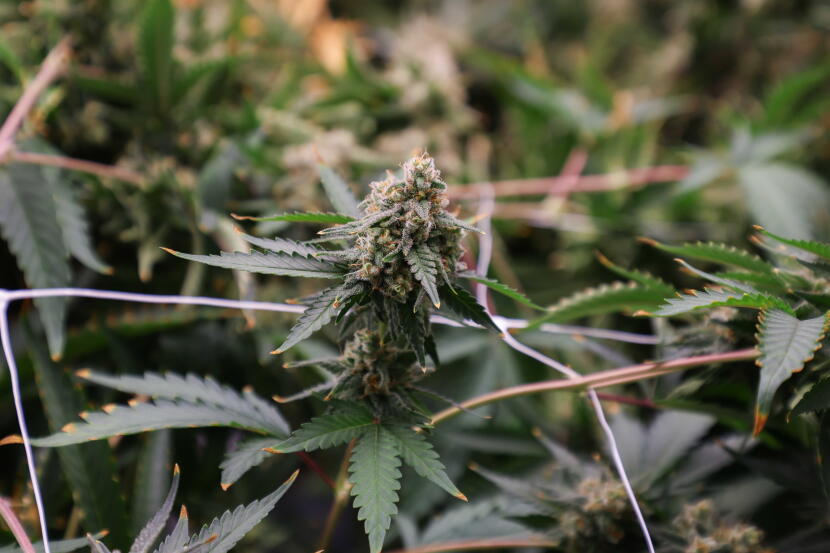
Meanwhile, the industry is sending less tax revenue to the state year over year.
In 2022, the cannabis industry brought in nearly $29.6 million in tax revenue for the state, according to the Department of Revenue. In 2025, the state made a little more than $25.3 million off cannabis taxes.
That decline also means specific state programs are getting less funding, because cannabis tax revenue goes to three funding pots: 50% to the Department of Corrections for recidivism reduction programs and 25% to the Marijuana Education and Treatment Fund. The remaining 25% goes to the state’s general fund.
“What’s happening and going to happen is that the state’s just going to continue to make less money off cannabis,” Abel said.
Although growers are the face of the tax issue, Trevor Haynes, president of the Alaska Marijuana Industry Association, said the tax impacts everyone.
“That tax is baked into the price all the way through, including when the retailer sells it to a consumer,” Haynes said. “It hurts everyone.”
And under the current tax structure, the unregulated market for illegal cannabis has thrived, Haynes said.
“If we can reduce taxes for the legal market, we will reduce prices,” he said. “People won’t be forced to go and shop for black market solutions for cannabis, and they can shop in the legal regulated market, which is in everyone’s best interest.”
The push for reform and the complications
In 2022, Gov. Dunleavy created a task force of cannabis industry leaders to look at ways to improve the industry. Among other recommendations, the task force determined changing the tax structure was critical for the industry’s future success.
The task force’s recommendations, including lowering the weight-based tax and eventually transitioning to a sales tax, manifested in House Bill 119 a year later. It stalled in the House Rules Committee.
The latest proposal, House Bill 91, was based on the same recommendations. It would have slowly changed the structure to a sales tax, first by dropping the weight-based tax to an across-the-board tax of $12.50 per ounce.
Rep. Ashley Carrick, a Fairbanks Democrat, introduced the bill. The state would initially see a decrease in revenue, which was a sticking point for critics, Carrick said.
But if nothing changes, the state will see an even greater loss, she said.
“You definitely have those in the industry who would like to see the governor’s task force recommendations implemented. You have others that want a much lower tax rate, and the more that the market suffers, the more that they want to see that happen,” Carrick said.
Rep. Andy Josephson, an Anchorage Democrat, said he has been cautious and conservative regarding cannabis tax reform. His main problem with the proposal was the decrease in funding to the Marijuana Education and Treatment Program.
The Department of Revenue projected that HB 91 would decrease tax revenue to the state by $8.1 million in fiscal year 2027. In subsequent years, the reduction in revenue would be $6.5 million in 2028, decreasing to $5 million by 2032, based on the department’s projection.
Still, the industry is divided on specifics in the proposed tax structure.
Some feel that a sales tax would be best. Others think a state sales tax on top of sales taxes imposed by local governments, like in Anchorage, would be too much of a burden.
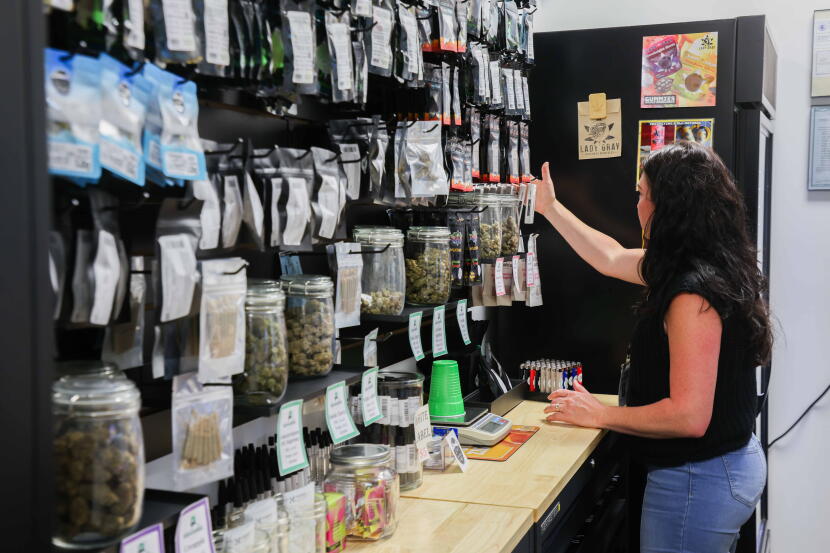
The general consensus in the Legislature is that there needs to be some reform to protect the cannabis industry, but Josephson described the last legislative session as “exhausting.” Legislators had more important things to worry about, he said.
“When you’ve got (state employee) retention reform problems, the gas line, climate issues, education funding, the rural health transformation program, you know, all of it, this just doesn’t rank,” Josephson said.
Abel, the Kasilof grower, said he gets it.
“From the politician’s perspective, they’re stuck between a rock and a hard place a little bit,” Abel said. “It’s actually unpopular for them to change the status quo, because some people might understand that in the long run it’ll make the state more money, but in the short term, a lot of their constituents don’t understand that.”
Carrick said she plans to reintroduce HB 91 in the next legislative session. She said she hopes that the Legislature can come together to find a solution.
“If the preponderance of the industry can live with changes that better support them and still support Alaska’s state revenue, and that legislators can get on board with, then we found a solution,” Carrick said. “It is my hope that we elevate it and that it becomes a major issue for the next Legislature.”
