
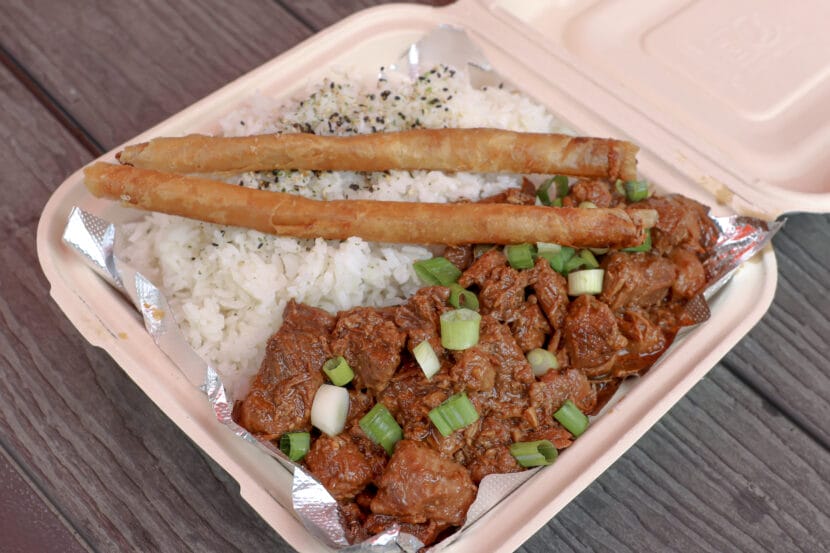
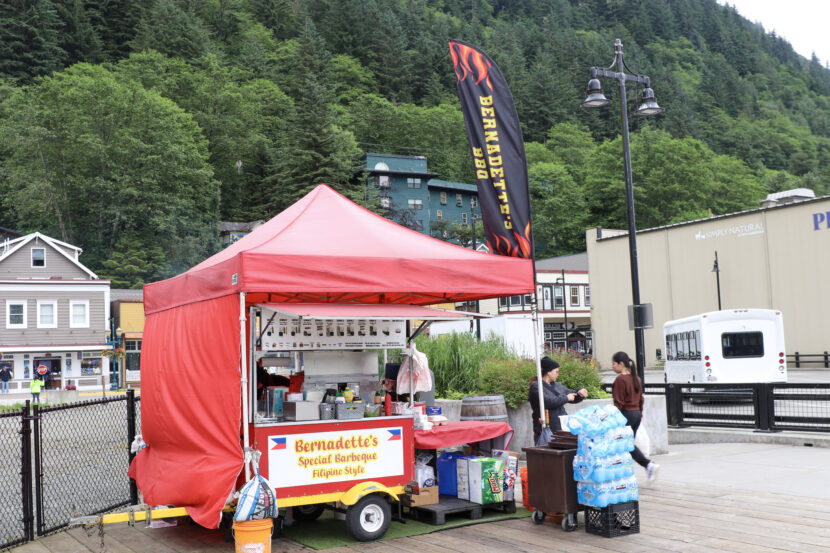
In the middle of a downtown Juneau lunch rush in July, the smell of garlic, vinegar and soy sauce drifted through the cruise ship docks. At Bernadette’s Filipino food stand, tourists and locals waited in line for Filipino favorites like lumpia, pancit and adobo.
For some people, it was an introduction to Filipino food. For others, like cruise ship worker Leonard Lee Salutis holding a plate of pork adobo, it’s a taste of home.
“My mother always cooks me this adobo because it’s one of my favorite dishes,” he said.
For many Filipinos, that connection is what makes adobo more than a meal. It’s a tie to family, memory and tradition. But there is no single way to make it. Ask ten Filipino families how to cook adobo, and chances are you’ll hear ten different recipes.
“Everybody has their own,” said Alex Carrillo Jr. of Carrillo Caldo Food Truck, located near the Juneau Arts and Culture Center. “There’s so many different versions of adobo.”
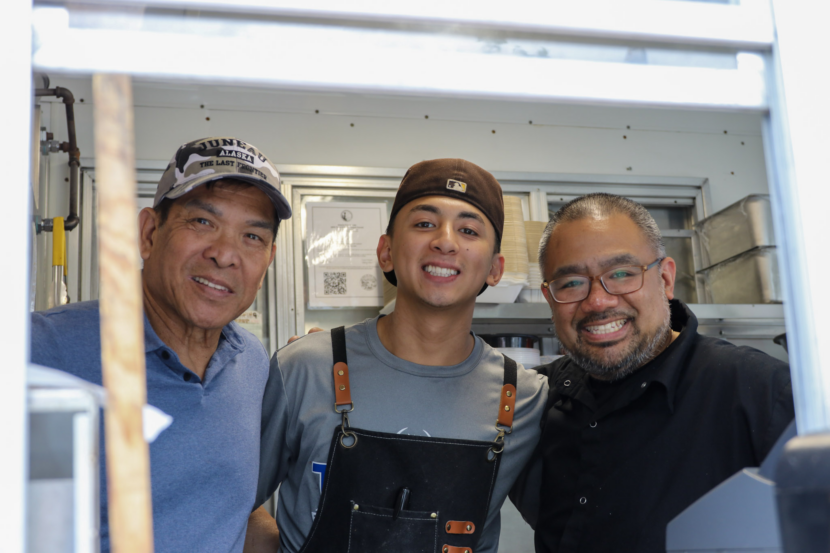
Inside the food truck, cooks Carrillo Jr. and Ray Dumaop spoke about what makes the dish so personal. For Carrillo, the differences between recipes are exactly what make adobo special.
Those differences can come down to something as simple as texture.
“Like me, my adobo is different because we make the adobo dry,” Dumaop said.
Adobo is one of the Philippines’ most recognizable dishes. At its simplest, it’s just meat cooked with vinegar, soy sauce, garlic and spices. Over generations, families have adapted the dish based on their region, ingredients and preferences.
Some like their adobo saucy. Others cook it almost dry. Some add potatoes. Others say it isn’t complete without hard-boiled eggs.
In Juneau, those small variations live inside family kitchens, restaurants and community gatherings.
How tradition continues
Back on the cruise docks, at Bernadette’s food stand, Criselda Teves served Filipino dishes during the busy summer season. Teves grew up watching her mother Bernadette cook and learned by example.
“My mom taught me how to cook adobo,” she said. “It’s a simple Filipino cuisine.”
But even within the same family, recipes can change. Teves has added her own touches.
“If I cook, I put potato or quail eggs,” she said. “Try something different, you know, so it’s not boring.”
For Teves, those changes do not take away from tradition — they’re a part of how tradition continues.
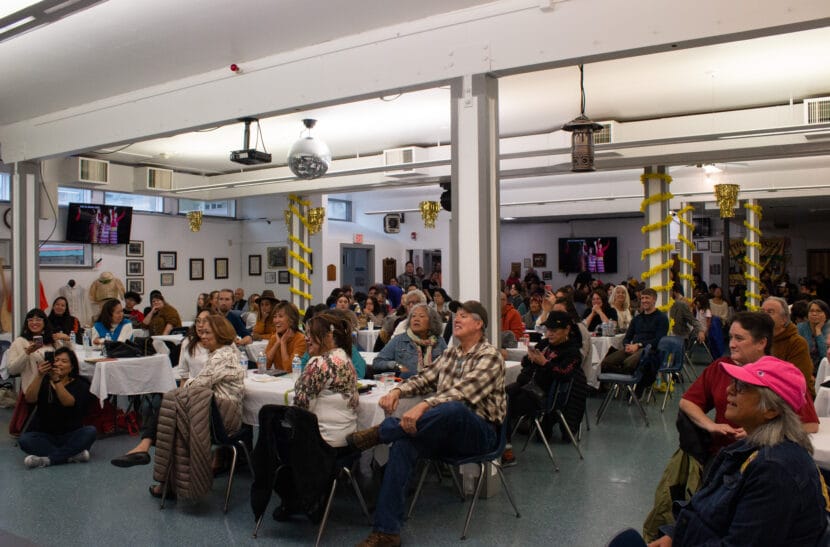
Off the docks and into downtown, Imelda Soriano attended a monthly meeting at the Filipino Community Hall. Imelda Soriano said adobo has always been part of everyday life. Soriano grew up in the Philippines and has lived in Juneau for two decades. She learned her version from her grandmother.
“Adobo to me is a staple food for us, so we always cook adobo, different kinds like chicken, pork, and in the province we have a delicacy wherein we even do the frog as an adobo,” she said. “Adobo is really like a special food for us.”
Her recipe is simple; pork, onion, garlic, black pepper, bay leaves — and taking some time.
The cut of meat matters, Soriano said. She prefers pork with skin and some fat because it adds flavor as the dish cooks. And like Carrillo, Soriano prefers her slow-cooked and her sauce reduced.
“I want it a little bit dry, so the fat of the meat will come out naturally,” she said.
Her favorite way to eat it: fresh rice, adobo on top and a hard-boiled egg.
“Adobo is really part of our life, just like rice,” she said. “Rice is life, and adobo is life.”
And generations ago, adobe was a meal a family could enjoy without modern conveniences.
Before refrigeration was common in the Philippines, Soriano remembers her grandmother hanging a covered pot of adobo in the kitchen.
“We put it in a big pan, cover it, and then hang it because at that time we don’t have any refrigerator to keep the food, and it stays long. It doesn’t spoil at all,” she said.
Hanging or elevating the pot kept critters away while salt and vinegar helped preserve the meat.
Connie Lumba has lived in Juneau for decades and said her adobo comes more from experience than a recipe card.
“I don’t measure when I cook. I’ll just put a little bit of this, a little of that, then I’ll taste it,” she said. “When the taste is good, then I stop putting the ingredients. That’s how I cook.”
Lumba usually cooks chicken adobo. She adds ingredients like lemon, balsamic vinegar, garlic, soy sauce and bay leaves. When asked how much of each ingredient goes into the dish, she said the answer comes from her deep knowledge of the flavor.
She joked that even her daughter can’t quite recreate it.
“She says, ‘Mom, my adobo doesn’t taste like your adobo,’” Lumba said, laughing.
Tradition of adaptation
For chef Rachel Carrillo Barril, adobo represents both tradition and creativity. Barril is the chef de cuisine at In Bocca Al Lupo in downtown Juneau. She grew up eating her family’s version of the dish, which reflected influences from different regions of the Philippines.
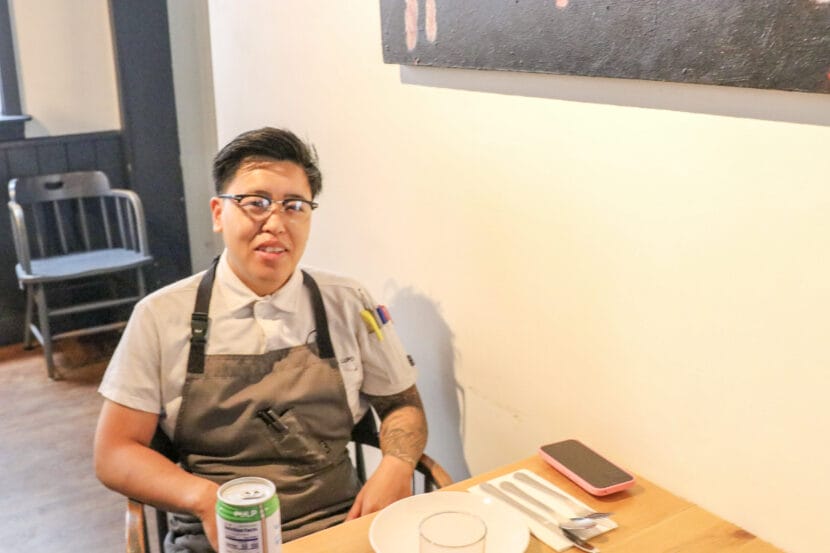
“The way my mom made adobo — the one that I grew up on — she kind of took parts and bits of the styles of adobo from the different people that were influencing her at the time,” she said. “Her adobo that I grew up with was half Visayan and half Ilocano.”
Her mother’s version was sweet, vinegary, garlicky and full of sabao, or sauce.
“Because all of us kids really liked the sabao, she always made extra sabao in her adobo, so extra saucy to put all over our rice,” she said.
Those memories continue influencing Barril’s own cooking. Now she’s continuing the tradition of adaptation in her kitchen.
This summer, she’s served adobo at the restaurant – in a potato salad side dish served with wild king salmon on the specials menu.
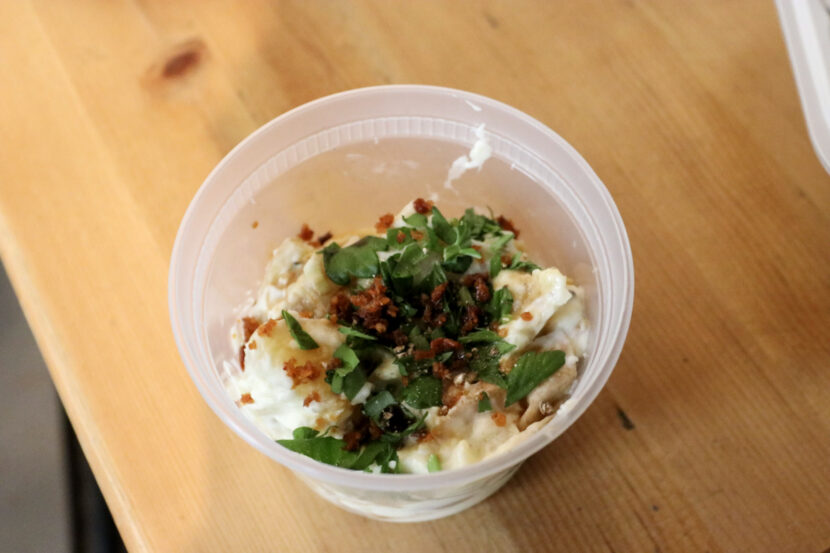
“I took the flavors of the adobo and tried to recreate the flavors that I would get from the potatoes. And instead of using regular soy sauce, I use white soy, so you have that nice clean white potato look, but all the flavors of adobo, and it looks like a potato salad,” she said.
A connection between generations
Like many Filipino cooks, Hans Javier’s recipe combines what he learned from his family with techniques he discovered himself. Instead of exact measurements, he uses ratios.
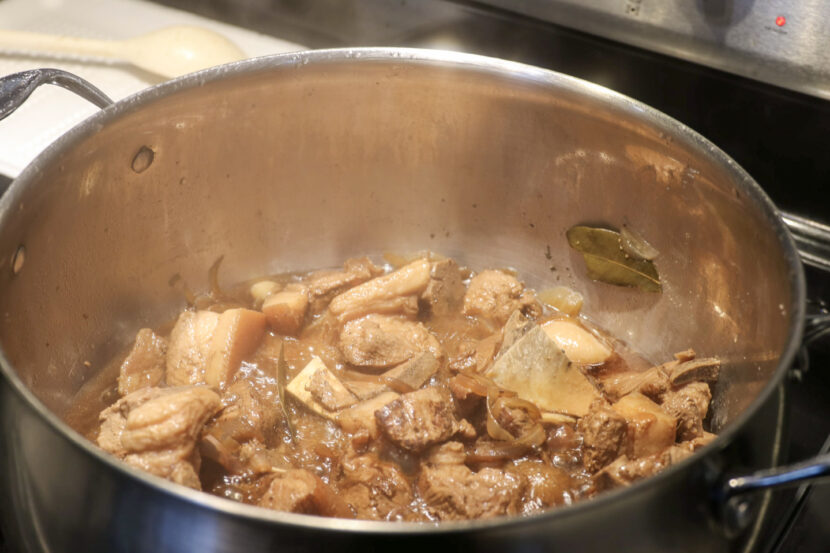
“Like a two-to-one, so two parts vinegar to one part soy sauce, and then one part water,” he said.
Before adding the sauce, he likes to brown the meat first.
“Why? I don’t know. I feel like it tastes better,” he said.
And Javier has experimented with different proteins.
“Whether you want to eat pork or chicken, or even squid — you can adobo it,” he said, laughing.
Javier was a budding chef in his family when he was growing up.
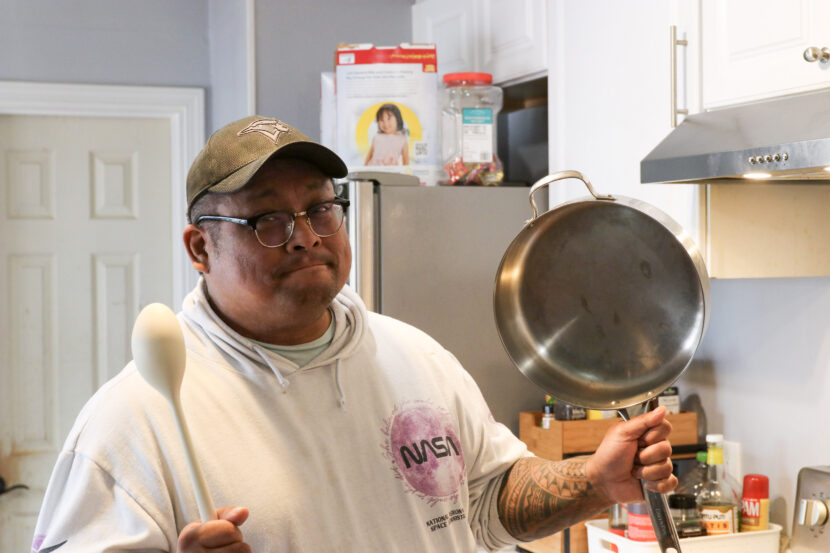
“Growing up, with my parents both cooking, out of my siblings, I was always the one in the kitchen with them, on a chair stirring the pot,” he said.
Those moments shaped how he sees food today. Cooking became more than a skill — it became a way to care for others.
“It’s kind of just like second nature to me, and it’s like a language of love too,” he said.
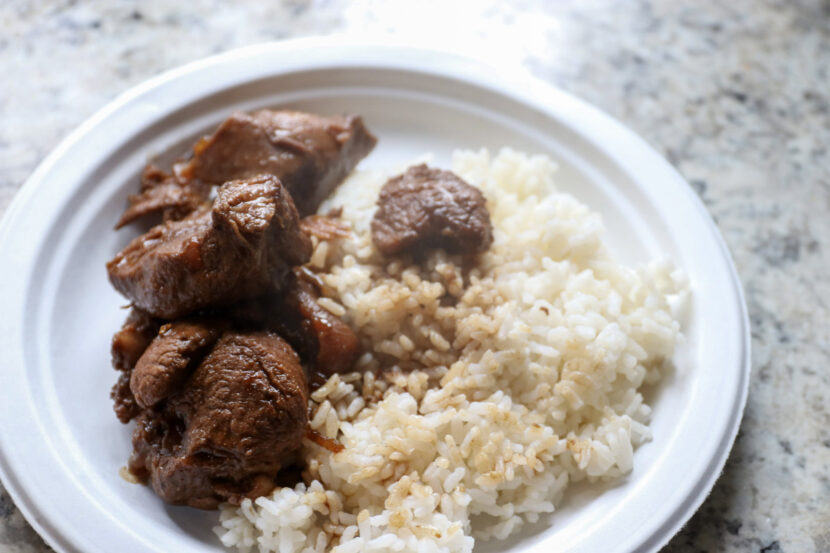
Across Juneau, every version of adobo carries something different: a mother’s technique, chef’s interpretation, a cook’s personal touch and evolutions of flavor. Some versions are measured carefully. Others are made by instinct.
But every version tells a story.
Each one reflects where a family comes from, who taught them to cook, and the memories their families have carried from the Philippines to Alaska.
