
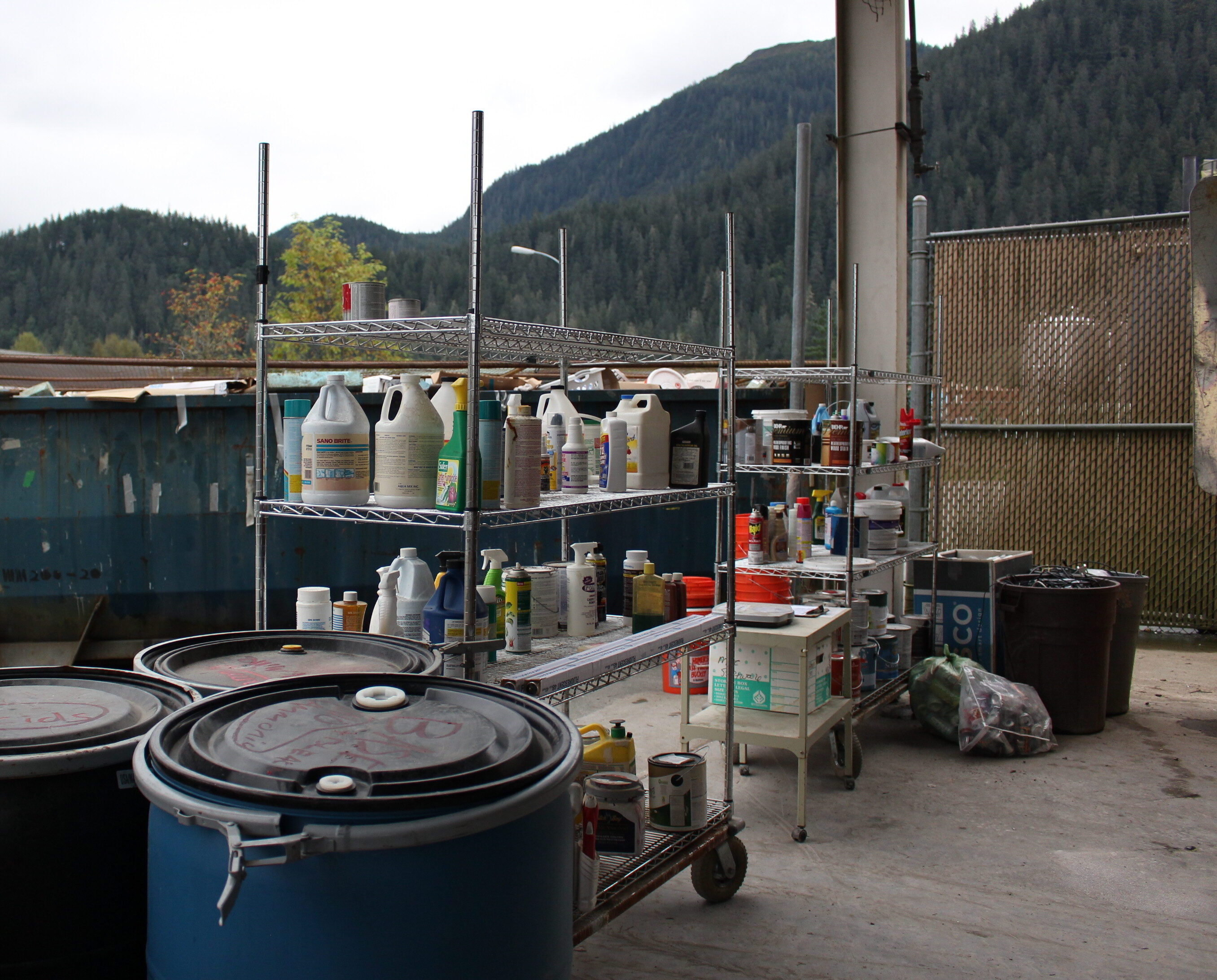
Alaska will now regulate its own hazardous waste. The U.S. Environmental Protection Agency handed over the responsibility to the Alaska Department of Environmental Conservation on Thursday.
This makes Alaska the 49th state with an authorized hazardous waste program. Only Iowa lacks one. State regulators will oversee the generation, transportation, treatment, storage and disposal of qualifying waste produced in Alaska.
Lori Aldrich manages the state’s new program and said not much will change.
“A big part of our job is just protecting human health and the environment, and you know, that’s going to be our focus,” Aldrich said.
She said it makes sense for the state to take on the program because there are some waste management challenges unique to Alaska. A major one, she said, is transporting hazardous materials out of state.
Federal regulators expect the waste to be disposed of within 45 days of shipping.
“A lot of shipping out of here takes more than 45 days, so it’s not unusual,” Aldrich said.
Most hazardous waste produced in the state doesn’t stay here and much of it leaves on barges, she said. Aldrich hopes to allow 60 days for transportation instead.
According to EPA data, Alaska shipped nearly 2,000 tons of hazardous waste to treatment and disposal facilities in the lower 48 between June 30, 2025 and June 30, 2026.
About 2,729 tons of hazardous waste were generated in Alaska in 2023, according to the most recent EPA report. The three largest producers were the Petro Star Valdez Refinery, the Eielson Air Force Base Superfund site and US Ecology Alaska, LLC, a company that handles hazardous waste and spills. Together, they were responsible for 57% of the hazardous waste generated in Alaska that year.
The state Legislature adopted new hazardous waste regulations that went into effect last summer. For the most part, the state’s rules now mirror federal rules under the Resource Conservation and Recovery Act.
Aldrich said one of the main differences is how commercial electronic waste is categorized.
“We’re going to allow people, if they choose, to do electronics as universal waste, which basically reduces the rules for shipment,” she said.
She said the purpose is to make it easier for companies to transport used electronics to treatment and disposal facilities.
Aldrich estimates running the hazardous waste program will cost about $1 million per year and said it will be managed by six department staff, including her.
