
Listen to this story:
A controversial gold mine proposed within the Tongass National Forest in Juneau was authorized to go through a faster federal permitting process on Thursday. Some Juneau residents say they worry the mine would turn the serene area into an industrial zone.
The New Amalga Gold Mine is now the fifth proposed mine in Alaska that’s secured what’s called FAST-41 permitting through the Federal Permitting Improvement Steering Council, which expedites the environmental review process for infrastructure projects.
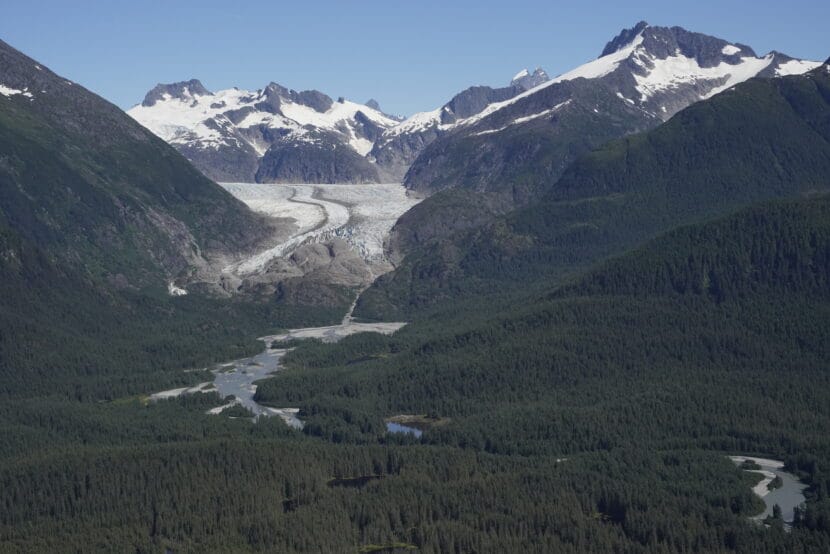
The mine is proposed at the face of Herbert Glacier in Juneau by Grande Portage Resources, Ltd., a Canadian junior mining company.
“Grande Portage thanks the Permitting Council and looks forward to working with the agencies and Juneau community to ensure the New Amalga Gold Project meets and exceeds the highest standards of environmental management and regulatory compliance,” Grande Portage CEO Ian Klassen said in an email to KTOO.
But some Juneau residents aren’t convinced.
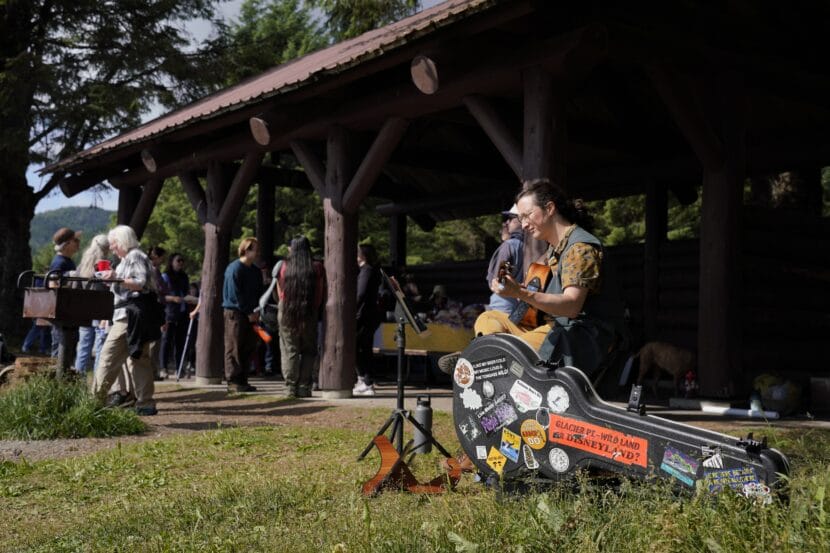
Stacy Unzicker is a mining campaigner at the Southeast Alaska Conservation Council. The nonprofit organized a barbecue at Eagle Beach in mid-July, where around 50 Juneau residents rallied against the proposed mine. Unzicker said she wants to see a careful risk-to-benefit analysis of the project.
“It feels like the rubber-stamping of less rigorous permitting to just get these things built,” Unzicker said at the event. “Shouldn’t we slow things down and really make sure we have good baseline data? That we’re making decisions that we’re not going to regret later?”
According to the permitting website, FAST-41 does not necessarily mean that the project will be approved.
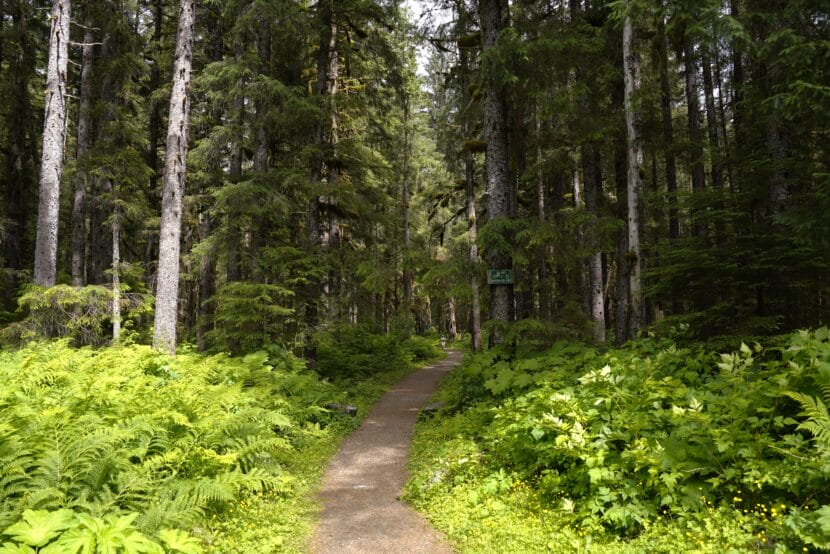
The proposed mine’s operations would cut through forest and wetlands in a popular area for outdoor recreation near the Herbert Glacier, Eagle Glacier and Windfall Lake trails. Last month, the U.S. Forest Service said the proposed mine played a key role in the agency’s decision to cancel a public-use cabin planned nearby.
Mazelle Joseph, a Lingít teen, said she wants to see the forest protected instead of mined.
“I think that the trees out here, you know, they’ve breathed in the carbon dioxide of my ancestors, and given me oxygen, given us all oxygen,” she said at the barbecue.
Joseph said she’s worried about the area becoming more developed.
“I feel like if this area was to be industrial, it’d, like, take away a lot,” she said.
The New Amalga mine would include underground tunnels near the Herbert Glacier, an access road through state and national forest land and a 30-acre materials handling area near the Herbert River.
Grande Portage plans to run about 72 ore trucks per day from the mine site 20 miles north to an ore barge dock at the controversial Cascade Point terminal. From there, it would be shipped overseas for processing.
Downtown Juneau resident Stuart Cohen said he’s concerned about the noise.
“As far as what Juneau gets out of it, we lose a watershed that’s going to become a noisy industrial zone, and the end of the road will become industrialized with big ore trucks rumbling,” Cohen said at the barbecue.
Richard Carstensen is a local naturalist who co-founded Discovery Southeast, a nonprofit that gets kids involved in the outdoors. At the Eagle Beach event, he said the area locals affectionately call “out the road” is special.
“When you think about the facilities out the road — the Eagle Valley Center, the Methodist Camp, the Boy Scout Camp and the Echo Cove Bible Ranch — they’re all about children and the future of our community,” Carstensen said. “So many people who are now adults and even grandparents had their foundational experiences in nature out here.”
Juneau’s two existing mines, Coeur Alaska’s Kensington mine and Hecla Greens Creek mine, are both located in remote areas that are not on the road system. They’re also the top two largest local taxpayers.
A preliminary economic assessment projects the New Amalga mine has an initial lifespan of 7 years and about a million ounces of gold. In April, a company spokesperson said the mine could supply Juneau with 277 jobs.
The federal council has not yet posted a permitting schedule, so it’s unclear exactly how fast the environmental review process could go under FAST-41.
According to a 2023 analysis by the Environmental Law Institute, federal agencies completed environmental impact statements for projects with FAST-41 status an average of 2 years quicker than they did for projects without that status, which averaged 4.5 years between 2010 and 2018.
