
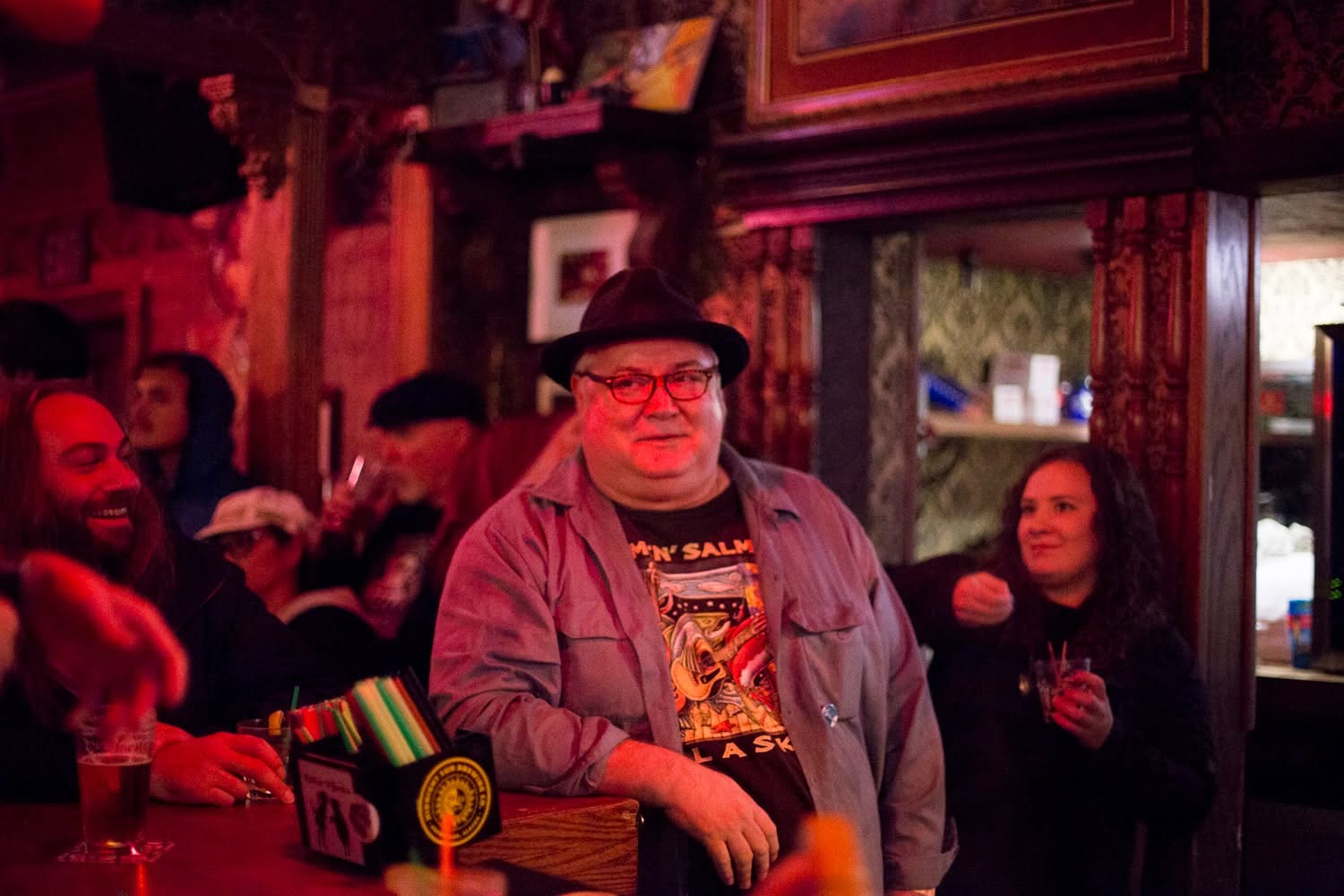
For C. Scott Fry, music was a lifelong passion.
“I knew, ever since I was probably like five or six, that I wanted to play music. I know the exact epiphany eureka moment,” he told Rob Weber in early 2015. Weber was a fellow KRNN volunteer DJ and produced a sound portrait of Fry.
At the time, Fry was living in Newport News, Virginia. He had a neighbor who was in junior high school and lived in a house that was kitty-corner behind Fry’s.
“Him and his friends had a band, and in their living room they had a piano, some drums, a bass and a guitar. And we all sat on the back of the top of the couch, and they played music. I don’t remember what song it was, but it was probably something like ‘Crocodile Rock,’ which was at that time the hit song on the radio,” Fry said.
“Whatever song it was, I knew the song and recognized it, and I smiled from ear to ear, and I knew right then that that’s what I want to do.”
Carl Scott Fry, also known as C. Scott Fry or Scotty or Scott, would go on to play in a countless number of bands. After moving to Alaska in the 1980s, he became a fixture in the Juneau music scene performing music, hosting open mic at The Alaskan Hotel, and booking bands. He had a music show on KRNN on Saturday afternoons called “Fry’s the Limit.” Fry was known to many as the “mayor of South Franklin.”
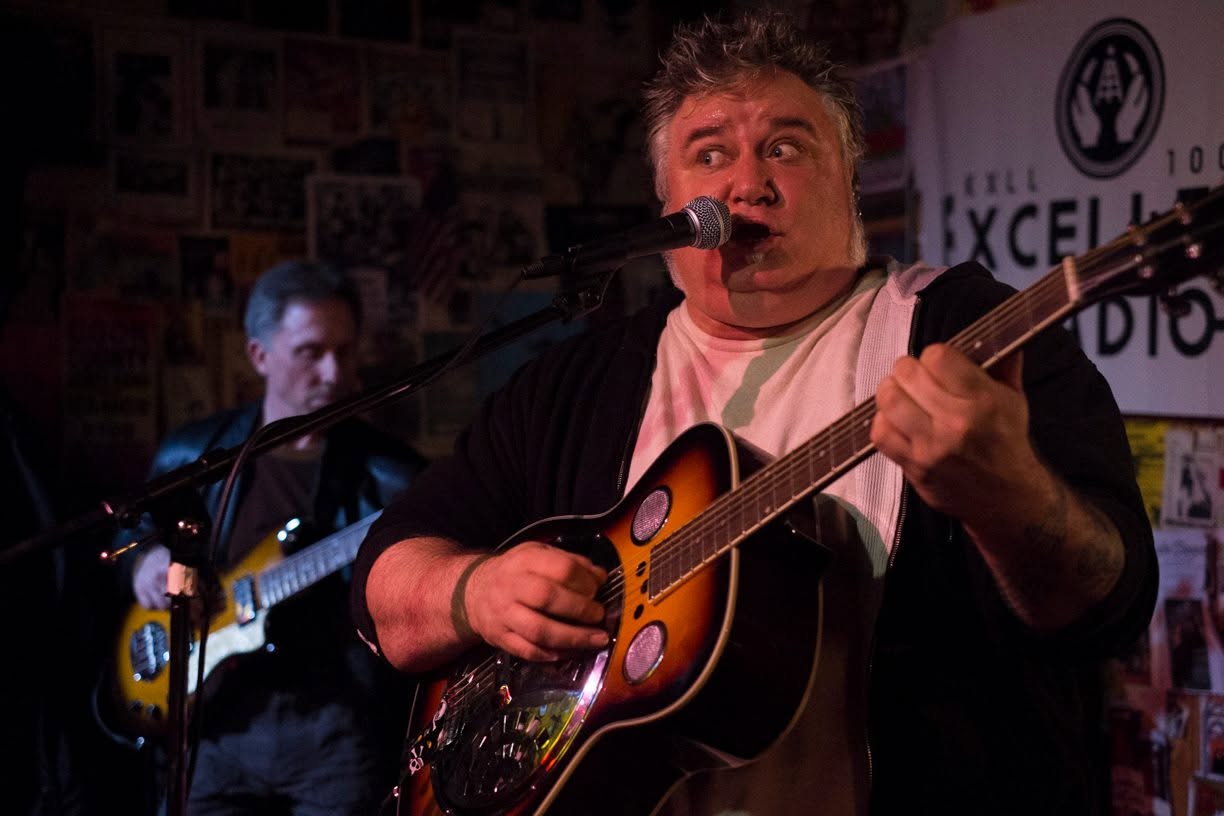
Fry died Sept. 22, 2026, in Texas, several years after leaving Juneau following a serious assault.
The Alaskan Hotel & Bar, where Fry worked as a bookkeeper and general manager, is hosting a remembrance for him on Saturday, Nov. 7, from 7 to 9 p.m. Sean Tracey, Andy Koch, and Matt Costa will perform, followed by an open mic, according to a Facebook post.
Fry was born on Oct. 3, 1964, in Mt. Vernon, Ohio. According to his obituary in the Juneau Independent, his father was in the U.S. Coast Guard and their family moved around a lot.
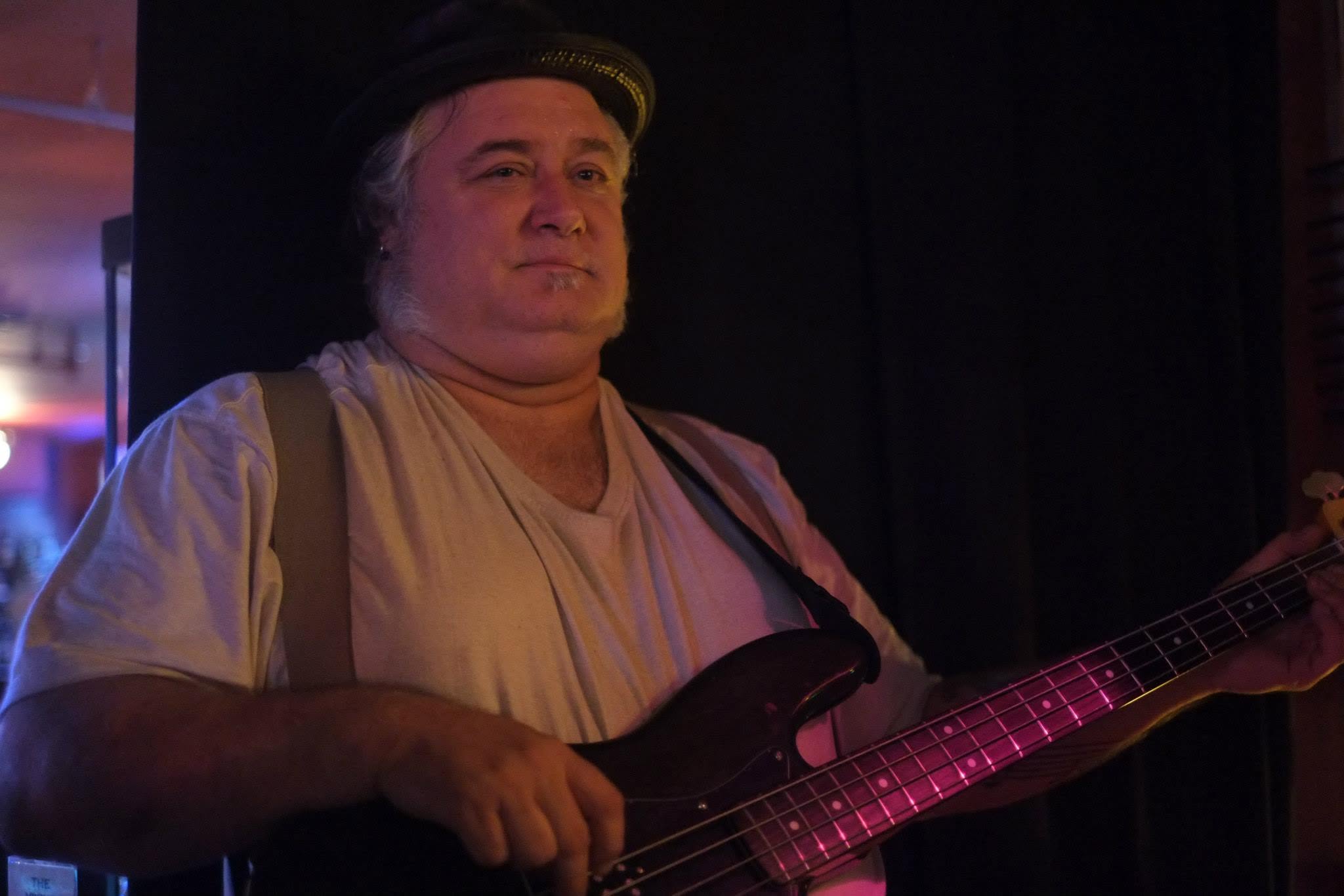
Fry told Weber in 2015 that the first instrument he was ever given was an autoharp. But, he eventually learned how to play the bass and performed all over the country. He played clubs. He busked.
“Busking is always a challenge. Some places are friendlier than others. Some places it’s just flat out against the law. Some places you might be playing in somebody’s spot that’s been playing there every day for two years, and they get a little angry with you,” Fry said. “But at the same time, you meet a lot of friends that way, too. You learn a lot about the country.”
Fry’s first time in Alaska was in 1976 and he returned in 1984. Soon after, he started playing music at the Alaskan Hotel and Bar in downtown Juneau. Owner Bettye Adams didn’t pay attention to Fry until Jack O’Hara, who managed the Alaskan at the time, introduced him to her. O’Hara told Adams he was going to train Fry to be his replacement.
Adams was skeptical at first “because he was a musician,” and that “he wouldn’t fit the profile of the person that’s going to keep the books or manage or anything.”
Fry started working at the Alaskan in the early 1990s. He cleaned the hot tubs they once had, worked as a desk clerk and eventually managed. He even lived at the Alaskan for a time.
“He did the books. He did the payroll and paid the bills. And he played in the bar a lot at night and also during the day, in the afternoon for the tourists,” Adams said. “He got the musicians here. He booked them and so he just kind of kept it going. He managed for a while.”
She often saw him teaching others how to play harmonica or the guitar and that he had more patience with musicians than he did for the hotel guests.
Music was about “sharing yourself with other people and being comfortable in your skin doing it,” Fry told Weber in 2015. For many musicians, Fry helped them become comfortable.
Sean Tracey said he was the first person that ever asked him to play harmonica in front of people. It was at the Folk Festival in Juneau more than three decades ago. Tracey was 23 at the time.
“It was a big deal. I was super nervous, and I was honored that a kind of preeminent local musician asked me to back them up and play with them, and it was a big honor,” Tracy told KTOO during a celebration of life for Fry on Oct. 2 at the Alaskan.
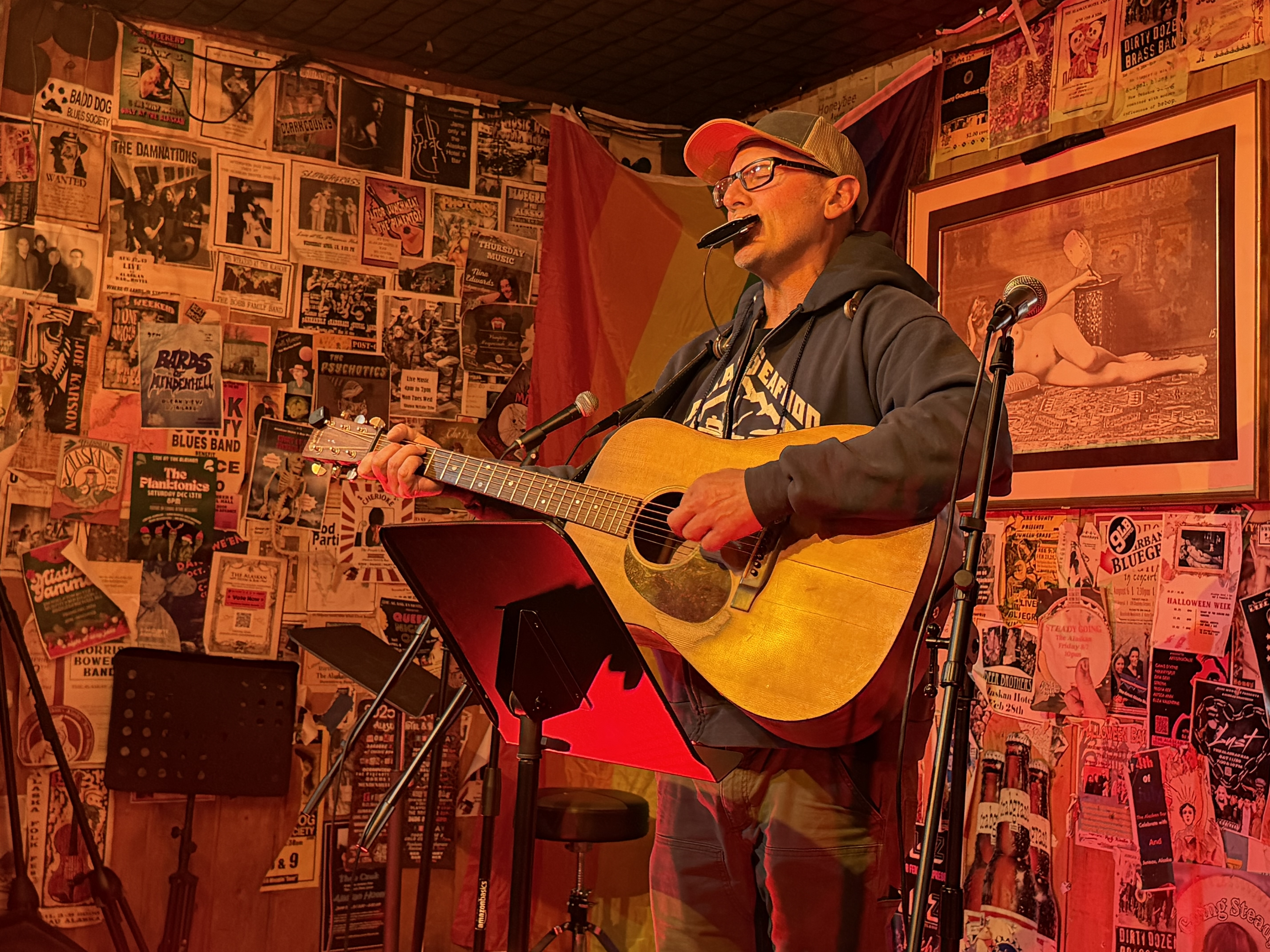
Tracy described Fry as “gruff on the outside, gooey on the inside.”
The two worked at the Alaskan together, played music together, and were both in the band the Panhandle Crabgrass Revival in the late 1990s. Tracey played harmonica. Fry was on the bass. But when the band did a tour of the West Coast and Fry couldn’t go, another member took over bass.
Tracey said when the band returned to Juneau and booked a gig at the Alaskan, “we kind of told him that he was fired from the band, and he got it. I think it’s one of the few times I saw him cry.”
Tracey said it was emotional then, but they stayed friends and eventually were able to laugh about it. Even recently, when Tracey last saw Fry in Texas in June.
Tracy called Fry “a consummate true artist.” As a musician, he played across genres – bluegrass, blues, rock, Tracey said. But he also painted hundreds of watercolors and sculpted.
“He didn’t make art to put it out and sell it. He made art because he was an artist and had to create. He’s a sculptor, painter, musician, videographer, photographer. He was like a real true artist,” Tracy said. “That’s going to be his legacy to me always, and my dear friend.”
Juneau artist David Woodie was friends with Fry for more than two decades. Woodie refers to them as “two barflies.”
“I really do miss him here. It’s going to be a great big missing tooth for a long time,” Woodie said.
He first started working on a 30-inch square oil painting of Fry at least ten years ago. He said the guitar is still not done.
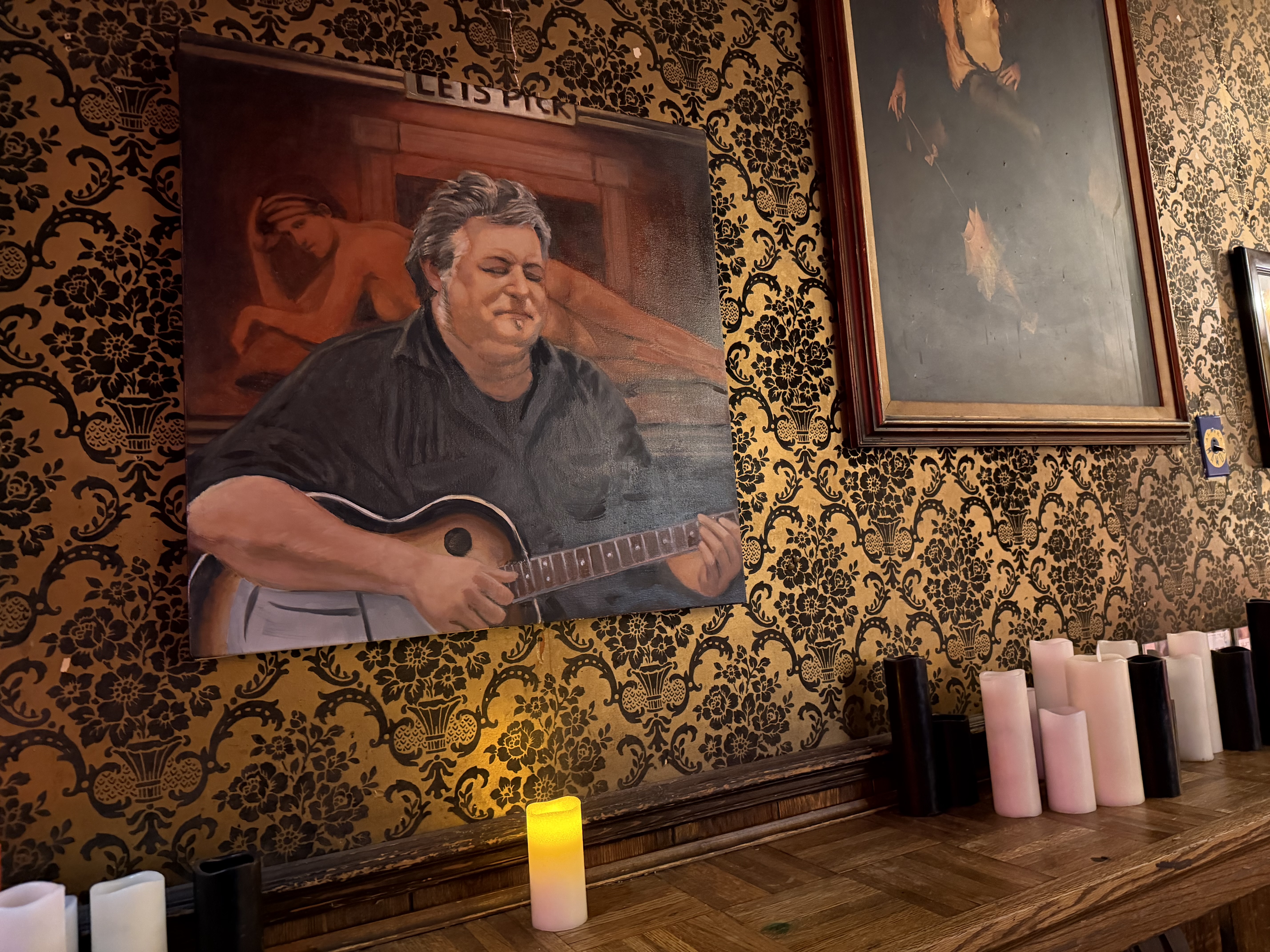
At the October celebration of life, Woodie said he painted Fry because Fry inspired him.
“Scott was a really generous guy in terms of helping musicians, and he ran the best open mic night there’s ever been in here, for years and years and years,” he said. “Some really great acts would show up, and usually Scott’s fingerprints were on there somewhere.”
One of those acts was Juneau musician Annie Bartholomew.
“At my first ever open mic in 2012, first time playing the Alaskan, C. Scott snuck onstage and surprised me by playing his harmonica over one of my original blue songs.” she recounted. “It was the wildest moment and such a sweet gesture that felt like acceptance and meant the world. He was a true character and generous to me and so many.”
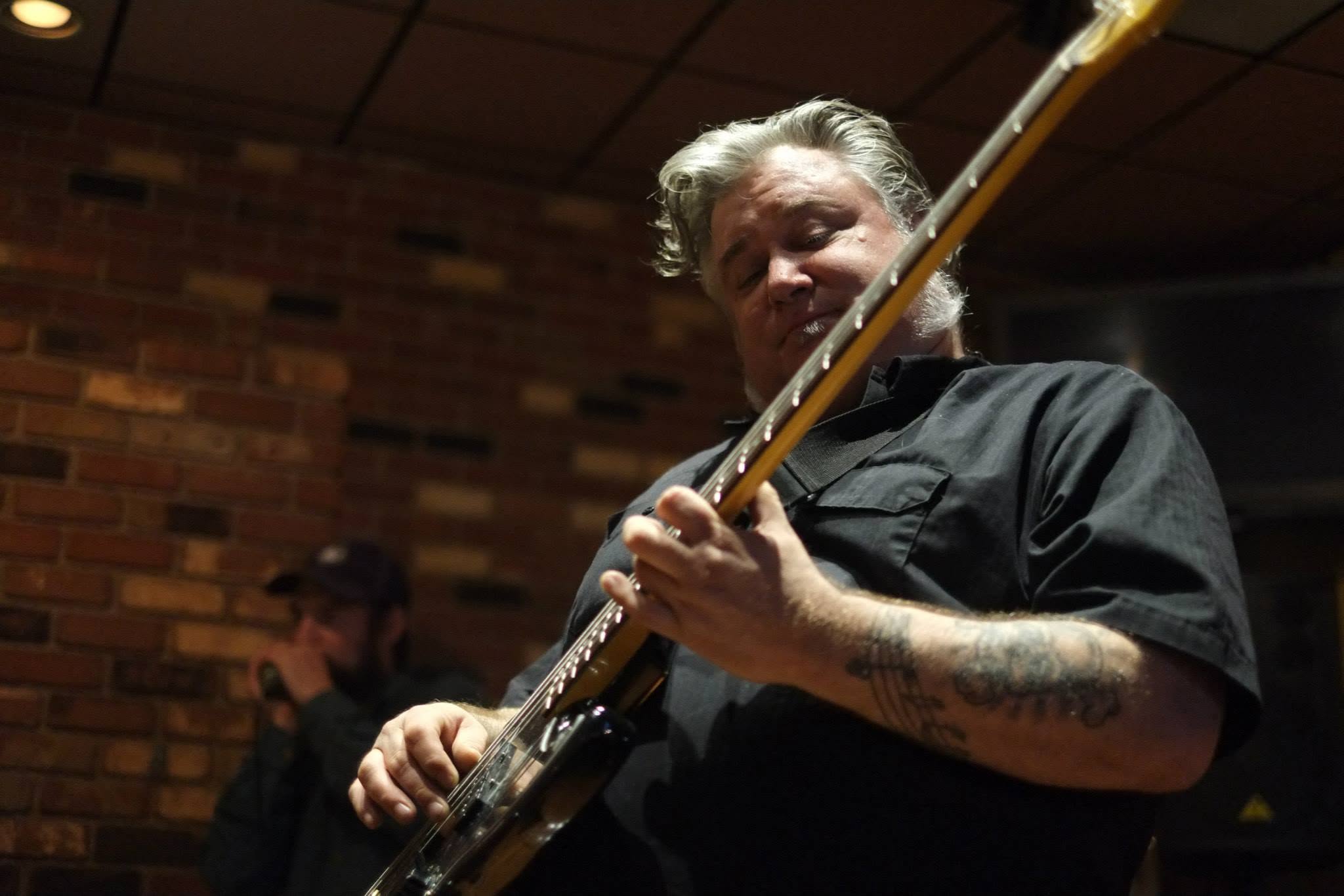
Long-time friend and Juneau performer Collette Costa said she hopes people who knew Fry continue to spread that spirit of generosity and openness – “musically leaving things open for everybody to be a part of, and not levying judgment about people’s abilities and choices, and that music is for everyone.”
Costa said she appreciated Fry’s musicianship.
“He wasn’t a show off, and he didn’t make a big deal about it. He, from what I saw, never had any ego involved in it. He loved music. He loved to play music.”
Costa associates Fry with the Alaskan, but the two also traveled to perform in the Pelican Boardwalk Boogie. She said, regardless of what state he was in, he gave it his all when performing, calling it a “Scotty-ism”
“Like he could be dead to the world and 20 minutes later, he’s on that stage just killing it,” she said. “Like he always delivers.”
Costa laughed, recounting one of the first times she met Fry.
“I distinctly remember being introduced to him, and him saying, ‘I’m C. Scott Fry. It’s not just a name; it’s a command, like see Scott fry.’ And I was like, ‘That’s one of the funniest things I’ve ever heard.’”
She doesn’t remember the actual first time they met though.
“The thing with Scotty is he was just one of those people who was always there, and you felt like he’d always been there,” Costa said. “And I feel like he’ll always be there.”

