
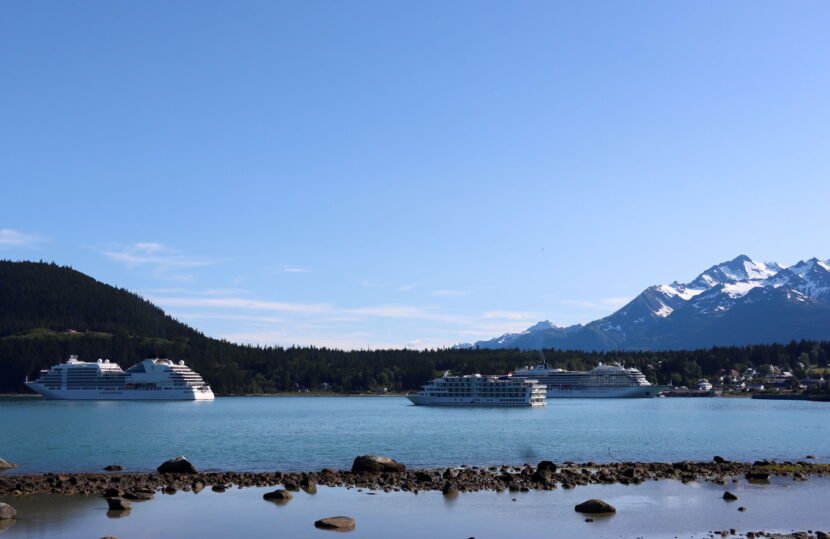
The state of Alaska inspects every cruise ship at least once a year. Which is why Cristian Iancu, the environmental officer on a ship owned by Norwegian Cruise Line, was confused when nobody showed up for an overnight inspection in July.
“Not sure if the inspection is canceled or will be rescheduled,” Iancu wrote in an email.
The meeting was canceled. And correspondence with the Department of Environmental Conservation, obtained through a records request, shows it wasn’t a mistake.
“Apologies, we have just received guidance from our commissioner that we are not to perform underway inspections starting July 1,” Ben Eisenstein, who directs DEC’s cruise ship program, wrote in response.
Public inspection reports and correspondence show that, over the summer, DEC gutted its inspection process with no notice to the public – or even some cruise lines.
Now the agency says it will not conduct any inspections while ships are underway, and it will skip some boats altogether. DEC has also directed its inspectors to stop routinely asking cruise lines for information about systems known as open loop scrubbers, which have faced criticism for converting air pollution into water pollution.
DEC did not acknowledge the halted inspections until months later, via an opinion piece in a Juneau news outlet — after KHNS asked the agency about them.
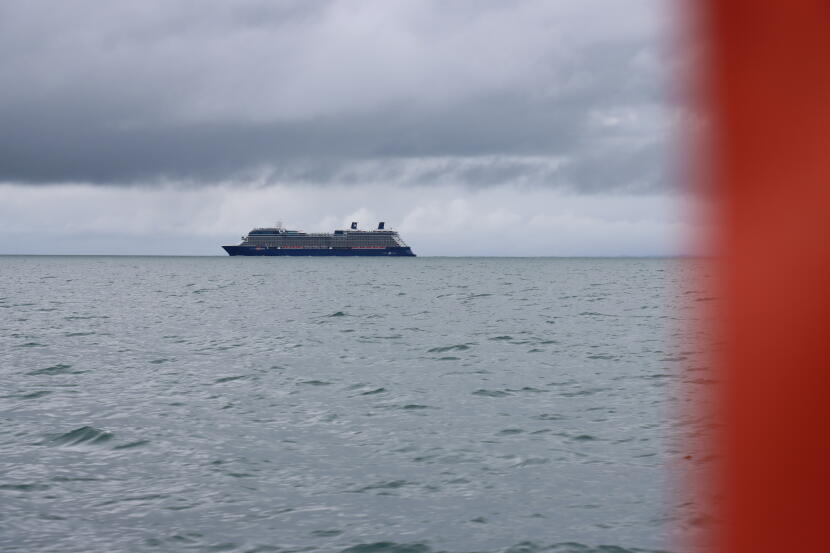
The moves represent the Dunleavy administration’s latest push to reduce state oversight of the cruise industry, which has a long history of environmental violations in Alaska. And they come just over a year after a heated dispute with Carnival Corp., the state’s largest operator, over its refusal to share data about their scrubber systems with the state.
Legislators, former inspectors, and clean water advocates all told KHNS that the move to scale back the inspection program gives too much leeway to an industry they think needs more oversight, not less.
“The [inspection] program was sorely inadequate already. And now it’s worse,” said Gershon Cohen, a Haines resident who co-authored a 2006 ballot measure that significantly increased cruise industry oversight in Alaska.
“If someone’s not on the ship, not traveling with the ship while it’s underway, there is simply no way that the state could possibly know what’s going on,” Cohen added.
Declining cruise oversight
The cruise industry’s environmental record is marked with fines and felony convictions for violations around the world, including actions the U.S. Department of Justice once described as “deliberate pollution of the seas and intentional acts to cover it up.”
But Alaska’s oversight of cruise pollution has been declining for years.
In 2008, 88% of large Alaska cruises had independent marine engineers aboard to ensure the ships followed environmental regulations. They were there because Alaskans wanted them to be. Two years before, voters had passed a ballot measure that created the Ocean Rangers program, funded with cruise revenue.
The program is still written into law, which means the state is still collecting the $4-per-berth fee that funds it. But that revenue hasn’t been used for its intended purpose since 2019, when Gov. Mike Dunleavy defunded the program.
His administration has since tried to repeal the Ocean Rangers program, saying it was too costly and unfair to the industry — and that a combination of self-reporting and DEC oversight could fill the gap.

A small team of DEC employees has carried out its own inspections ever since. But even before this summer’s changes, the program was less rigorous. Ships with permits to discharge in state waters were inspected yearly, once in port and once while underway. Ships without those permits got a single inspection, in port.
Plus, all inspections are pre-scheduled, giving cruise lines time to prepare.
But now the agency will not inspect ships while they are underway. Since July 1, the agency is only inspecting permitted ships once every two years, while in port.
Nearly half of the 53 cruise ships that operated in Alaska this year did not have state permits. Under the new changes, DEC will not inspect those ships at all.
Earlier this month, the U.S. Coast Guard launched a criminal investigation into one such ship, the MSC Poesia, for “allegedly discharging oil illegally at sea,” CBS News reported. 2026 was the ship’s first season in Alaska.
‘They need perpetual shoes on deck’
State Sen. Jesse Kiehl, a Democrat who represents Southeast communities including Haines, Klukwan, Skagway and Juneau, said it’s reasonable to ask if keeping an ocean ranger on every ship is the best approach.
“But to not do any underway inspections, to only inspect each ship every second year, that’s not what the people of Alaska voted for,” Kiehl said.
Bob Layko, who served as an Ocean Ranger in Alaska for eight seasons, said underway inspections are valuable because that’s when cruise ships’ engines and other major systems are running at full bore, and it’s when some key water discharges happen.
Plus, he said just having someone on board can encourage better behavior.
“If we weren’t there, they could do anything they want,” Layko said. “They knew there was an Ocean Ranger on board, and if I saw something, they would get reported.”
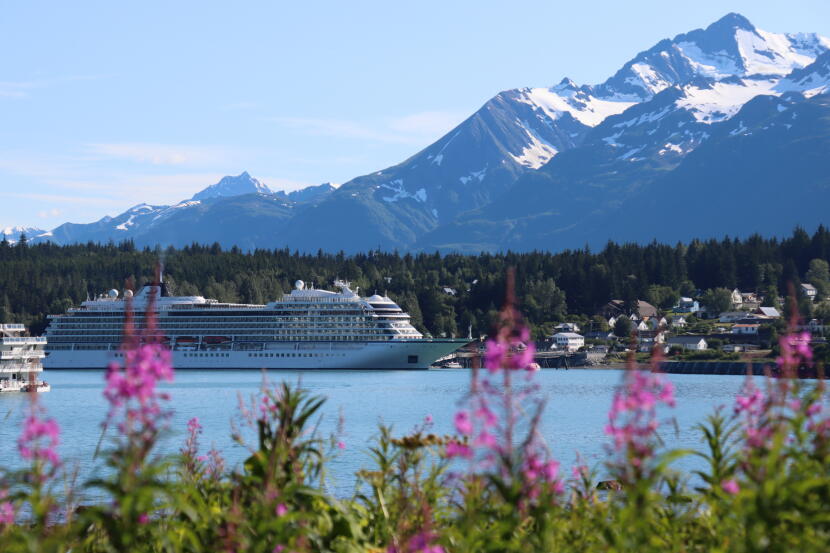
DEC declined two interview requests about the policy changes. Agency spokesperson Sam Dapcevich acknowledged in an email that in-port inspections “do not provide the same opportunity” for inspectors to observe operations during underway discharges.
He said the changes would reduce travel and “related logistical complications” and said there would be no changes to the agency’s requirements for cruise lines to monitor and report their discharges.
“The data collected under those requirements remain DEC’s primary source of information for determining whether permitted discharges comply with Alaska water-quality standards,” Dapcevich said.
Another former Ocean Ranger, Alan Ladd, balked at the idea.
“They need oversight, not just once a year, not just once every two years,” he said. “They need perpetual shoes on deck oversight, and I don’t care who does it, whether it’s a U.S. merchant mariner or somebody that works for ADEC.”
State reverses course on scrubber requests
DEC didn’t only reduce the frequency of inspections this summer. KHNS reviewed inspection reports from before and after July 15 that show the agency deleted an entire section of the form focused on compliance with a federal permit that covers exhaust gas cleaning systems, also known as scrubbers.
Those systems are installed on some cruise ships that rely on high-sulfur fuels. They draw in sea water and blast it through the ship’s stacks to scrub toxic pollutants from the exhaust. One type of scrubber system, known as “open loop,” then releases the washwater back into the ocean, including the pollutants from the stack.
The U.S. Environmental Protection Agency regulates scrubber discharge. But Carnival-owned ships violate federal standards hundreds of times a year, federal data shows, andEPA has rarely enforced its related permit.
In recent years, DEC staff have included scrubber systems in their inspections, including by looking for scrubber-related sheens or soot in the water when ships start up or slow down. They would later verify whether the ships reported those instances to the EPA. Inspectors would also ask to review data that shows when the washwater exceeds federal pollutant limits.
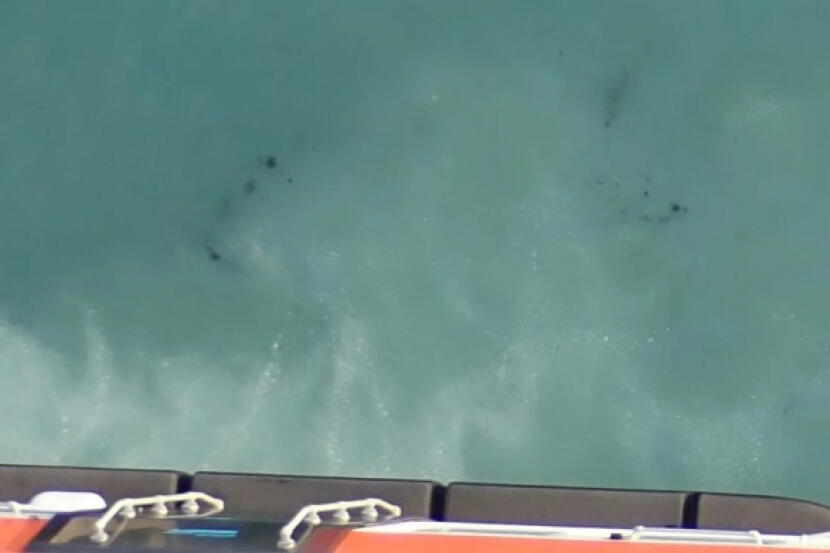
Dapcevich said that state oversight will not happen routinely moving forward. DEC could still request relevant information “when conditions warrant,” he wrote in an email, but the agency is shifting its focus to the discharges it formally regulates, like treated sewage and greywater.
That’s despite DEC’s previous insistence that it has an obligation to know about pollution from scrubbers in state waters.
In 2025, at least five ships owned by Carnival Corp. blocked DEC efforts to review scrubber-related data and take samples of scrubber washwater.

The company said the state didn’t have authority over scrubber discharges. DEC Commissioner Randy Bates responded that the agency “without question” has the authority to request and review the information, and that Carnival “has the obligation” to provide it. The dispute resulted in negotiations about a joint sampling program that “did not move forward” this summer, Dapcevich said.
Asked whether the agency’s stance on scrubber oversight has shifted, Dapcevich said DEC’s inspection policy has changed, but its legal authority has not.
That answer didn’t impress Kiehl, the state lawmaker, who said DEC requested “the same budget as last year and didn’t tell the legislature it was planning to make any changes.”
“DEC exists to make sure Alaskans have clean air and water. They have the legal authority, and they have the budget,” he said. “To just say, ‘You know what, screw it, [we’re] not doing the job,’ is a pretty skeevy decision.”
The Cruise Lines International Association did not respond to a detailed list of questions for this story. A Carnival spokesperson said in an emailed statement that the company is “always open to sharing data and being transparent,” and that scrubber washwater is already “tightly regulated” by the EPA and International Maritime Organization.
Jim Gamble, who directs Pacific Environment’s Arctic Program, said the state seems to be taking “the path of least resistance” amid pushback from an industry with “a lot of money, and a lot of lawyers, and all the time in the world to contest these things.”
He said that’s disappointing, but he’s hopeful that Governor-elect Jonathan Kreiss-Tomkins will take a different approach.
“The fact of the matter is, they’re producing a staggering amount of toxic wastewater, and just dumping it overboard,” he said.

