
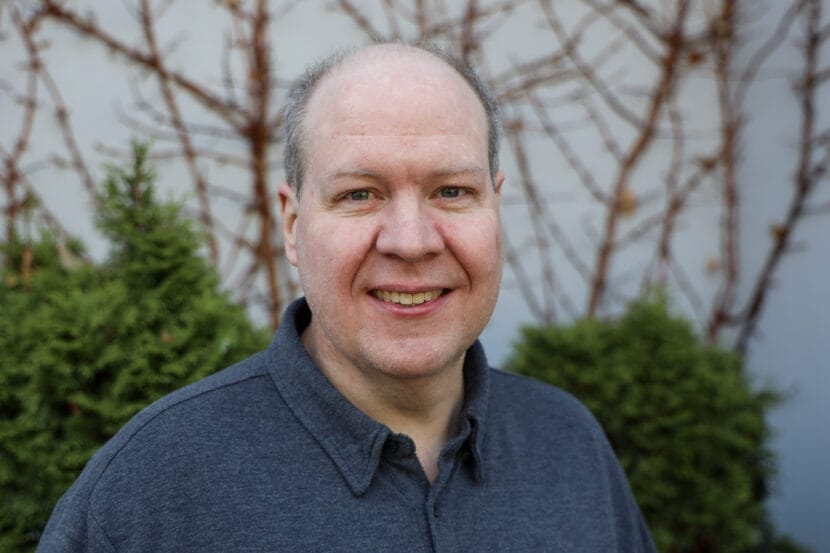
The dark days are upon us and winter is quickly approaching. As the days grow even shorter and darker, our mental health may be altered.
KTOO’s Mike Lane spoke with Dr. Jonathan Swinton, a licensed family therapist in Juneau, to find out what people can do to help themselves combat seasonal depression.
Listen:
The following transcript has been lightly edited for clarity.
Mike Lane: In the studio with me is Dr. Jonathan Swinton. He is a licensed family therapist. Welcome, Jonathan.
Dr. Jonathan Swinton: Thanks.
Mike Lane: And you’re here to speak with us about seasonal affective disorder. So, for those who may not be familiar with it, what is it exactly?
Dr. Jonathan Swinton: Well, Seasonal Affective Disorder is technically not an official disorder, but it’s what we call depression symptoms that tend to surface as we get closer to the winter months. And so it’s depression, but it has a seasonal component to it.
Mike Lane: Okay, are people in Juneau potentially more vulnerable to seasonal depression than others in the Lower 48, say?
Dr. Jonathan Swinton: Absolutely, for a couple of reasons: in Juneau we’re much higher up on the planet, so the angle of the sun as it hits here is very different. We don’t we’re not able to get the vitamin D that we need up here, and it’s just darker a lot more during the winter time. And our system responds to light. So those two things together, with also we’ve got a tendency to hibernate a little bit, I think, in the off season and that doesn’t help us either
Mike Lane: How can someone recognize what they’re experiencing is more than just a feeling of being tired or down, and closer to the symptoms of SAD?
Dr. Jonathan Swinton: If they are lasting longer than two weeks. And I think people really need to worry less about what do we call this? Is this seasonal affective stuff? Is this depression? Is this something else? If if somebody’s got an issue that’s been perpetuating for more than a couple of weeks, there’d be some benefit to getting help.
Mike Lane: Okay, and what are the most common symptoms people should watch out for?
Dr. Jonathan Swinton: Feeling down, irritability, difficulty concentrating, trouble with sleep, weight gain or loss, and just an overall feeling of “I just don’t have the motivation or happiness that I usually do.”
Mike Lane: What’s one thing people can start doing now to protect their mental health through the winter?
Dr. Jonathan Swinton: That’s a great question. One thing is to try to trick your system into not realizing it’s winter, and that’s where there’s a real benefit to using light therapy. There’s actually good research behind it. When we wake up in the morning and we’re surrounded by light in the summer, it kind of knocks our system awake actively and we need to do that same thing in the winter time. So turn on all the lights first thing when you wake up and keep them on all day long and do that through the winter. It’ll be a good prevention mechanism. Exercise, daily exercise is is probably the single most helpful thing a person can do to prevent and even manage it. And get out — getting out of the house. We tend to hibernate, as I mentioned earlier, and we need human interactions. And depression symptoms are often directly connected to those human interactions.
Mike Lane: So one of the things I’m hearing you say is that the light therapy boxes — they work.
Dr. Jonathan Swinton: Yeah, they do. The purpose of the light box is to help your system believe that it’s it’s light outside. We evolved as humans to respond to this big burning ball in the sky, and we need to trick the system that that’s still happening. And so, really, just a very bright light is what’s key. Find one, if you’re looking, that you keep less than two feet away from you for 30 minutes in the morning, and have it so it’s really kind of in your line of sight. I keep one on my dining table, so I turn it on when I’m eating my morning breakfast, and yeah, that’s what you need: 30 minutes of good light early in the morning.
Mike Lane: Can getting outside during daylight hours make a meaningful difference, even when it’s cloudy or raining?
Dr. Jonathan Swinton: Absolutely. Now, the the brightness of the the outdoors it’s often only about 10 or 20% as bright as in the bright sunlight. But there’s still a benefit there. And getting outdoors is going to have multiple benefits. One of the things that is beneficial about getting outside is just the fact you’re going to be surrounded by more light. The other is that you’re actually getting outside and getting to do something, our systems tend to do better when we kind of force ourselves to do anything.
Mike Lane: Getting more light into your eyes and getting exercise are some of the best things you can do for your mental health at this time of year.
Dr. Jonathan Swinton: Absolutely, and if that isn’t sufficient, that’s the time — reach out to get some help. Talk to your doctor, NAMI in Juneau. They’ve got great resources to help people find any help they might need.
Mike Lane: Thank you, Dr. Jonathan Swinton. Thanks for joining us today.
Dr. Jonathan Swinton: Yeah.
If you or someone you know is in need of mental health support, contact NAMI Juneau by calling (907) 463-4251 or visit their website at namijuneau.org.

