
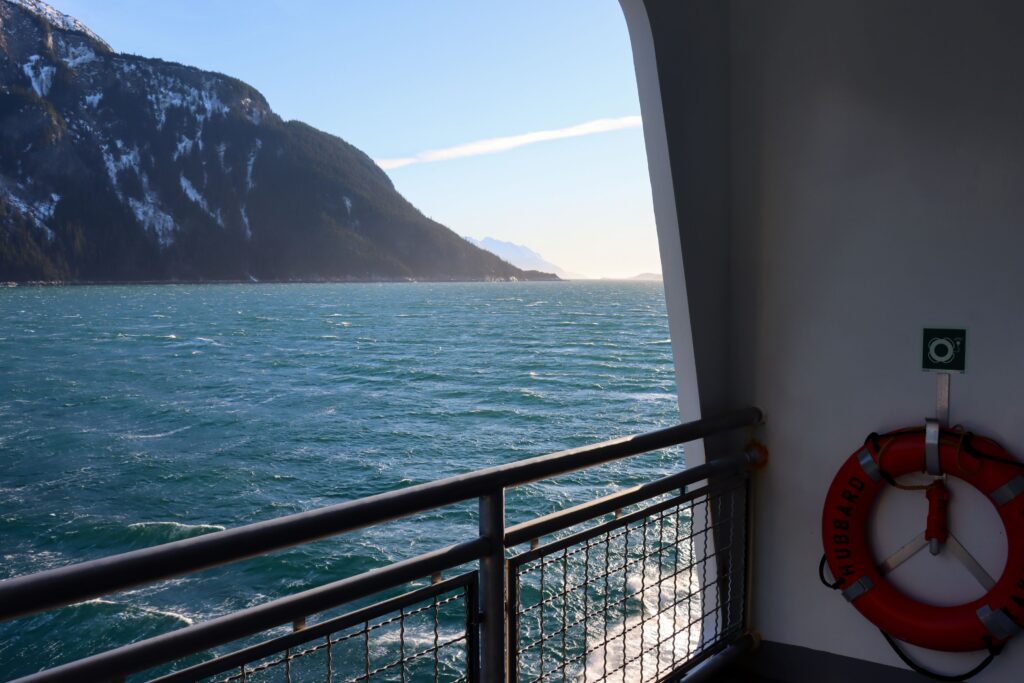
The State of Alaska last month gave a contractor the green light to begin preparing for the construction of a controversial ferry terminal between Haines and Juneau. The move is raising concerns among critics that the Dunleavy administration is improperly fast tracking the project before a new governor takes office.
The Alaska Department of Transportation and Public Facilities has not yet authorized any actual construction on the Cascade Point Ferry Terminal project. But DOT&PF spokesperson Justin Shelby said the agency in mid-October informed Sitka-based contractor K&E Alaska Inc. that it could “mobilize equipment and store materials at the project site.”
That was after the U.S. Army Corps of Engineers issued a so-called jurisdictional determination that outlines which parts of the project site require federal permitting. That determination clarified that the first phase of the project — which would include upland work, but not the terminal itself — would not affect federally regulated waters.
“It is conceivable that ADOT could do work at the site and not be required to get a permit from us if they don’t impact those jurisdictional waters,” said Randal Vigil, of the Corps’ Alaska District.
The Southeast Alaska Conservation Council sent a cease and desist letter to the agency on Friday after staff observed excavators at the site. More equipment appeared to be on site by Monday afternoon, said staffer Stacy Unzicker.
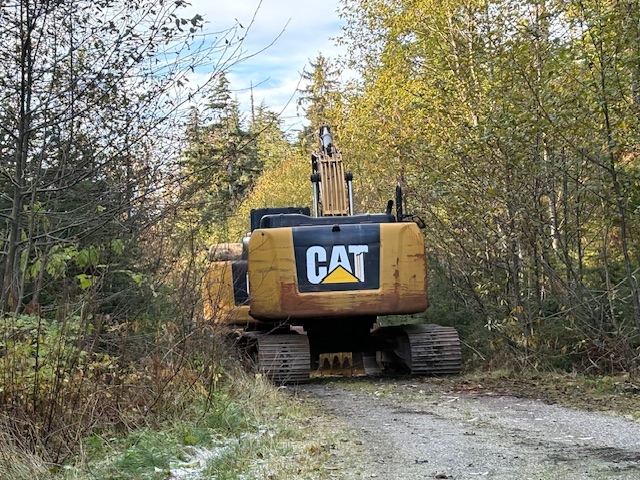
The organization is among those concerned about the state moving forward on Stage 1 without first obtaining the permits needed to complete the rest of the project. In a written statement, Unzicker accused the Dunleavy administration of unlawfully dividing the project up to “set things in motion before the next governor can put a stop to it.”
State Rep. Louise Stutes, a Republican from Kodiak, echoed that point in a phone interview.
“This clearly is a situation of trying to beat the change of administration,” she said.
Stutes sits on the House Transportation Committee. She’s previously slammed DOT&PF for moving forward with the project despite opposition from elected officials and ferry users in Haines, Skagway and Juneau.
DOT&PF says building a terminal further north than the current one in Auke Bay would shorten the ferry route, save on fuel and make the system more efficient overall. But critics argue it would just complicate things for travelers – including by requiring them to drive or shuttle 30 additional miles from Juneau just to board the boat.
Stutes said she’s worried the agency will spend millions of dollars on the first phase of a highly unpopular project that may never actually be completed.
“The $28.5 million that they’re working on now is just a drop in the bucket of what that project would cost if it were to go forward,” she said.
Asked for comment, Shelby said DOT&PF is “following all applicable laws and regulations” and that there is “no attempt at the unlawful practice of improper segmentation.”
Construction possible this year or next
The move to prepare for construction comes after DOT&PF said in March that it was delaying work until next year. That happened after the Corps requested “all design information” about both project phases – as opposed to just the first phase – before moving forward with permitting.
Shelby said DOT&PF doesn’t need a federal permit to break ground, so long as the planned work will not impact any waters that fall under the Corps’ jurisdiction.
But he added that the state and contractor still need to complete an environmental review checklist, a Stormwater Pollution Prevention Plan, and consultations under the Alaska Historic Preservation Act. Only then would construction begin on the first phase, paid for with state funds.
“There’s a possibility we could see construction this year, or we could end up pushing into next year,” Shelby said.
State Sen. Jesse Kiehl, a Democrat who represents all three communities that would be affected by the terminal, said even if DOT&PF can technically move forward with Stage 1, it shouldn’t.
“If you don’t know that the ultimate thing you’re going to build for the whole project is going to be allowed, why would you start building yet?” Kiehl said.

