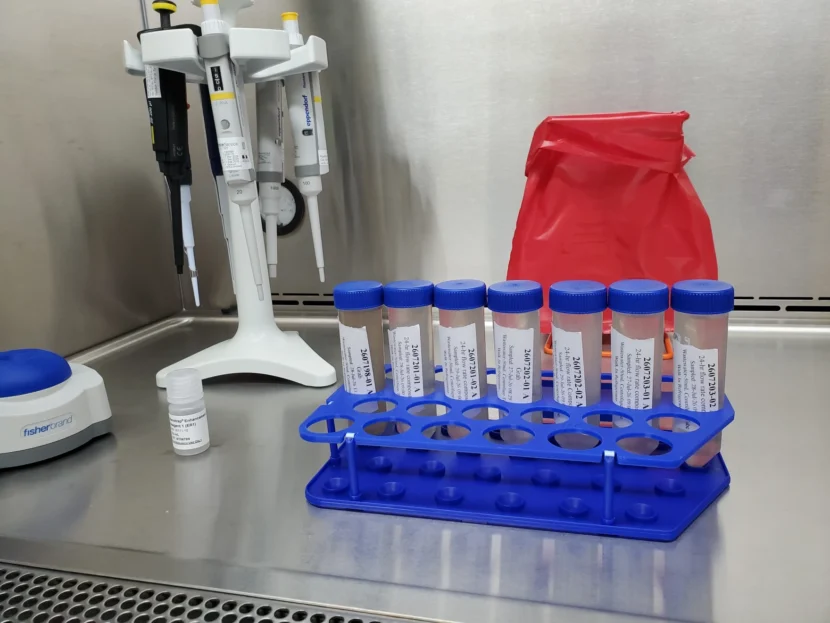
Evidence of the measles virus was found in Anchorage wastewater in July, according to state epidemiologists. The data is from a national pilot program that analyzes wastewater for disease and looks for ribonucleic acid, or RNA, of certain pathogens.
Joe McLaughlin, head epidemiologist for the state, said that based on those findings, “We’ve got at least one, maybe several people in the Anchorage sewershed catchment area that had measles around these dates, and we don’t know who they were, where they were, or whether transmission was occurring.”
Wastewater tested positive for evidence of measles on July 7, 8, 9 and 14, but the state doesn’t have comparable data yet for dates beyond mid-July. Further data is likely to come in by early August, he said.
McLaughlin said officials don’t know yet whether the test results are due to a traveler passing through or an Anchorage resident, but clinicians should be vigilant and on the lookout for measles.
“Anybody who presents to the urgent care, the emergency department, or in for a routine clinic visit, seeing a child with an acute viral illness that’s compatible with measles, they should go ahead and test them and put them in isolation if they think that they do have measles,” McLaughlin said.
Clayton Weingartner, who heads the wastewater analysis program for the state, said the data is thanks to a new pilot program funded by a national nonprofit organization, which uses a highly sensitive process to analyze Anchorage’s wastewater. No other parts of Alaska are included in the pilot program, he said.
Alaska analyzes its own wastewater too, through the Department of Environmental Conservation, a lab at the University of Alaska Anchorage and in Bethel through the Yukon-Kuskokwim Health Corporation’s Office of Environmental Health.
Although state testing is less sensitive, if there are more cases of measles, Weingartner said it would likely show up in the state data too. That testing is analyzed more quickly than the pilot program and can be tracked online.
He said the state has detected trace amounts of measles before.
“For certain pathogens like measles, which are of such high consequence, we’re really working on increasing that (testing) sensitivity,” he said and that the state may start notifying the public moving forward if there are trace detections.
Weingartner pointed out that a person cannot get measles from wastewater, that it’s a respiratory disease. And he said that while people who get the measles vaccine do shed a form of the viral RNA, the testing can differentiate what he called the “wild type” of virus versus the vaccine-derived type.
“It’s the wild type that we are detecting,” he said.
The best way to prevent measles transmission is through vaccination, according to the Centers for Disease Control and Prevention. Typically, children get vaccinated before kindergarten.
Symptoms for measles include a rash, high fever, a cough and congestion, tiny white spots in the mouth and red, watery eyes. If you or a family member has symptoms, McLaughlin said it’s best to call a clinic before getting tested so they can prevent other patients from being exposed.
Measles activity in the United States is at an all-time high since the disease was declared eliminated in the country in 2000. So, McLaughlin said it’s really important for Alaskans to take precautions.
“Measles could be imported from an Alaskan who’s returning to Alaska from the Lower 48, or from abroad, or a tourist,” he said.
Measles is a very unpleasant disease to get, McLaughlin said, and long-term effects of the illness can include lifelong neurological consequences and occasionally, death. Those most at risk of hospitalization are young children and immunocompromised people.
Most elders over age 60, McLaughlin said, were exposed during childhood or later vaccinated, so have immunity to the virus. Immunity through vaccination is lifelong.